Department of Pathobiology, College of Veterinary Medicine, Auburn University, 169 Green Hall, Auburn, AL, 36840, USA.
Department of Chemical Engineering, Samuel Ginn College of Engineering, Auburn University, Auburn, AL, USA.
Sci Rep. 2021 Oct 21;11(1):20763. doi: 10.1038/s41598-021-00325-3.
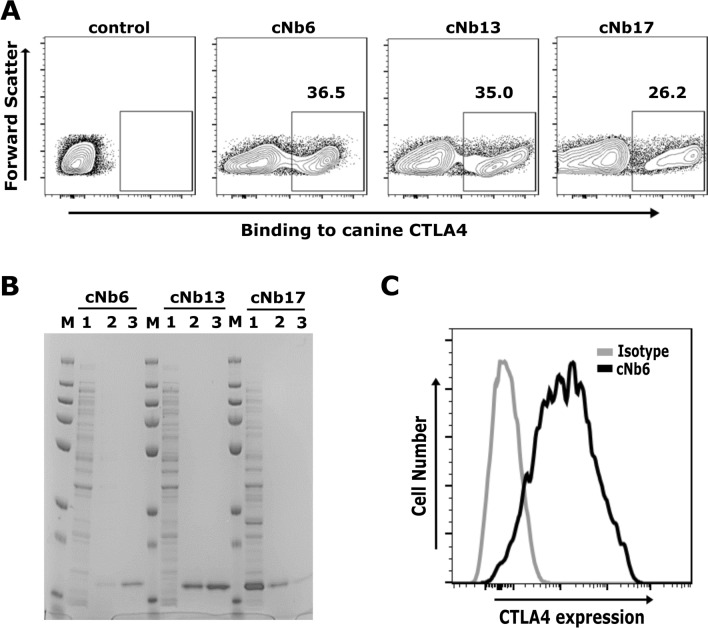
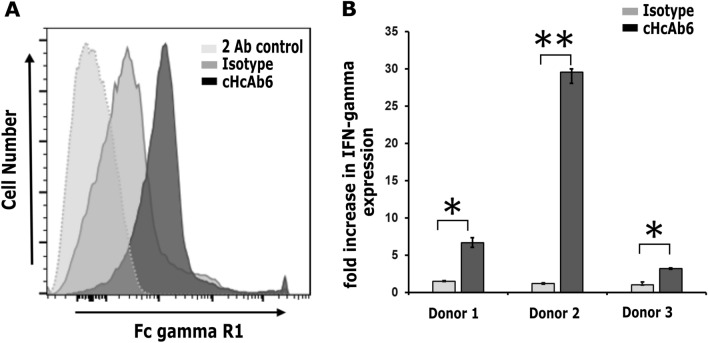
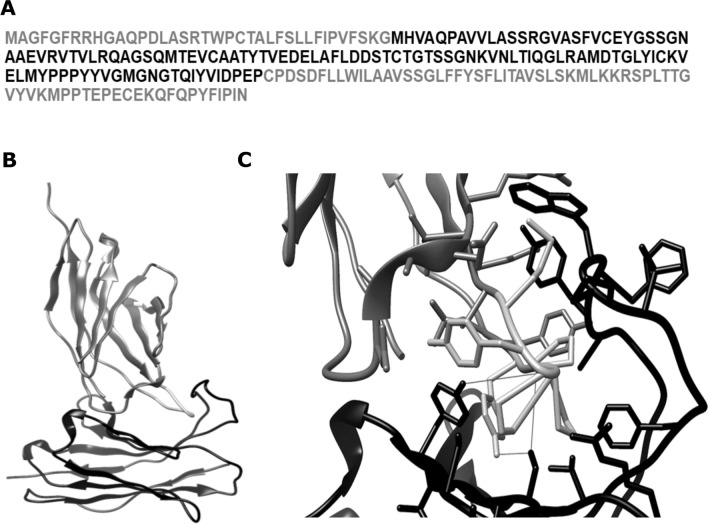
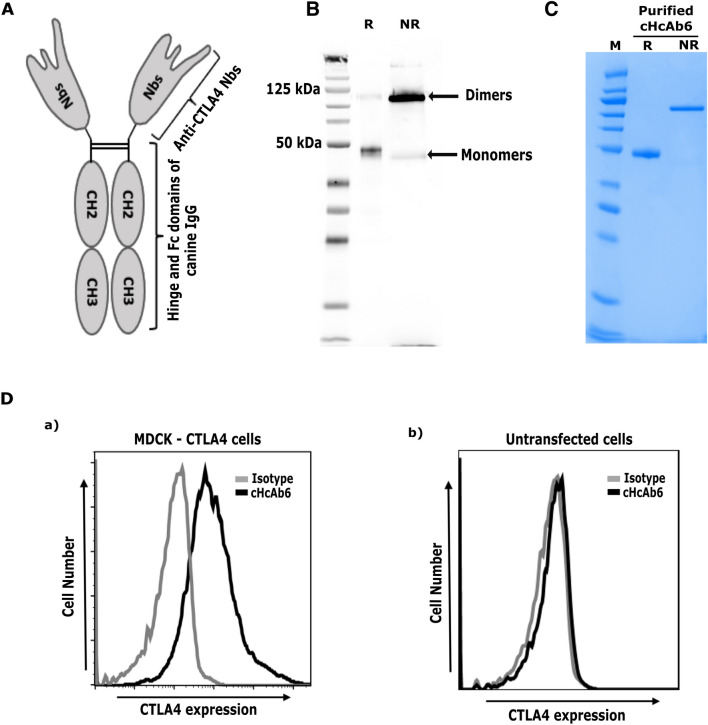
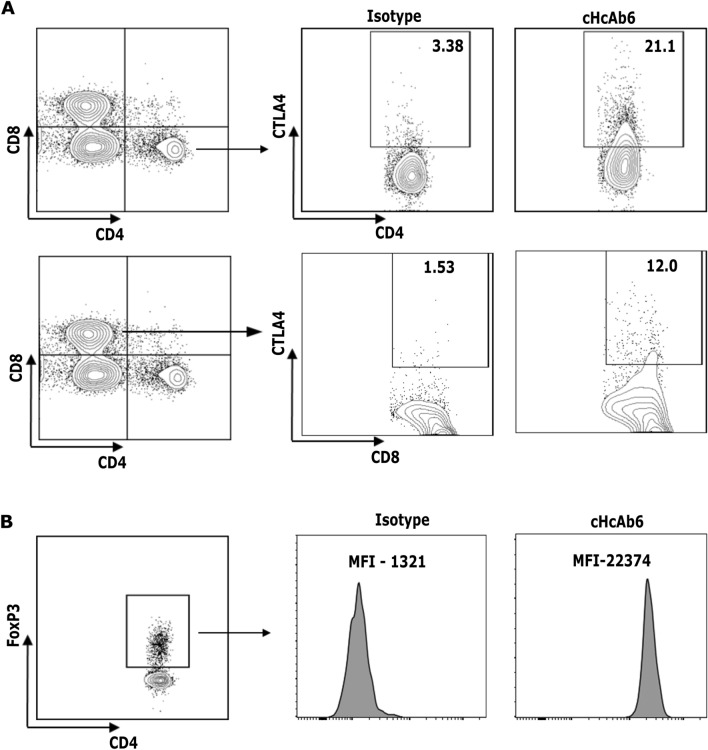
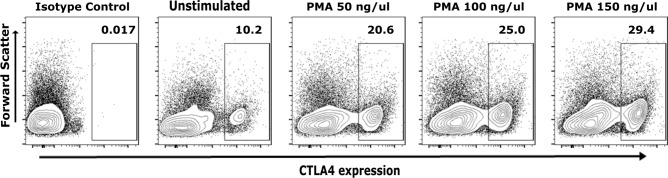
Cancer is the leading cause of death in the geriatric dog population. Currently, the use of immune checkpoint inhibitors (ICIs) such as anti-CTLA4 antibodies has markedly improved the prognosis of several cancers in their advanced stages. However, ICIs targeting CTLA4 blockade to treat canine cancer patients are yet to define. In this study, we sought to develop, characterize and assess whether chimeric heavy chain only antibodies (cHcAbs) against CTLA4 are viable therapeutic candidates for the treatment of canine cancers. Anti-CTLA4 nanobodies (Nbs) were identified from a yeast nanobody (Nb) library using magnetic-assisted cell sorting (MACS) and flow cytometry. cHcAbs were engineered by genetically fusing the DNA sequences coding for anti-CTLA4 Nbs with the Fc domain of the subclass B of canine IgG. Recombinant cHcAbs were purified from ExpiCHO-S cells. Stable cell lines expressing canine CTLA4 and FcγRI were used to elucidate the binding ability and specificity of cHcAbs. PBMCs isolated from healthy dogs were used to evaluate the ability of cHcAbs to activate canine PBMCs (cPBMCs). Novel Nbs were identified using the extracellular domain of canine CTLA4 protein to screen a fully synthetic yeast nanobody library. Purified Nbs bind specifically to natïve canine CTLA4. We report that chimeric HcAbs, which were engineered by fusing the anti-CTLA4 Nbs and Fc region of subclass B of canine IgG, were half the size of a conventional mAb and formed dimers. The chimeric HcAbs specifically binds both with canine CTLA4 and Fcγ receptors. As the binding of Nbs overlapped with the MYPPPY motif of canine CTLA4, these Nbs were expected to sterically disrupt the interaction of canine CTLA4 to B-7s. Like their human counterpart, canine CTLA4 was expressed on helper T cells and a small subset of cytotoxic T cells. Canine Tregs also constitutively expressed CTLA4, and stimulation with PMA/Ionomycin dramatically increased expression of CTLA4 on the cell surface. Stimulation of cPBMCs in the presence of agonistic anti-CD3 Ab and cHcAb6 significantly increased the expression of IFN-γ as compared to the isotype control. This study identifies a novel nanobody-based CTLA4 inhibitor for the treatment of canine cancer patients.
癌症是老年犬死亡的主要原因。目前,使用免疫检查点抑制剂(ICIs),如抗 CTLA4 抗体,已显著改善了晚期多种癌症的预后。然而,针对 CTLA4 阻断的 ICIs 尚未确定用于治疗犬癌症患者。在这项研究中,我们试图开发、表征并评估针对 CTLA4 的嵌合重链仅抗体(cHcAb)是否是治疗犬癌症的可行治疗候选物。使用磁辅助细胞分选(MACS)和流式细胞术从酵母纳米抗体(Nb)文库中鉴定出抗 CTLA4 的纳米抗体(Nbs)。通过基因融合编码抗 CTLA4 Nbs 的 DNA 序列与犬 IgG 亚类 B 的 Fc 结构域,设计了 cHcAbs。从 ExpiCHO-S 细胞中纯化重组 cHcAbs。使用表达犬 CTLA4 和 FcγRI 的稳定细胞系来阐明 cHcAbs 的结合能力和特异性。从健康犬中分离 PBMCs,用于评估 cHcAbs 激活犬 PBMCs(cPBMCs)的能力。使用犬 CTLA4 蛋白的细胞外结构域筛选全合成酵母纳米抗体文库,以鉴定新型 Nbs。纯化的 Nbs特异性结合天然犬 CTLA4。我们报告说,通过融合抗 CTLA4 Nbs 和犬 IgG 亚类 B 的 Fc 区域,设计的嵌合 HcAbs 是常规 mAb 的一半大小,形成二聚体。嵌合 HcAbs 特异性结合犬 CTLA4 和 Fcγ 受体。由于 Nbs 的结合与犬 CTLA4 的 MYPPPY 基序重叠,这些 Nbs 预计会在空间上破坏犬 CTLA4 与 B-7s 的相互作用。与人类 CTLA4 类似,犬 CTLA4 表达于辅助性 T 细胞和一小部分细胞毒性 T 细胞上。犬调节性 T 细胞(Tregs)也组成性表达 CTLA4,用 PMA/离子霉素刺激可显著增加细胞表面 CTLA4 的表达。与同种型对照相比,在激动性抗 CD3 Ab 和 cHcAb6 的存在下刺激 cPBMCs 可显著增加 IFN-γ 的表达。本研究鉴定了一种新型基于纳米抗体的 CTLA4 抑制剂,用于治疗犬癌症患者。