Yang Meng, Geng Chang-An, Liu Xinguang, Guan Min
Guangdong Provincial Key Laboratory of Medical Molecular Diagnostics, Institute of Biochemistry and Molecular Biology, Institute of Aging Research, Guangdong Medical University, Dongguan 523808, China.
Center for Human Tissues and Organs Degeneration, Institute of Biomedicine and Biotechnology, Shenzhen Institute of Advanced Technology, Chinese Academy of Sciences, Shenzhen 518055, China.
Biomedicines. 2021 Oct 6;9(10):1405. doi: 10.3390/biomedicines9101405.
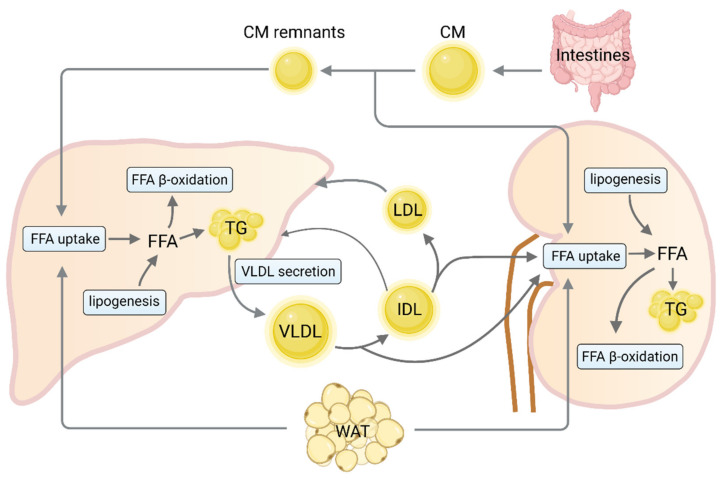
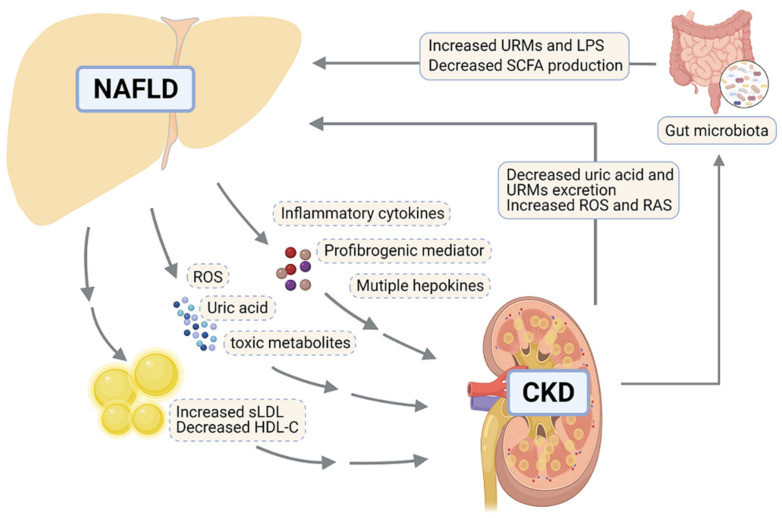
Nonalcoholic fatty liver disease (NAFLD) is the most common cause of chronic liver dysfunction and is characterized by exaggerated lipid accumulation, inflammation and even fibrosis. It has been shown that NAFLD increases the risk of other chronic diseases, particularly chronic kidney disease (CKD). Lipid in excess could lead to liver and kidney lesions and even end-stage disease through diverse pathways. Dysregulation of lipid uptake, oxidation or de novo lipogenesis contributes to the toxic effects of ectopic lipids which promotes the development and progression of NAFLD and CKD via triggering oxidative stress, apoptosis, pro-inflammatory and profibrotic responses. Importantly, dyslipidemia and release of pro-inflammatory cytokines caused by NAFLD (specifically, nonalcoholic steatohepatitis) are considered to play important roles in the pathological progression of CKD. Growing evidence of similarities between the pathogenic mechanisms of NAFLD and those of CKD has attracted attention and urged researchers to discover their common therapeutic targets. Here, we summarize the current understanding of molecular aberrations underlying the lipid metabolism of NAFLD and CKD and clinical evidence that suggests the relevance of these pathways in humans. This review also highlights the orchestrated inter-organ cross-talk in lipid disorders, as well as therapeutic options and opportunities to counteract NAFLD and CKD.
非酒精性脂肪性肝病(NAFLD)是慢性肝功能障碍最常见的病因,其特征为脂质过度蓄积、炎症甚至纤维化。研究表明,NAFLD会增加其他慢性疾病的风险,尤其是慢性肾脏病(CKD)。过量脂质可通过多种途径导致肝脏和肾脏病变,甚至发展为终末期疾病。脂质摄取、氧化或从头脂肪生成的失调会导致异位脂质的毒性作用,通过引发氧化应激、细胞凋亡、促炎和促纤维化反应,促进NAFLD和CKD的发生发展。重要的是,NAFLD(特别是非酒精性脂肪性肝炎)引起的血脂异常和促炎细胞因子的释放被认为在CKD的病理进展中起重要作用。NAFLD和CKD致病机制之间相似性的证据越来越多,这引起了人们的关注,并促使研究人员寻找它们共同的治疗靶点。在此,我们总结了目前对NAFLD和CKD脂质代谢分子异常的认识,以及表明这些途径在人类中具有相关性的临床证据。本综述还强调了脂质紊乱中器官间的协同相互作用,以及对抗NAFLD和CKD的治疗选择和机会。