Laboratory of Synthesis of Medicinal Molecules (LaSMMed), Department of Chemistry, CCE, Universidade Estadual de Londrina, Londrina CEP 86057-970, Parana, Brazil.
Faculdade de Ciências da Saúde, Universidade Zambeze, Tete CP 2301, Mozambique.
Int J Mol Sci. 2021 Oct 12;22(20):11013. doi: 10.3390/ijms222011013.
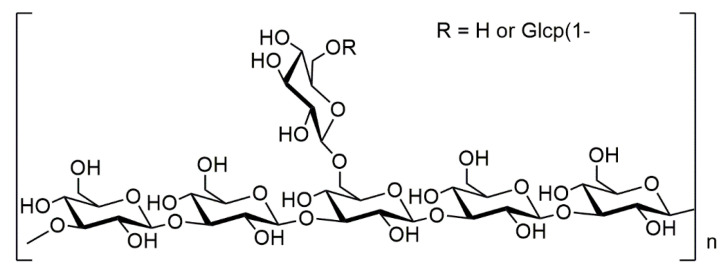
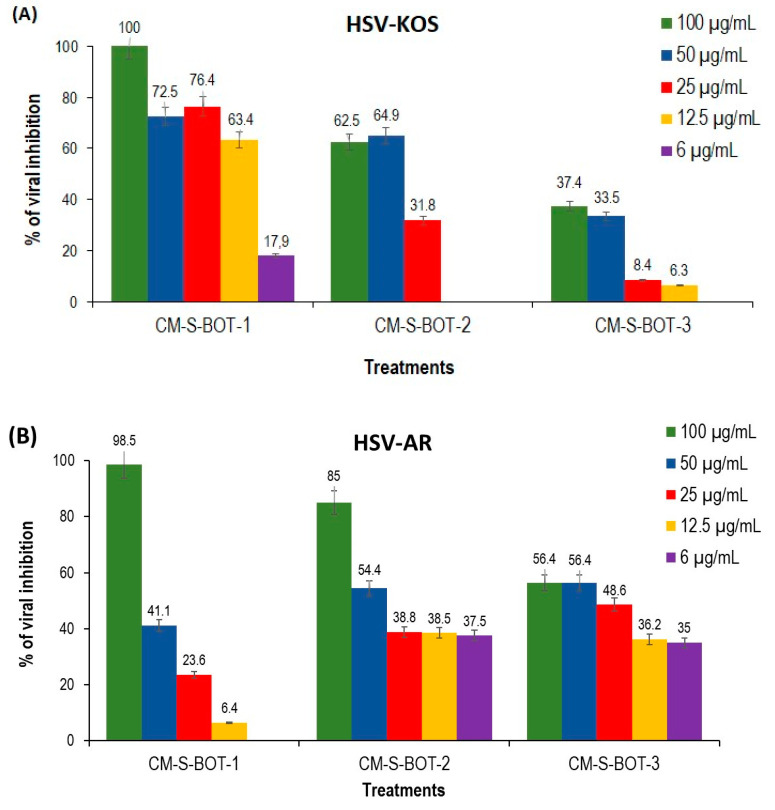
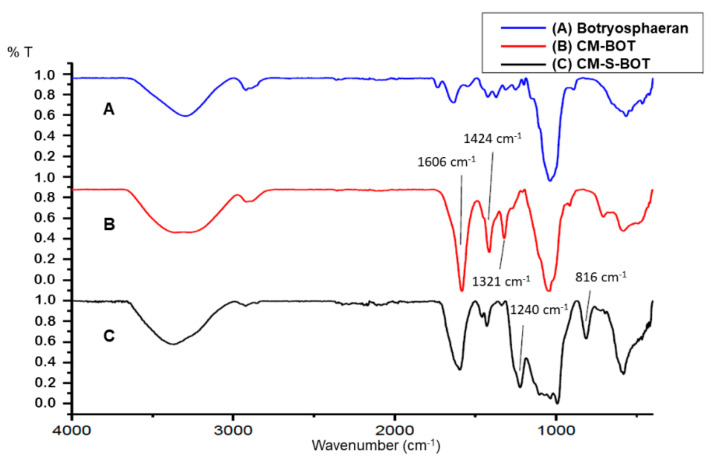
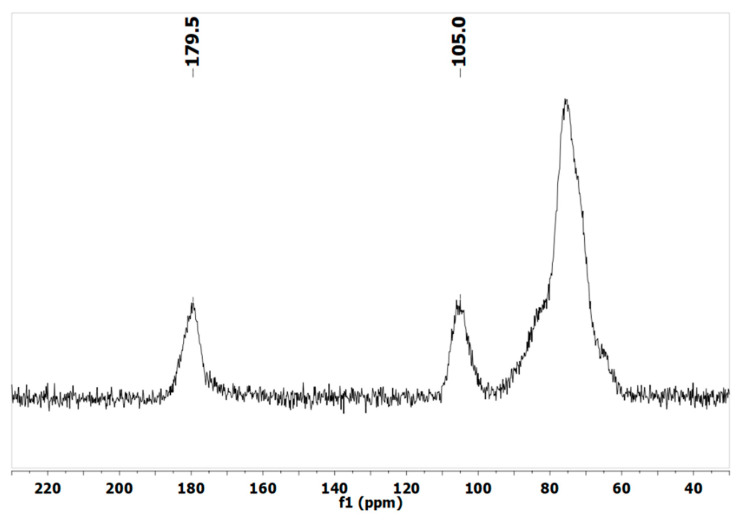
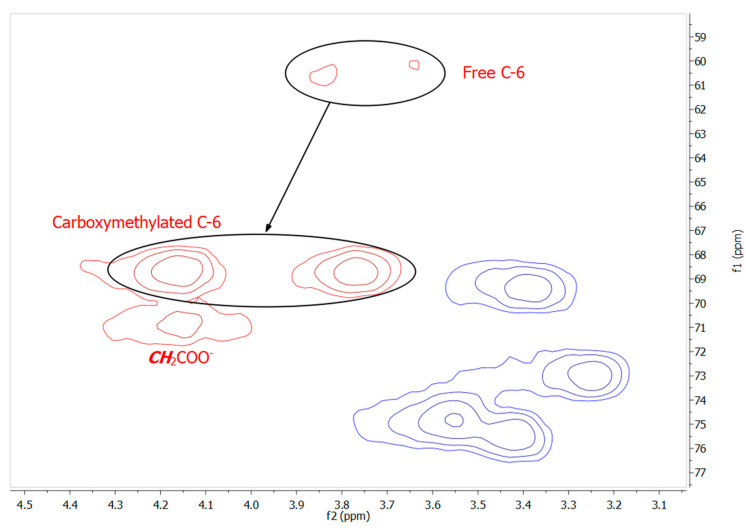
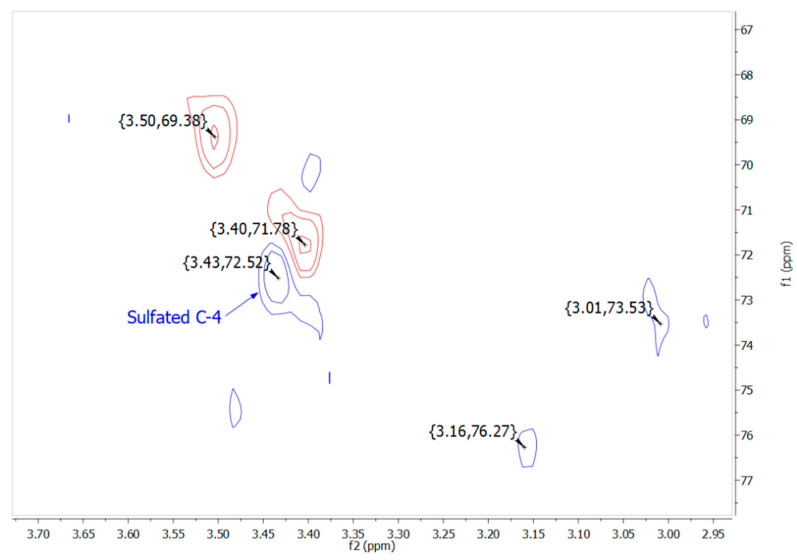
The infection of mammalian cells by enveloped viruses is triggered by the interaction of viral envelope glycoproteins with the glycosaminoglycan, heparan sulfate. By mimicking this carbohydrate, some anionic polysaccharides can block this interaction and inhibit viral entry and infection. As heparan sulfate carries both carboxyl and sulfate groups, this work focused on the derivatization of a (1→3)(1→6)-β-D-glucan, botryosphaeran, with these negatively-charged groups in an attempt to improve its antiviral activity. Carboxyl and sulfonate groups were introduced by carboxymethylation and sulfonylation reactions, respectively. Three derivatives with the same degree of carboxymethylation (0.9) and different degrees of sulfonation (0.1; 0.2; 0.4) were obtained. All derivatives were chemically characterized and evaluated for their antiviral activity against herpes (HSV-1, strains KOS and AR) and dengue (DENV-2) viruses. Carboxymethylated botryosphaeran did not inhibit the viruses, while all sulfonated-carboxymethylated derivatives were able to inhibit HSV-1. DENV-2 was inhibited only by one of these derivatives with an intermediate degree of sulfonation (0.2), demonstrating that the dengue virus is more resistant to anionic β-D-glucans than the Herpes simplex virus. By comparison with a previous study on the antiviral activity of sulfonated botryosphaerans, we conclude that the presence of carboxymethyl groups might have a detrimental effect on antiviral activity.
包膜病毒感染哺乳动物细胞是由病毒包膜糖蛋白与糖胺聚糖、硫酸乙酰肝素的相互作用触发的。通过模拟这种碳水化合物,一些阴离子多糖可以阻断这种相互作用,抑制病毒进入和感染。由于硫酸乙酰肝素既带有羧基又带有硫酸基,因此这项工作集中在对(1→3)(1→6)-β-D-葡聚糖(botryosphaeran)进行衍生化,用这些带负电荷的基团对其进行修饰,以期提高其抗病毒活性。羧甲基化和磺化反应分别引入了羧基和磺酸基。获得了 3 种具有相同羧甲基化程度(0.9)但磺化程度不同(0.1、0.2、0.4)的衍生物。所有衍生物均进行了化学表征,并评估了它们对疱疹(HSV-1,KOS 和 AR 株)和登革热(DENV-2)病毒的抗病毒活性。羧甲基化 botryosphaeran 不能抑制这些病毒,而所有磺化羧甲基化衍生物都能抑制 HSV-1。DENV-2 仅被其中一种具有中等磺化程度(0.2)的衍生物所抑制,这表明登革热病毒比单纯疱疹病毒更能抵抗阴离子β-D-葡聚糖。与之前关于磺化 botryosphaeran 抗病毒活性的研究相比,我们得出结论,羧甲基基团的存在可能对抗病毒活性产生不利影响。