Dehestani Mohammad, Liu Hui, Gasser Thomas
Department of Neurodegenerative Disease, Hertie Institute for Clinical Brain Research, University of Tuebingen, 72076 Tuebingen, Germany.
German Center for Neurodegenerative Disease (DZNE), 72076 Tuebingen, Germany.
J Pers Med. 2021 Oct 15;11(10):1030. doi: 10.3390/jpm11101030.
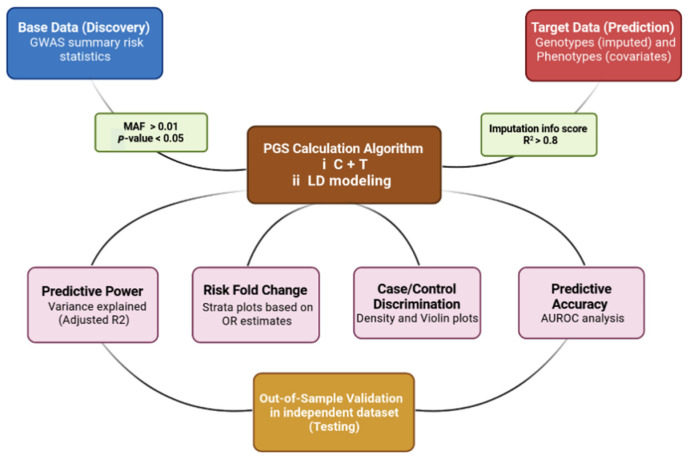
Parkinson's disease (PD) is the second most common neurodegenerative disorder characterized by the loss of dopaminergic neurons. The vast majority of PD patients develop the disease sporadically and it is assumed that the cause lies in polygenic and environmental components. The overall polygenic risk is the result of a large number of common low-risk variants discovered by large genome-wide association studies (GWAS). Polygenic risk scores (PRS), generated by compiling genome-wide significant variants, are a useful prognostic tool that quantifies the cumulative effect of genetic risk in a patient and in this way helps to identify high-risk patients. Although there are limitations to the construction and application of PRS, such as considerations of limited genetic underpinning of diseases explained by SNPs and generalizability of PRS to other populations, this personalized risk prediction could make a promising contribution to stratified medicine and tailored therapeutic interventions in the future.
帕金森病(PD)是第二常见的神经退行性疾病,其特征是多巴胺能神经元的丧失。绝大多数帕金森病患者是散发性发病,据推测其病因在于多基因和环境因素。总体多基因风险是大型全基因组关联研究(GWAS)发现的大量常见低风险变异的结果。通过汇总全基因组显著变异生成的多基因风险评分(PRS)是一种有用的预后工具,它可以量化患者遗传风险的累积效应,从而有助于识别高危患者。尽管多基因风险评分的构建和应用存在局限性,例如单核苷酸多态性(SNP)对疾病的遗传基础解释有限以及多基因风险评分对其他人群的可推广性等问题,但这种个性化风险预测有望在未来对分层医学和量身定制的治疗干预做出贡献。