School of Pharmacy, University of Reading, Reading RG6 6UB, UK.
School of Biological Sciences, University of Reading, Reading RG6 6UB, UK.
Cells. 2021 Oct 1;10(10):2616. doi: 10.3390/cells10102616.
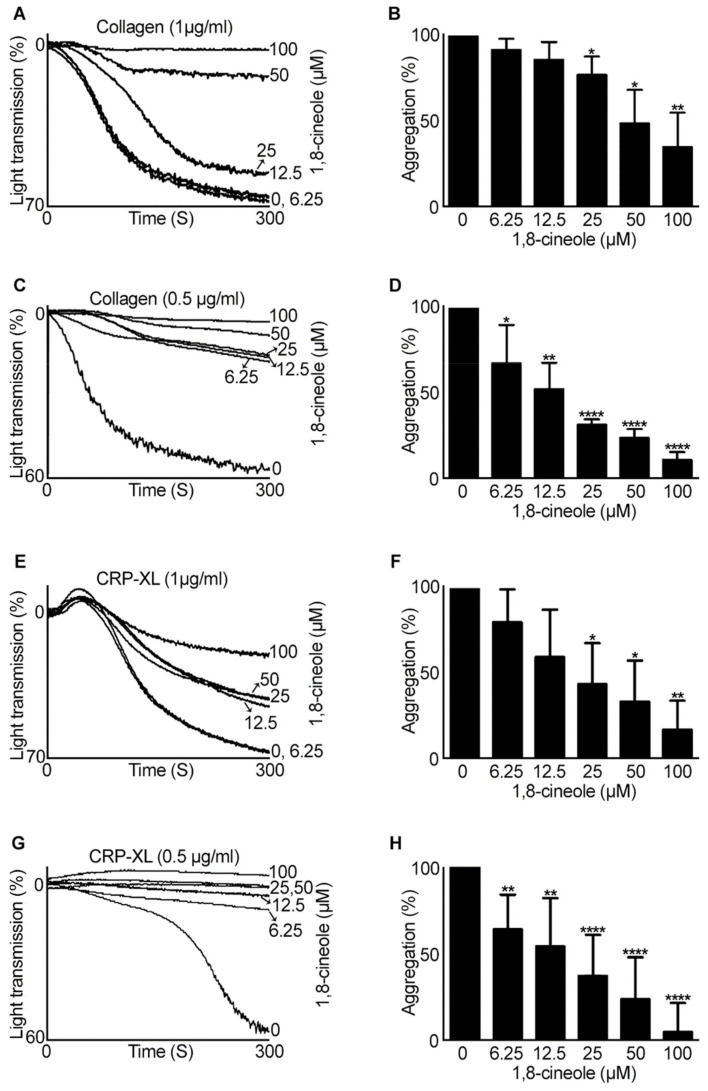
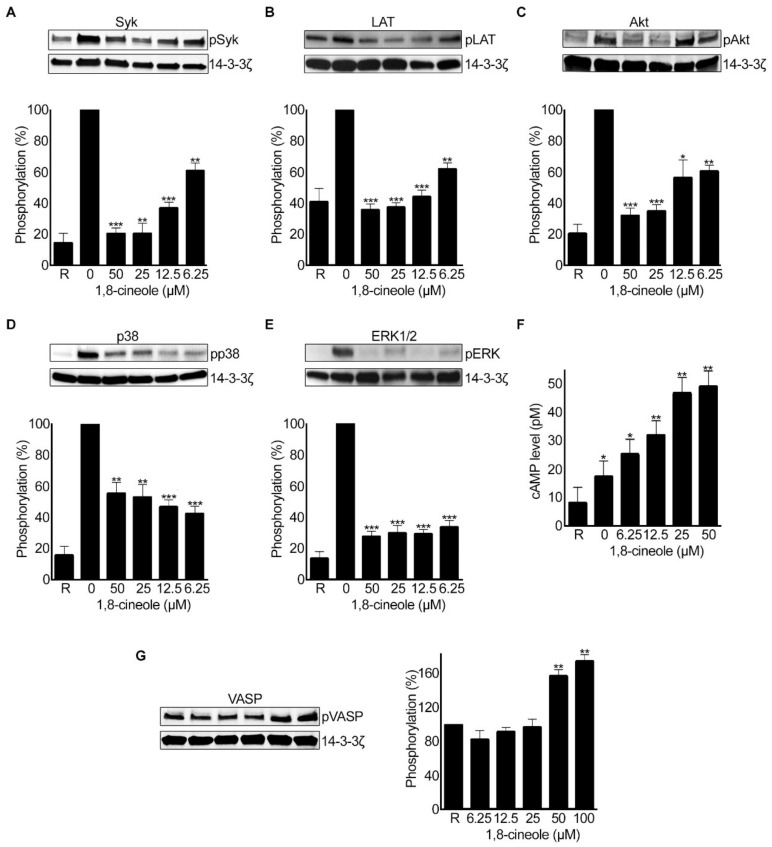
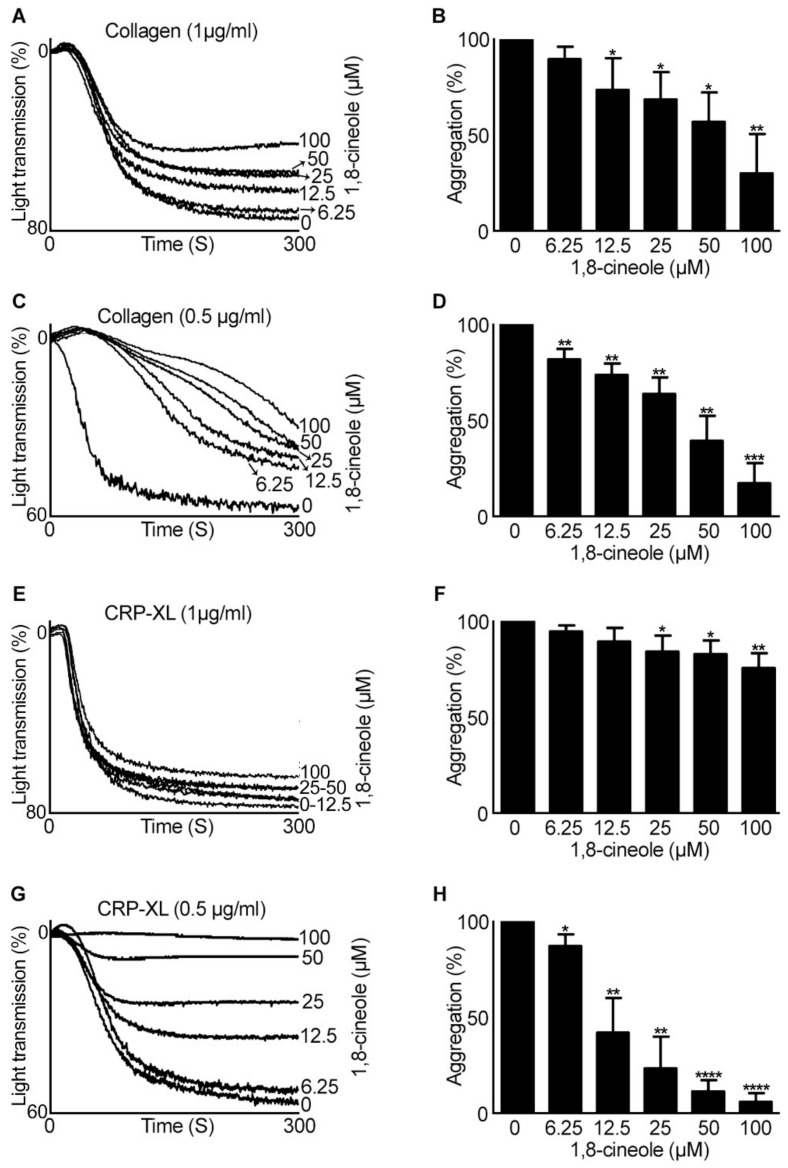
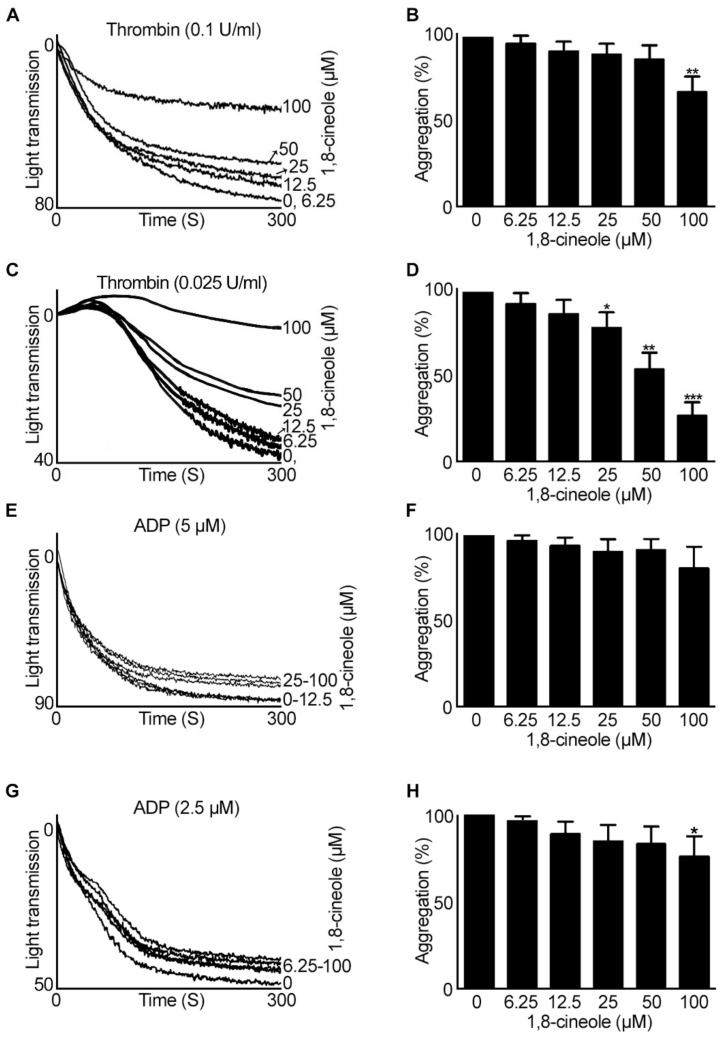
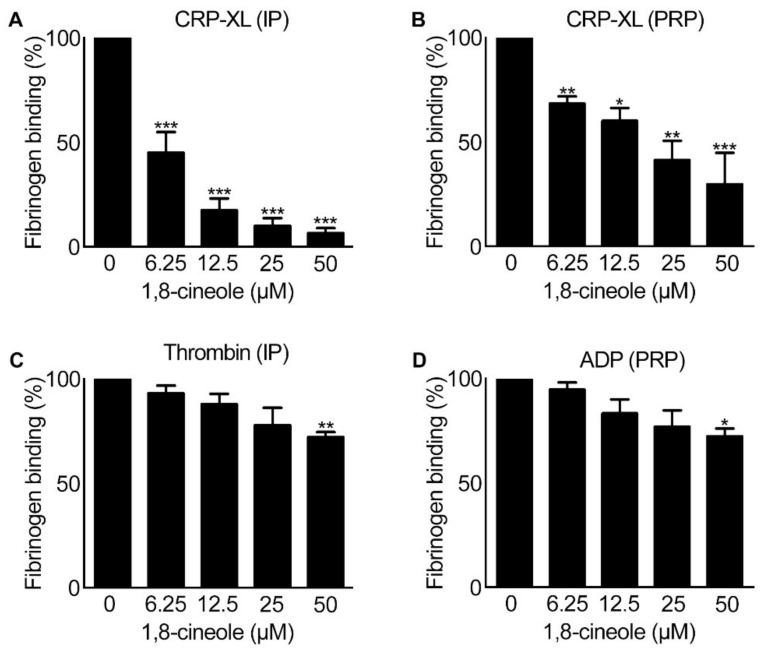
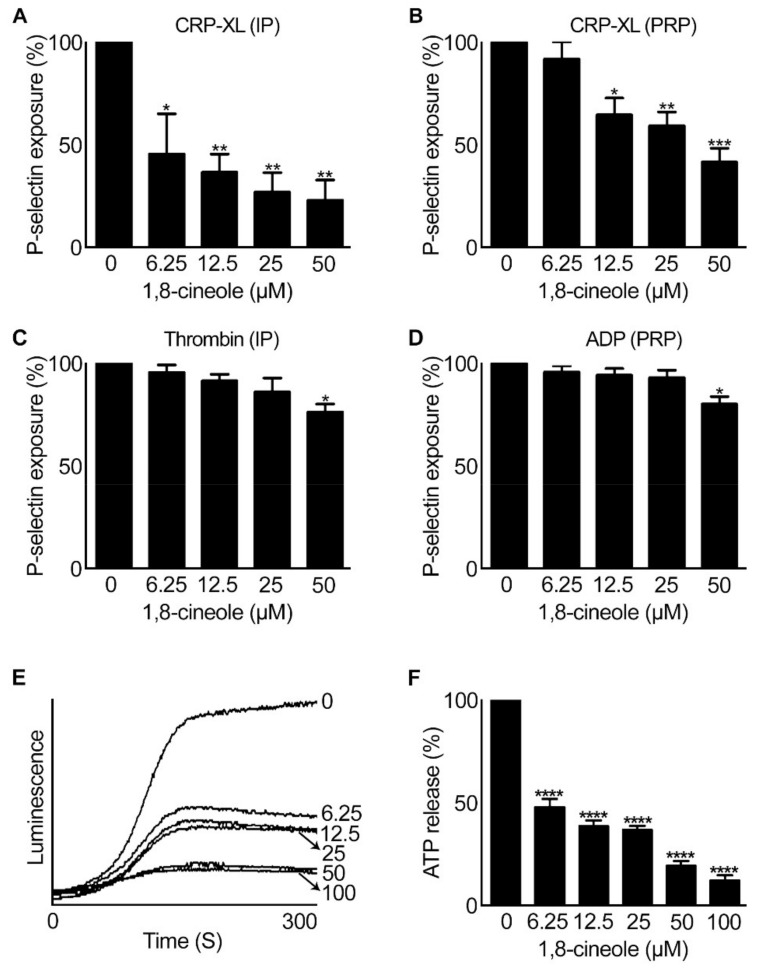
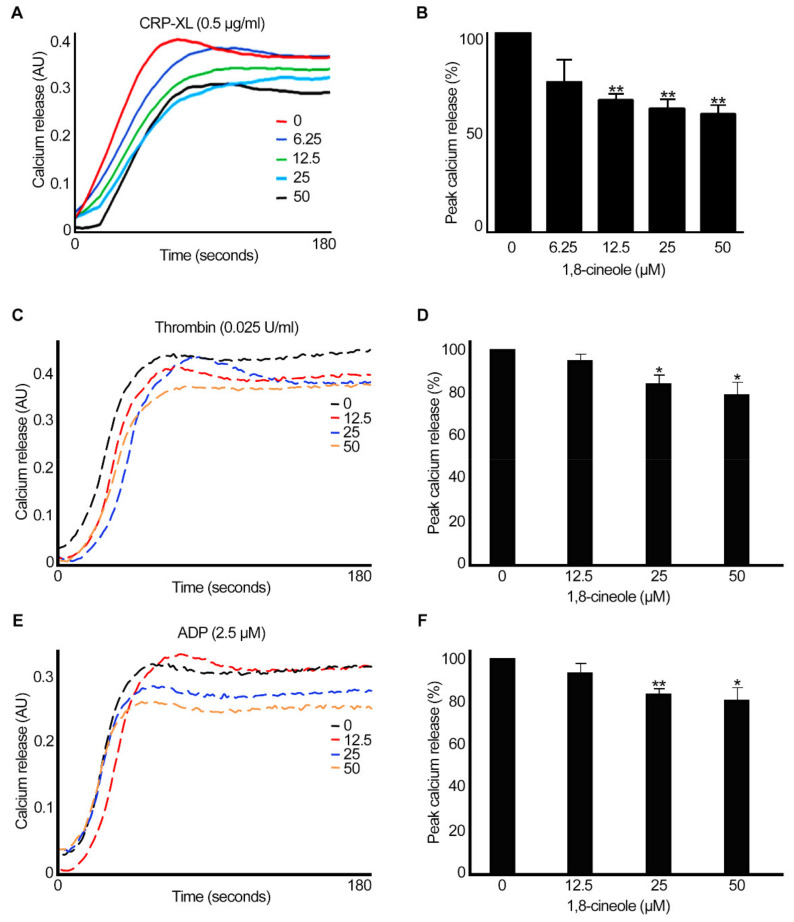
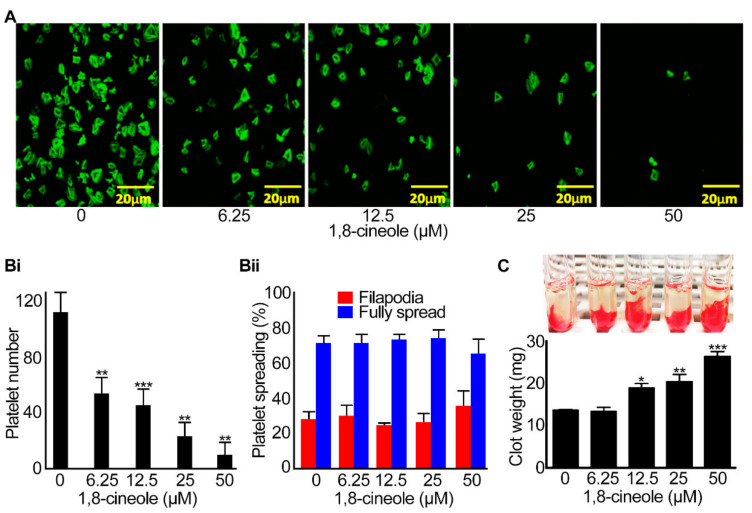
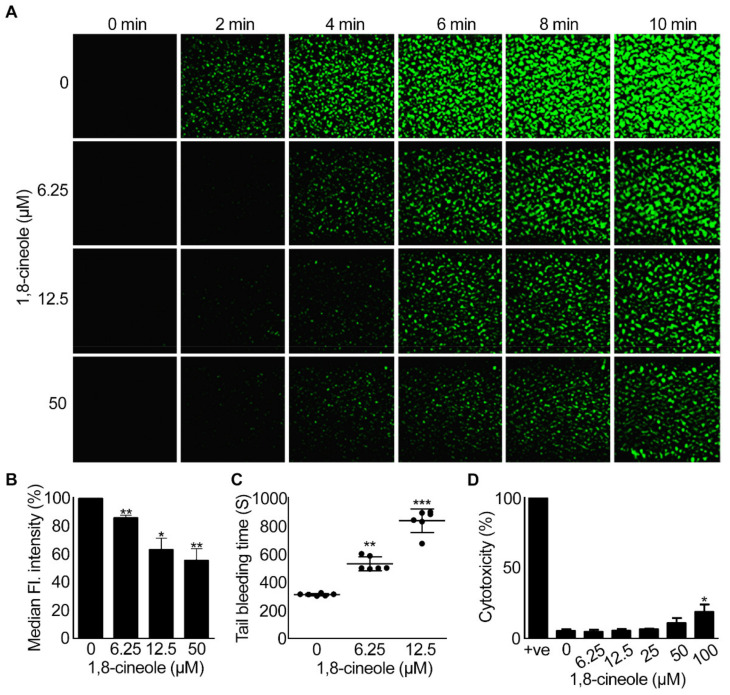
1,8-cineole, a monoterpenoid is a major component of eucalyptus oil and has been proven to possess numerous beneficial effects in humans. Notably, 1,8-cineole is the primary active ingredient of a clinically approved drug, Soledum which is being mainly used for the maintenance of sinus and respiratory health. Due to its clinically valuable properties, 1,8-cineole has gained significant scientific interest over the recent years specifically to investigate its anti-inflammatory and antioxidant effects. However, the impact of 1,8-cineole on the modulation of platelet activation, thrombosis and haemostasis was not fully established. Therefore, in this study, we demonstrate the effects of 1,8-cineole on agonists-induced platelet activation, thrombus formation under arterial flow conditions and haemostasis in mice. 1,8-cineole largely inhibits platelet activation stimulated by glycoprotein VI (GPVI) agonists such as collagen and cross-linked collagen-related peptide (CRP-XL), while it displays minimal inhibitory effects on thrombin or ADP-induced platelet aggregation. It inhibited inside-out signalling to integrin αIIbβ3 and outside-in signalling triggered by the same integrin as well as granule secretion and intracellular calcium mobilisation in platelets. 1,8-cineole affected thrombus formation on collagen-coated surface under arterial flow conditions and displayed a minimal effect on haemostasis of mice at a lower concentration of 6.25 µM. Notably, 1,8-cineole was found to be non-toxic to platelets up to 50 µM concentration. The investigation on the molecular mechanisms through which 1,8-cineole inhibits platelet function suggests that this compound affects signalling mediated by various molecules such as AKT, Syk, LAT, and cAMP in platelets. Based on these results, we conclude that 1,8-cineole may act as a potential therapeutic agent to control unwarranted platelet reactivity under various pathophysiological settings.
1,8-桉叶素是一种单萜类化合物,是桉树油的主要成分,已被证明对人体具有多种有益作用。值得注意的是,1,8-桉叶素是一种临床批准的药物 Soledum 的主要活性成分,主要用于维持鼻窦和呼吸道健康。由于其具有临床价值,近年来,1,8-桉叶素引起了科学界的极大关注,特别是研究其抗炎和抗氧化作用。然而,1,8-桉叶素对血小板激活、血栓形成和止血的调节作用尚未完全确定。因此,在这项研究中,我们证明了 1,8-桉叶素对激动剂诱导的血小板激活、动脉血流条件下血栓形成和小鼠止血的影响。1,8-桉叶素可显著抑制由糖蛋白 VI(GPVI)激动剂如胶原蛋白和交联胶原蛋白相关肽(CRP-XL)刺激的血小板激活,而对凝血酶或 ADP 诱导的血小板聚集的抑制作用较小。它抑制了整合素αIIbβ3的内向外信号和同一整合素触发的外向信号以及血小板中的颗粒分泌和细胞内钙动员。1,8-桉叶素影响动脉血流条件下胶原蛋白涂层表面上的血栓形成,并在较低浓度 6.25µM 时对小鼠的止血作用影响较小。值得注意的是,1,8-桉叶素在高达 50µM 的浓度下对血小板无毒性。通过研究 1,8-桉叶素抑制血小板功能的分子机制表明,该化合物影响血小板中各种分子如 AKT、Syk、LAT 和 cAMP 介导的信号。基于这些结果,我们得出结论,1,8-桉叶素可能作为一种潜在的治疗剂,在各种病理生理条件下控制不必要的血小板反应性。