School of Science, Monash University, Sunway Campus, 47500 Bandar Sunway, Selangor DE, Malaysia.
School of Science, Monash University, Sunway Campus, 47500 Bandar Sunway, Selangor DE, Malaysia; Tropical Medicine and Biology Platform, Monash University, Sunway Campus, 47500 Bandar Sunway, Selangor DE, Malaysia.
Biochim Biophys Acta Mol Basis Dis. 2022 Feb 1;1868(2):166294. doi: 10.1016/j.bbadis.2021.166294. Epub 2021 Oct 20.
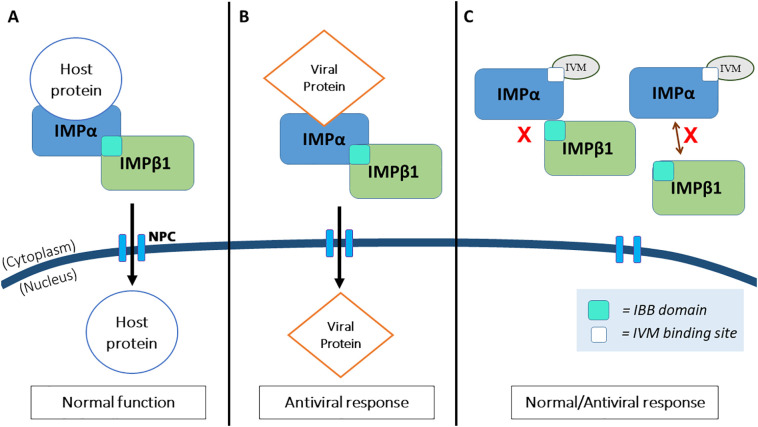
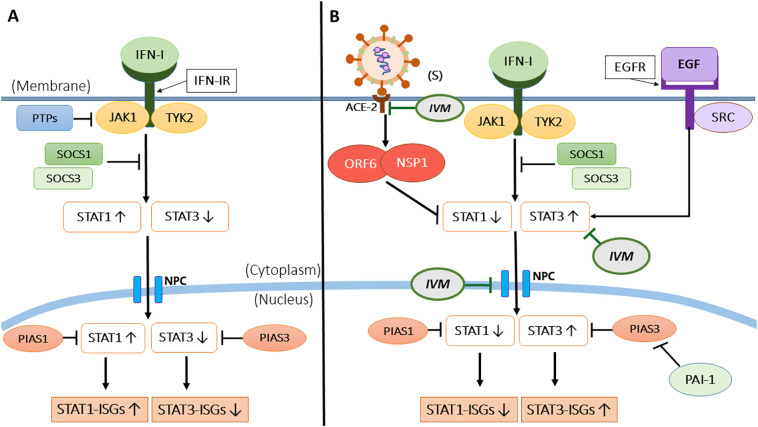
Ivermectin (IVM) is an FDA approved macrocyclic lactone compound traditionally used to treat parasitic infestations and has shown to have antiviral potential from previous in-vitro studies. Currently, IVM is commercially available as a veterinary drug but have also been applied in humans to treat onchocerciasis (river blindness - a parasitic worm infection) and strongyloidiasis (a roundworm/nematode infection). In light of the recent pandemic, the repurposing of IVM to combat SARS-CoV-2 has acquired significant attention. Recently, IVM has been proven effective in numerous in-silico and molecular biology experiments against the infection in mammalian cells and human cohort studies. One promising study had reported a marked reduction of 93% of released virion and 99.98% unreleased virion levels upon administration of IVM to Vero-hSLAM cells. IVM's mode of action centres around the inhibition of the cytoplasmic-nuclear shuttling of viral proteins by disrupting the Importin heterodimer complex (IMPα/β1) and downregulating STAT3, thereby effectively reducing the cytokine storm. Furthermore, the ability of IVM to block the active sites of viral 3CLpro and S protein, disrupts important machinery such as viral replication and attachment. This review compiles all the molecular evidence to date, in review of the antiviral characteristics exhibited by IVM. Thereafter, we discuss IVM's mechanism and highlight the clinical advantages that could potentially contribute towards disabling the viral replication of SARS-CoV-2. In summary, the collective review of recent efforts suggests that IVM has a prophylactic effect and would be a strong candidate for clinical trials to treat SARS-CoV-2.
伊维菌素(IVM)是一种获得美国食品和药物管理局(FDA)批准的大环内酯类化合物,传统上用于治疗寄生虫感染,并已显示出具有先前的体外研究的抗病毒潜力。目前,IVM 作为一种兽药在商业上可获得,但也已在人类中用于治疗盘尾丝虫病(河盲症 - 一种寄生虫感染)和类圆线虫病(一种蛔虫/线虫感染)。鉴于最近的大流行,重新利用 IVM 来对抗 SARS-CoV-2 引起了广泛关注。最近,IVM 在许多针对哺乳动物细胞和人类队列研究的感染的计算机模拟和分子生物学实验中被证明是有效的。一项有前途的研究报告称,在向 Vero-hSLAM 细胞施用 IVM 后,释放的病毒粒子减少了 93%,未释放的病毒粒子减少了 99.98%。IVM 的作用机制围绕通过破坏 Importin 异二聚体复合物(IMPα/β1)和下调 STAT3 来抑制细胞质-核穿梭来抑制病毒蛋白,从而有效减少细胞因子风暴。此外,IVM 阻断病毒 3CLpro 和 S 蛋白的活性位点的能力会破坏病毒复制和附着等重要机制。本综述汇总了迄今为止所有的分子证据,综述了 IVM 表现出的抗病毒特性。然后,我们讨论了 IVM 的作用机制,并强调了可能有助于阻止 SARS-CoV-2 病毒复制的临床优势。总之,最近的努力的综合综述表明,IVM 具有预防作用,将是治疗 SARS-CoV-2 的临床试验的有力候选药物。