Department of Pharmacology and Toxicology, Faculty of Pharmacy, MAHSA University, Bandar Saujana Putra, 42610 Jenjarom, Selangor, Malaysia.
Kuala Balah Health Clinic (Klinik Kesihatan Kuala Balah), Kuala Balah, 17600 Jeli, Kelantan, Malaysia.
Int Immunopharmacol. 2021 Dec;101(Pt B):108255. doi: 10.1016/j.intimp.2021.108255. Epub 2021 Oct 15.
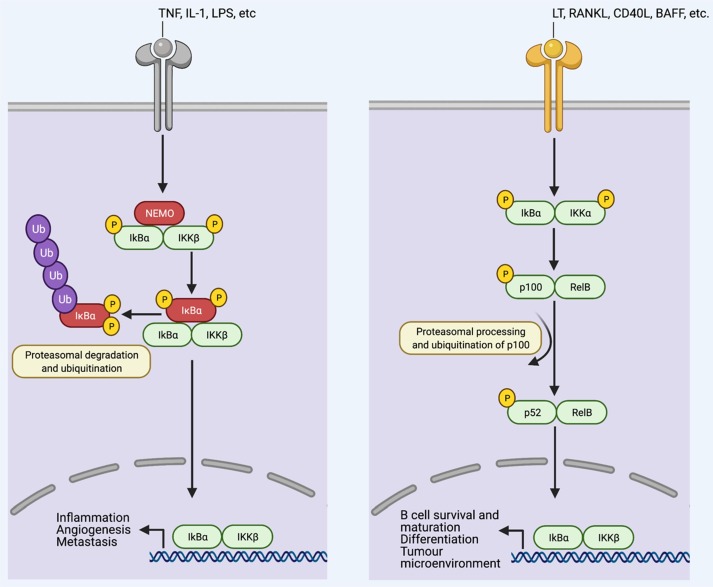
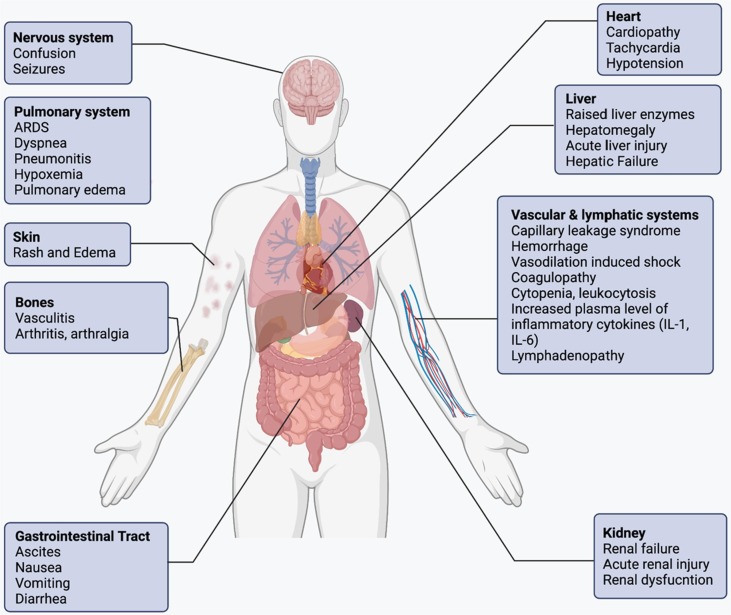
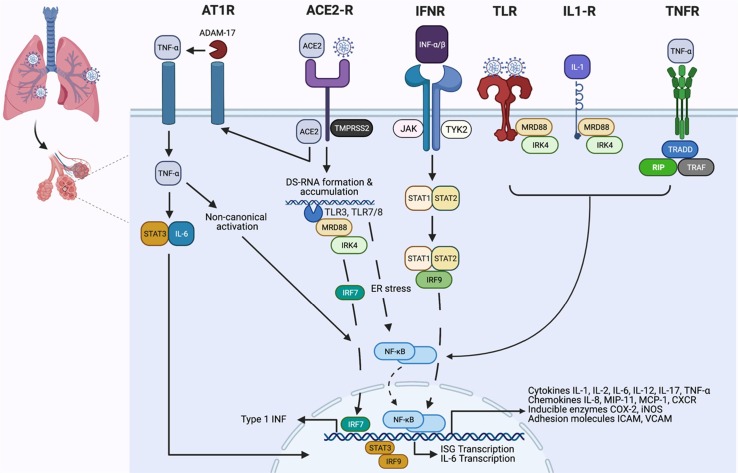
The coronavirus disease (COVID-19) has once again reminded us of the significance of host immune response and consequential havocs of the immune dysregulation. The severe acute respiratory syndrome coronavirus-2 (SARS-CoV-2) inflicts severe complications to the infected host, including cough, dyspnoea, fever, septic shock, acute respiratory distress syndrome (ARDs), and multiple organ failure. These manifestations are the consequence of the dysregulated immune system, which gives rise to excessive and unattended production of pro-inflammatory mediators. Elevated circulatory cytokine and chemokine levels are accompanied by spontaneous haemorrhage, thrombocytopenia and systemic inflammation, which are the cardinal features of life-threatening cytokine storm syndrome in advanced COVID-19 diseases. Coronavirus hijacked NF-kappa B (NF-κB) is responsible for upregulating the expressions of inflammatory cytokine, chemokine, alarmins and inducible enzymes, which paves the pathway for cytokine storm. Given the scenario, the systemic approach of simultaneous inhibition of NF-κB offers an attractive therapeutic intervention. Targeted therapies with proteasome inhibitor (VL-01, bortezomib, carfilzomib and ixazomib), bruton tyrosine kinase inhibitor (acalabrutinib), nucleotide analogue (remdesivir), TNF-α monoclonal antibodies (infliximab and adalimumab), N-acetylcysteine and corticosteroids (dexamethasone), focusing the NF-κB inhibition have demonstrated effectiveness in terms of the significant decrease in morbidity and mortality in severe COVID-19 patients. Hence, this review highlights the activation, signal transduction and cross-talk of NF-κB with regard to cytokine storm in COVID-19. Moreover, the development of therapeutic strategies based on NF-κB inhibition are also discussed herein.
新型冠状病毒病(COVID-19)再次提醒我们宿主免疫反应的重要性及其免疫失调的后果。严重急性呼吸综合征冠状病毒 2(SARS-CoV-2)使感染宿主产生严重并发症,包括咳嗽、呼吸困难、发热、感染性休克、急性呼吸窘迫综合征(ARDS)和多器官衰竭。这些表现是失调的免疫系统的结果,导致过度和未受控制的促炎介质产生。循环细胞因子和趋化因子水平升高伴随着自发性出血、血小板减少和全身炎症,这是 COVID-19 疾病晚期危及生命的细胞因子风暴综合征的主要特征。冠状病毒劫持 NF-κB(NF-κB)负责上调炎症细胞因子、趋化因子、警报素和诱导酶的表达,为细胞因子风暴铺平了道路。鉴于这种情况,同时抑制 NF-κB 的系统方法提供了一种有吸引力的治疗干预。蛋白酶体抑制剂(VL-01、硼替佐米、卡非佐米和伊沙佐米)、布鲁顿酪氨酸激酶抑制剂(阿卡鲁替尼)、核苷酸类似物(瑞德西韦)、TNF-α 单克隆抗体(英夫利昔单抗和阿达木单抗)、N-乙酰半胱氨酸和皮质类固醇(地塞米松)的靶向治疗,针对 NF-κB 的抑制在降低严重 COVID-19 患者的发病率和死亡率方面已证明有效。因此,本综述强调了 NF-κB 在 COVID-19 细胞因子风暴中的激活、信号转导和串扰。此外,本文还讨论了基于 NF-κB 抑制的治疗策略的发展。