Department of Infectious Diseases, University of Georgia, Athens, GA, United States.
Department of Cellular Biology, University of Georgia, Athens, GA, United States.
Front Immunol. 2021 Oct 7;12:738490. doi: 10.3389/fimmu.2021.738490. eCollection 2021.
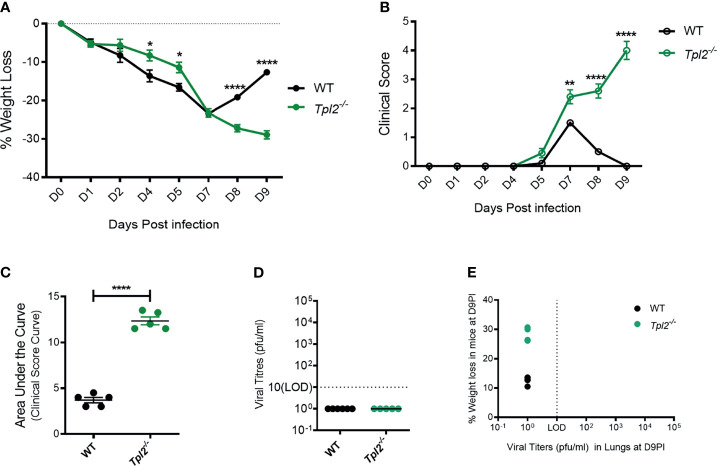
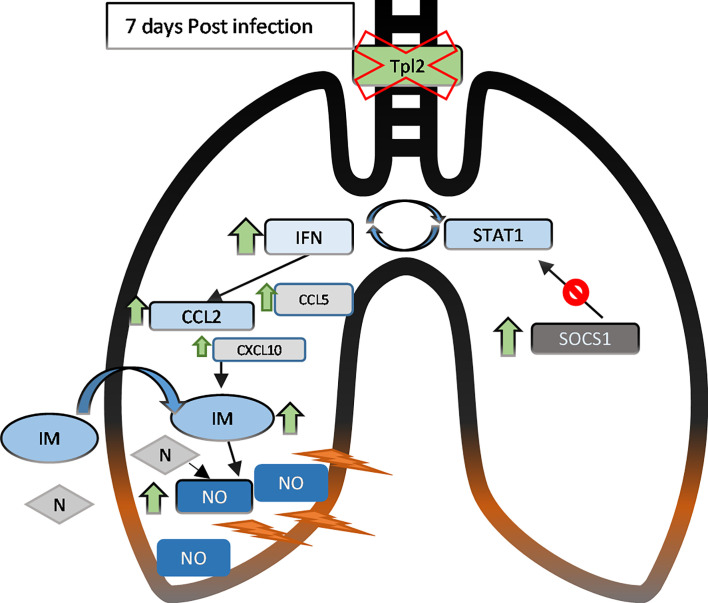
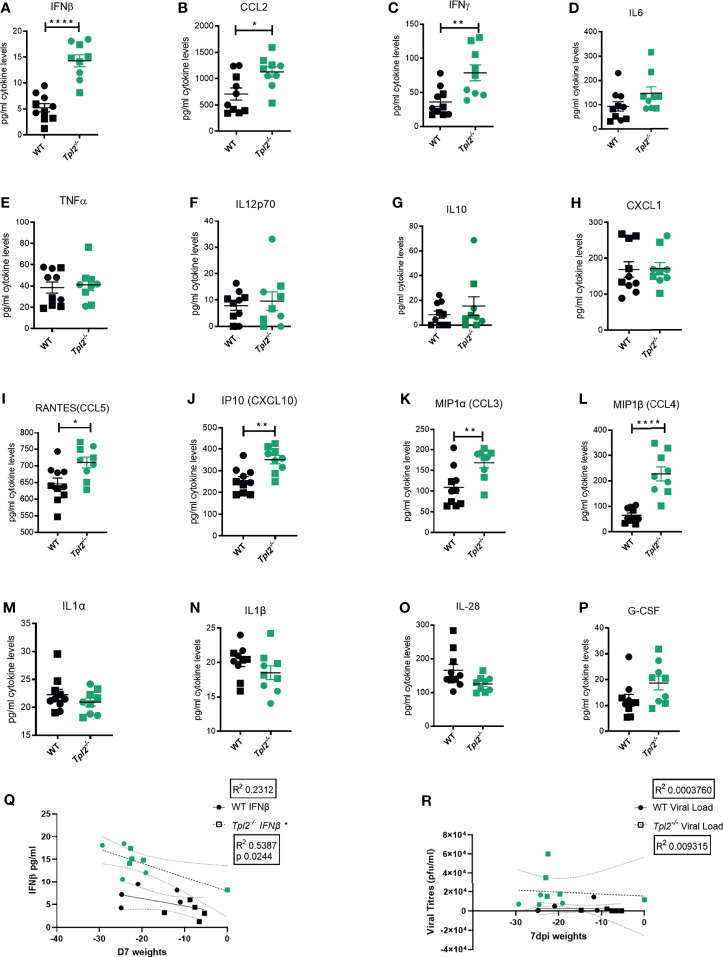
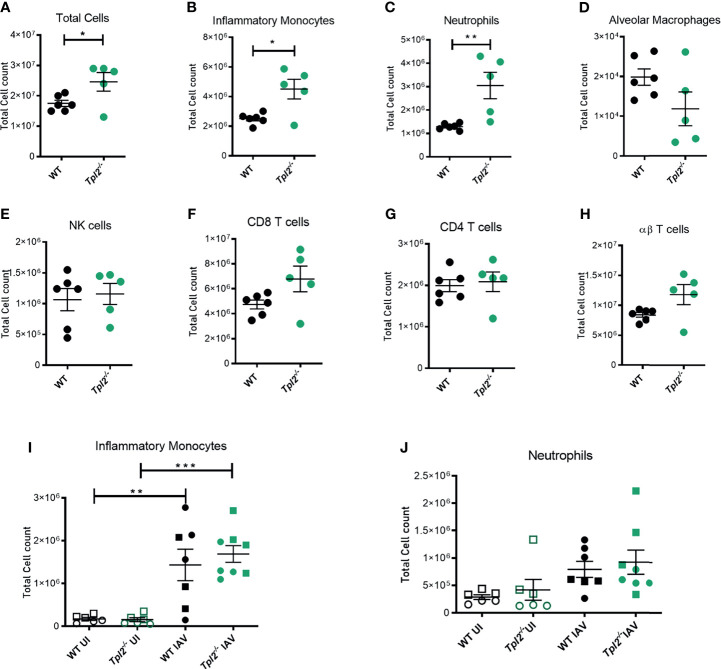
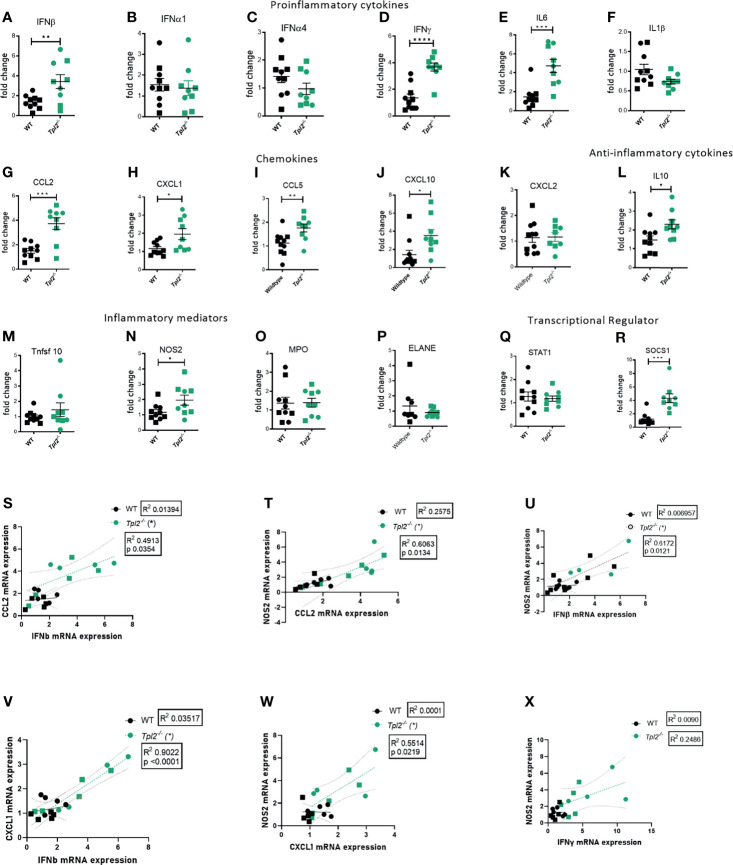
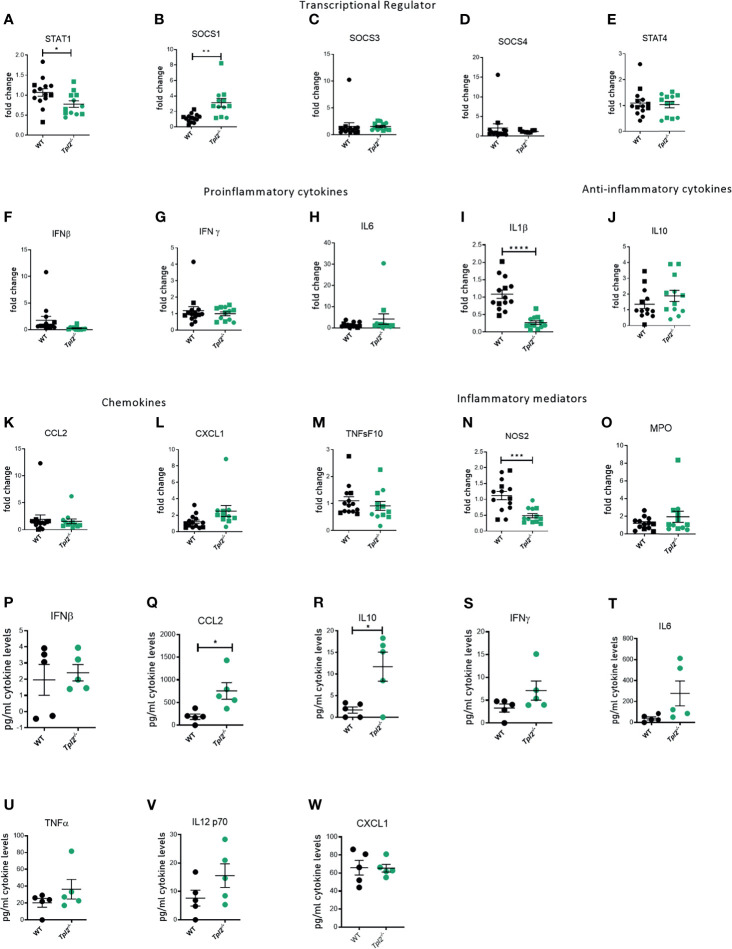
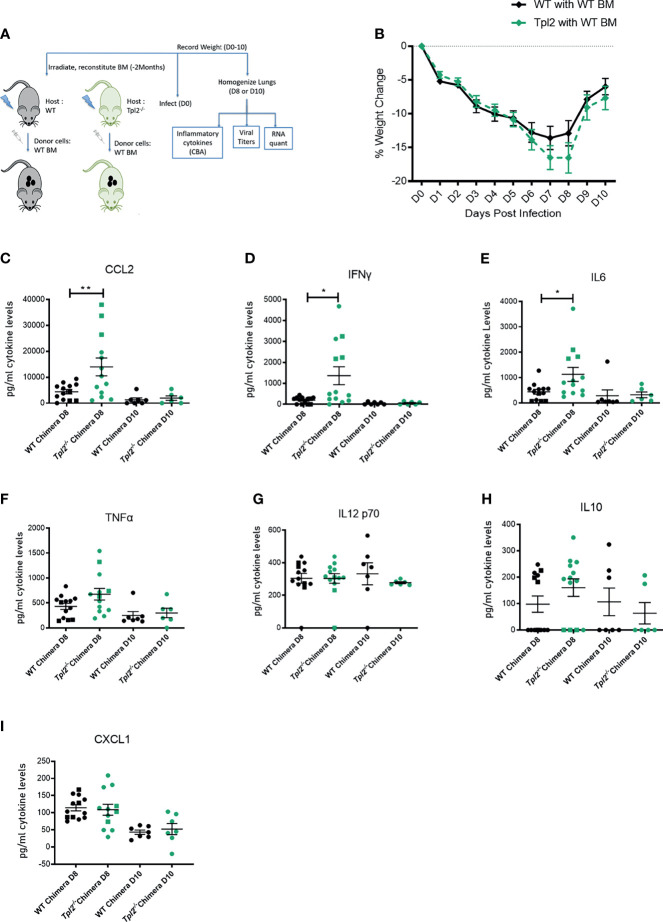
Tumor progression locus 2 (Tpl2) is a serine-threonine kinase known to promote inflammation in response to various pathogen-associated molecular patterns (PAMPs), inflammatory cytokines and G-protein-coupled receptors and consequently aids in host resistance to pathogens. We have recently shown that mice succumb to infection with a low-pathogenicity strain of influenza (x31, H3N2) by an unknown mechanism. In this study, we sought to characterize the cytokine and immune cell profile of influenza-infected mice to gain insight into its host protective effects. Although mice display modestly impaired viral control, no virus was observed in the lungs of mice on the day of peak morbidity and mortality suggesting that morbidity is not due to virus cytopathic effects but rather to an overactive antiviral immune response. Indeed, increased levels of interferon-β (IFN-β), the IFN-inducible monocyte chemoattractant protein-1 (MCP-1, CCL2), Macrophage inflammatory protein 1 alpha (MIP-1α; CCL3), MIP-1β (CCL4), RANTES (CCL5), IP-10 (CXCL10) and Interferon-γ (IFN-γ) was observed in the lungs of influenza-infected mice at 7 days post infection (dpi). Elevated cytokine and chemokines were accompanied by increased infiltration of the lungs with inflammatory monocytes and neutrophils. Additionally, we noted that increased IFN-β correlated with increased CCL2, CXCL1 and nitric oxide synthase (NOS2) expression in the lungs, which has been associated with severe influenza infections. Bone marrow chimeras with Tpl2 ablation localized to radioresistant cells confirmed that Tpl2 functions, at least in part, within radioresistant cells to limit pro-inflammatory response to viral infection. Collectively, this study suggests that Tpl2 tempers inflammation during influenza infection by constraining the production of interferons and chemokines which are known to promote the recruitment of detrimental inflammatory monocytes and neutrophils.
肿瘤进展基因座 2(Tpl2)是一种丝氨酸-苏氨酸激酶,已知可促进各种病原体相关分子模式(PAMPs)、炎性细胞因子和 G 蛋白偶联受体的炎症反应,从而有助于宿主抵抗病原体。我们最近发现, 小鼠通过未知机制感染低致病性流感(x31,H3N2)后会死亡。在这项研究中,我们试图描述感染流感的 小鼠的细胞因子和免疫细胞特征,以深入了解其宿主保护作用。尽管 小鼠显示出轻微的病毒控制受损,但在发病和死亡高峰期的 小鼠肺部未观察到病毒,这表明发病不是由于病毒细胞病变作用,而是由于过度活跃的抗病毒免疫反应。事实上,在感染流感 7 天后, 小鼠肺部的干扰素-β(IFN-β)、IFN 诱导的单核细胞趋化蛋白-1(MCP-1,CCL2)、巨噬细胞炎性蛋白 1α(MIP-1α;CCL3)、MIP-1β(CCL4)、RANTES(CCL5)、IP-10(CXCL10)和干扰素-γ(IFN-γ)水平升高。在流感感染的 小鼠肺部,细胞因子和趋化因子的升高伴随着炎症性单核细胞和中性粒细胞的浸润增加。此外,我们注意到,IFN-β的增加与肺部 CCL2、CXCL1 和一氧化氮合酶(NOS2)表达的增加相关,这与严重流感感染有关。骨髓嵌合体中 Tpl2 缺失定位于辐射抗性细胞,证实 Tpl2 功能至少部分在辐射抗性细胞中发挥作用,以限制病毒感染引起的促炎反应。总的来说,这项研究表明,Tpl2 通过限制干扰素和趋化因子的产生来调节流感感染期间的炎症反应,已知这些物质可促进有害炎症性单核细胞和中性粒细胞的募集。