Department of Molecular Pharmacology, Graduate School of Medical Sciences, Kitasato University, Sagamihara, Japan.
Department of Pharmacology, Kitasato University School of Medicine, Sagamihara, Japan.
Front Immunol. 2021 Oct 6;12:754106. doi: 10.3389/fimmu.2021.754106. eCollection 2021.
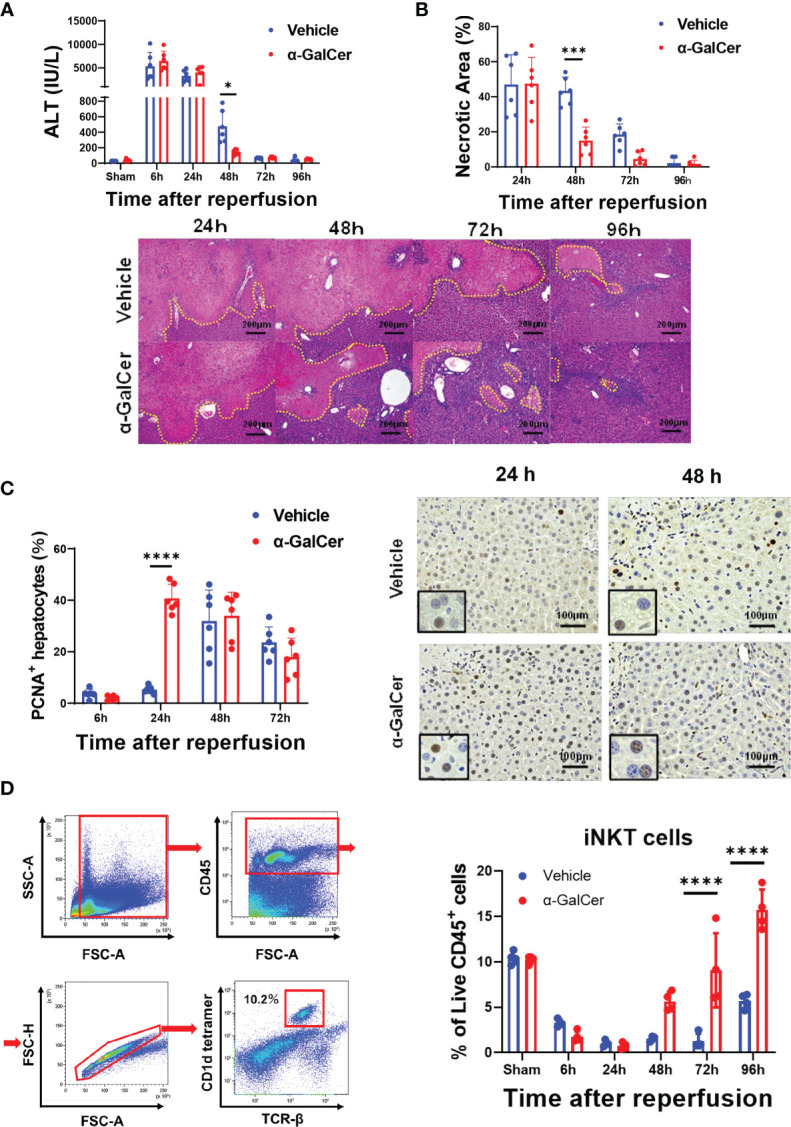
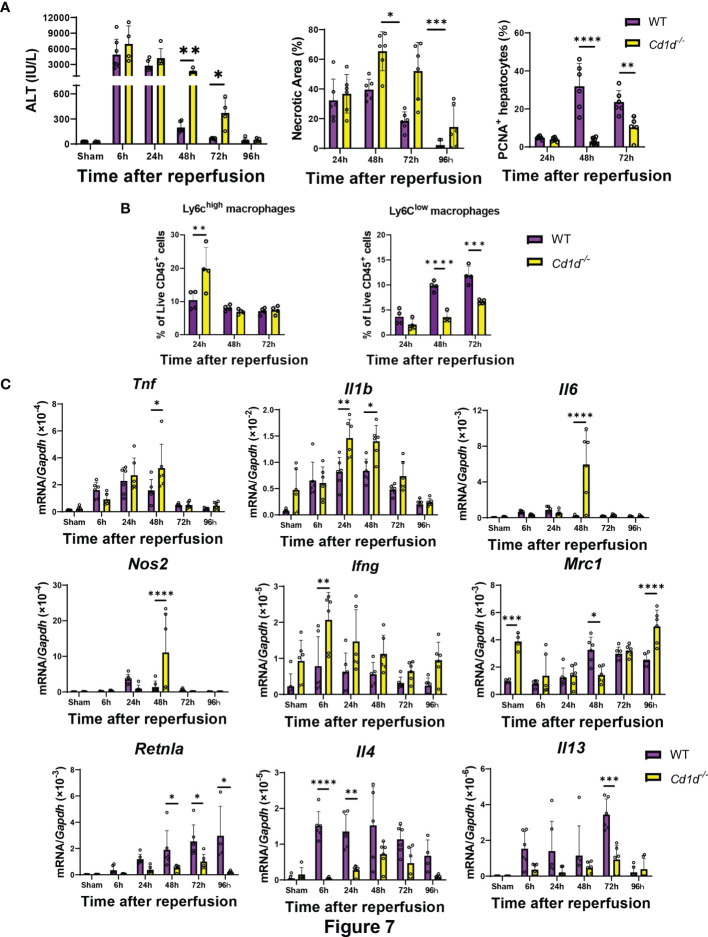
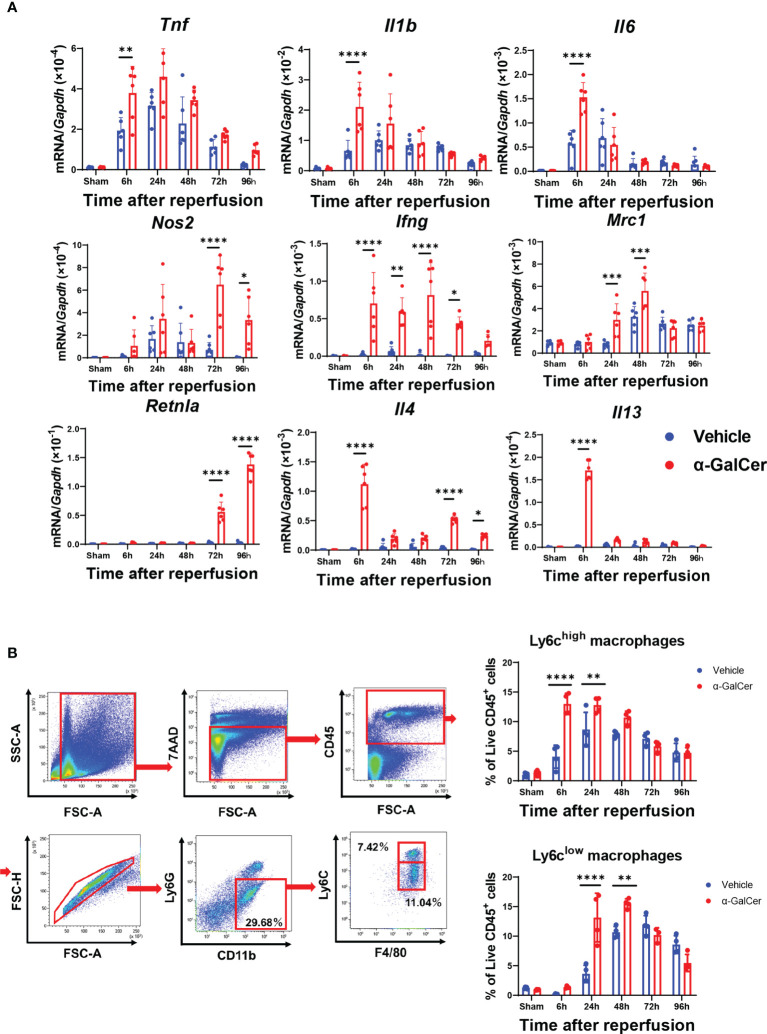
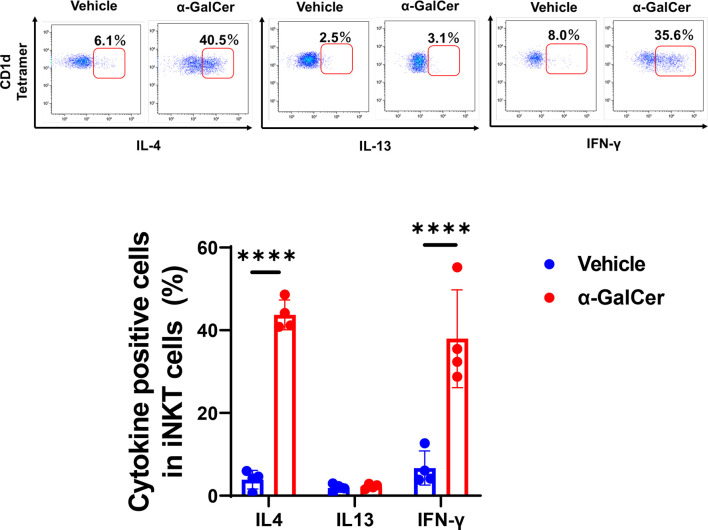
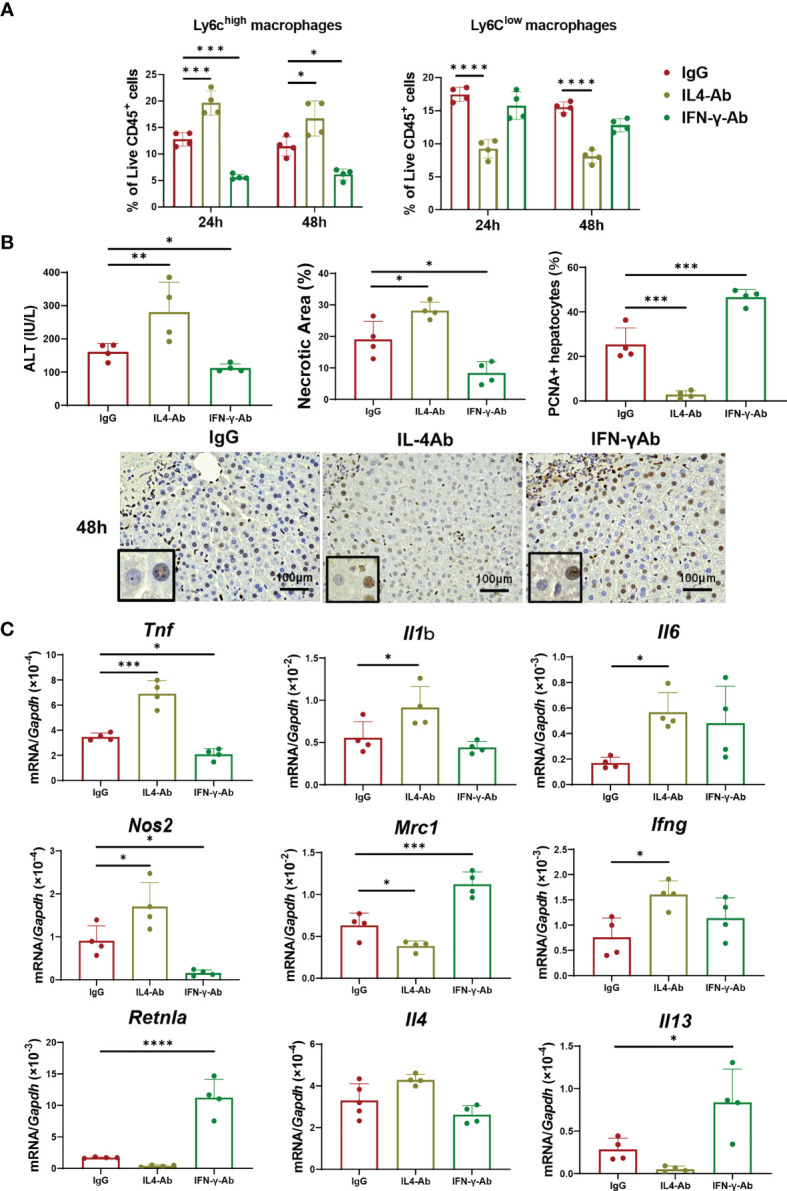
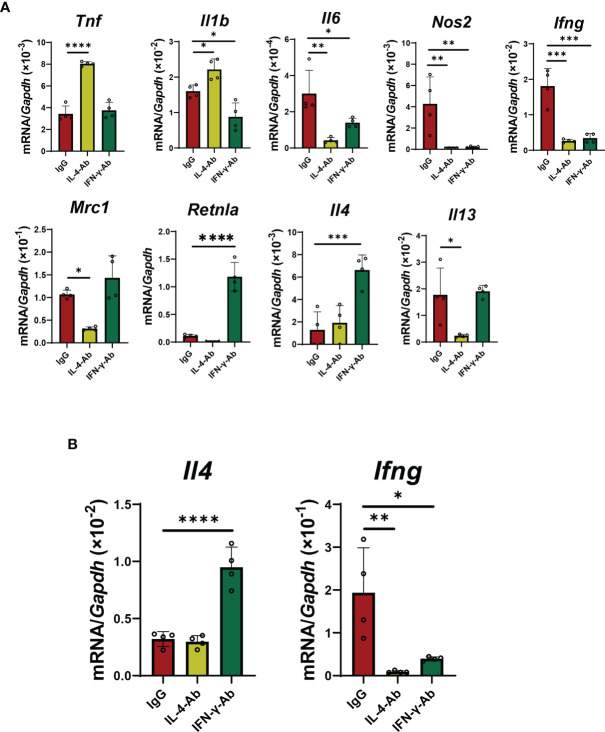
Macrophage polarization is critical for liver tissue repair following acute liver injury. However, the underlying mechanisms of macrophage phenotype switching are not well defined. Invariant natural killer T (iNKT) cells orchestrate tissue inflammation and tissue repair by regulating cytokine production. Herein, we examined whether iNKT cells played an important role in liver repair after hepatic ischemia-reperfusion (I/R) injury by affecting macrophage polarization. To this end, we subjected male C57BL/6 mice to hepatic I/R injury, and mice received an intraperitoneal () injection of α-galactosylceramide (α-GalCer) or vehicle. Compared with that of the vehicle, α-GalCer administration resulted in the promotion of liver repair accompanied by acceleration of macrophage differentiation and by increases in the numbers of Ly6C pro-inflammatory macrophages and Ly6C reparative macrophages. iNKT cells activated with α-GalCer produced interleukin (IL)-4 and interferon (IFN)-γ. Treatment with anti-IL-4 antibodies delayed liver repair, which was associated with an increased number of Ly6C macrophages and a decreased number of Ly6C macrophages. Treatment with anti-IFN-γ antibodies promoted liver repair, associated with reduced the number of Ly6C macrophages, but did not change the number of Ly6C macrophages. Bone marrow-derived macrophages up-regulated the expression of genes related to both a pro-inflammatory and a reparative phenotype when co-cultured with activated iNKT cells. Anti-IL-4 antibodies increased the levels of pro-inflammatory macrophage-related genes and decreased those of reparative macrophage-related genes in cultured macrophages, while anti-IFN-γ antibodies reversed the polarization of macrophages. -deficient mice showed delayed liver repair and suppressed macrophage switching, compared with that in wild-type mice. These results suggest that the activation of iNKT cells by α-GalCer facilitated liver repair after hepatic I/R injury by both IL-4-and IFN-γ-mediated acceleration of macrophage polarization. Therefore, the activation of iNKT cells may represent a therapeutic tool for liver repair after hepatic I/R injury.
巨噬细胞极化对于急性肝损伤后的肝组织修复至关重要。然而,巨噬细胞表型转换的潜在机制尚不清楚。天然免疫细胞固有淋巴细胞(iNKT)通过调节细胞因子产生来协调组织炎症和组织修复。在此,我们通过研究 iNKT 细胞是否通过影响巨噬细胞极化在肝缺血再灌注(I/R)损伤后对肝修复发挥重要作用。为此,我们使雄性 C57BL/6 小鼠发生肝 I/R 损伤,并给小鼠腹腔内注射α-半乳糖神经酰胺(α-GalCer)或对照物。与对照物相比,α-GalCer 给药促进了肝修复,同时加速了巨噬细胞分化,并增加了 Ly6C 促炎巨噬细胞和 Ly6C 修复性巨噬细胞的数量。用 α-GalCer 激活的 iNKT 细胞产生白细胞介素(IL)-4 和干扰素(IFN)-γ。用抗 IL-4 抗体处理会延迟肝修复,这与 Ly6C 巨噬细胞数量增加和 Ly6C 巨噬细胞数量减少有关。用抗 IFN-γ 抗体处理会促进肝修复,与 Ly6C 巨噬细胞数量减少有关,但不改变 Ly6C 巨噬细胞数量。与激活的 iNKT 细胞共培养时,骨髓来源的巨噬细胞上调了与促炎和修复表型相关的基因的表达。抗 IL-4 抗体增加了培养的巨噬细胞中促炎巨噬细胞相关基因的水平,并降低了修复性巨噬细胞相关基因的水平,而抗 IFN-γ 抗体则逆转了巨噬细胞的极化。与野生型小鼠相比,-缺陷小鼠的肝修复延迟,并且抑制了巨噬细胞的转换。这些结果表明,α-GalCer 通过 IL-4 和 IFN-γ 介导的加速巨噬细胞极化激活 iNKT 细胞,促进肝 I/R 损伤后的肝修复。因此,激活 iNKT 细胞可能成为肝 I/R 损伤后肝修复的治疗工具。