Li Chuanyin, Lu Wenli, Yang Liguang, Li Zhengwei, Zhou Xiaoyi, Guo Rong, Wang Junqi, Wu Zhebao, Dong Zhiya, Ning Guang, Shi Yujiang, Gu Yinmin, Chen Peng, Hao Zijian, Han Tianting, Yang Meiqiang, Wang Wei, Huang Xuehui, Li Yixue, Gao Shan, Hu Ronggui
Department of Pediatrics, Ruijin Hospital Affiliated to Shanghai Jiao Tong University School of Medicine, Shanghai 200025, China; State Key Laboratory of Molecular Biology, CAS Center for Excellence in Molecular Cell Institute of Biochemistry and Cell Biology, Chinese Academy of Sciences, Shanghai 200031, China.
University of Chinese Academy of Sciences, Beijing 100049, China.
Natl Sci Rev. 2020 Mar;7(3):671-685. doi: 10.1093/nsr/nwaa023. Epub 2020 Feb 14.
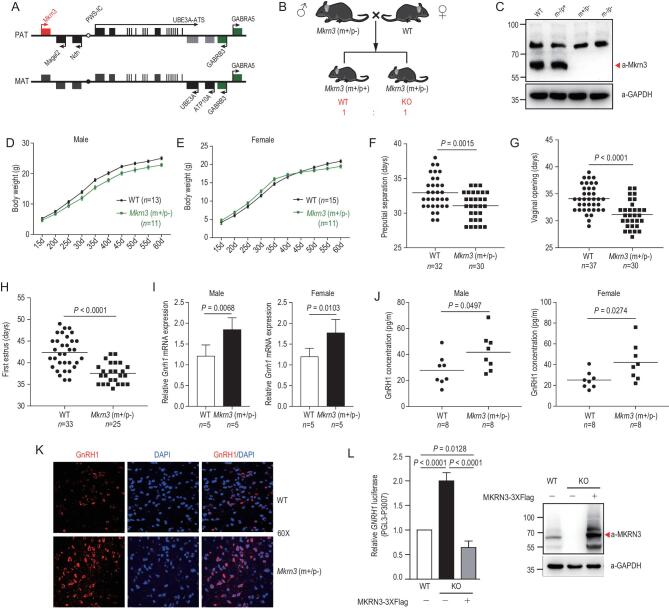
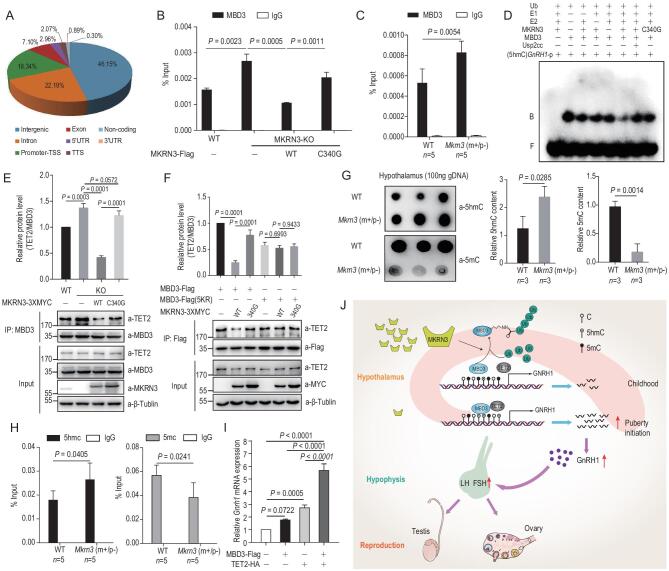
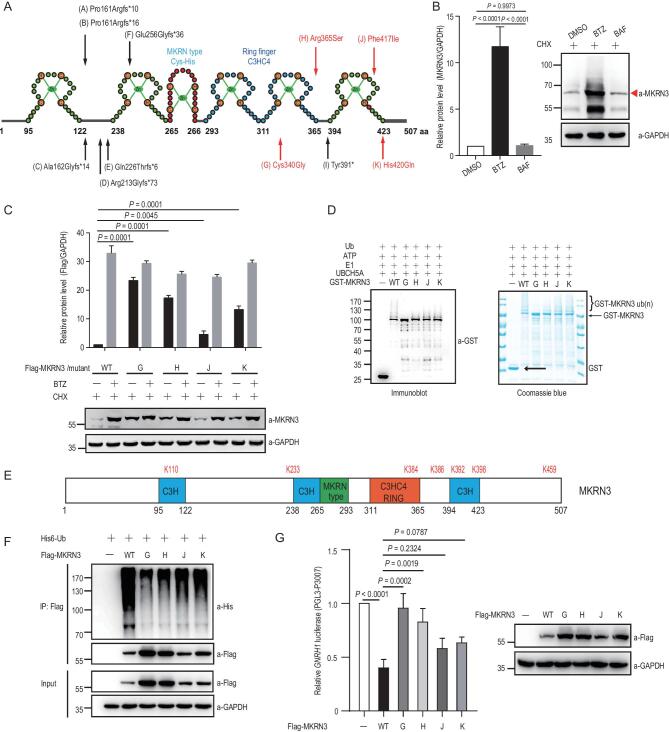
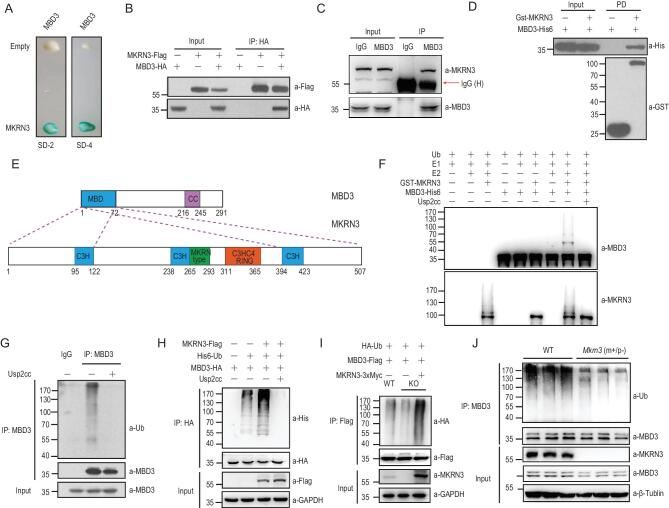
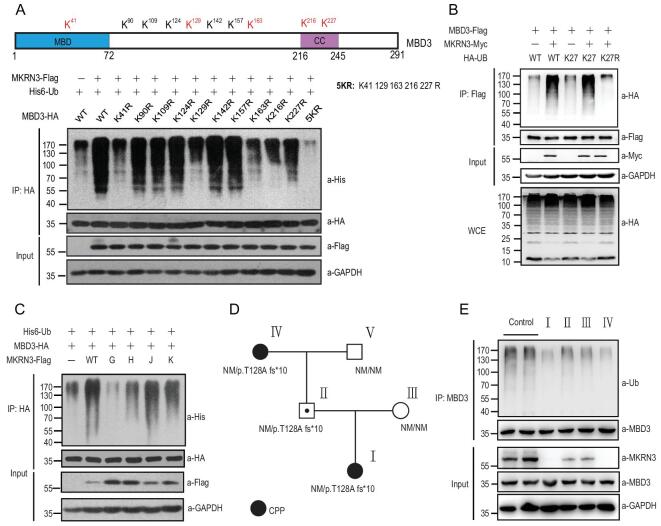
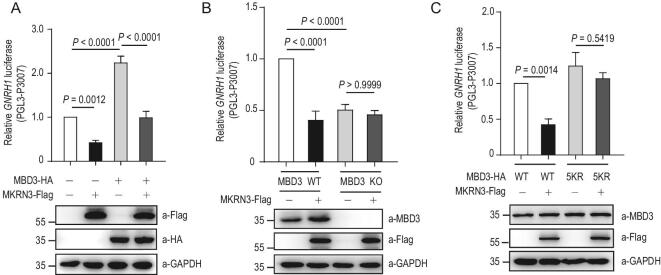
Central precocious puberty (CPP) refers to a human syndrome of early puberty initiation with characteristic increase in hypothalamic production and release of gonadotropin-releasing hormone (GnRH). Previously, loss-of-function mutations in human , encoding a putative E3 ubiquitin ligase, were found to contribute to about 30% of cases of familial CPP. MKRN3 was thereby suggested to serve as a 'brake' of mammalian puberty onset, but the underlying mechanisms remain as yet unknown. Here, we report that genetic ablation of did accelerate mouse puberty onset with increased production of hypothalamic GnRH1. MKRN3 interacts with and ubiquitinates MBD3, which epigenetically silences through disrupting the MBD3 binding to the promoter and recruitment of DNA demethylase TET2. Our findings have thus delineated a molecular mechanism through which the MKRN3-MBD3 axis controls the epigenetic switch in the onset of mammalian puberty.
中枢性性早熟(CPP)是指一种人类青春期过早启动的综合征,其特征是下丘脑促性腺激素释放激素(GnRH)的产生和释放增加。此前,发现编码一种假定的E3泛素连接酶的人类基因功能丧失突变导致约30%的家族性CPP病例。因此,MKRN3被认为是哺乳动物青春期开始的“刹车”,但其潜在机制仍不清楚。在这里,我们报告说,基因敲除确实加速了小鼠青春期的开始,同时下丘脑GnRH1的产生增加。MKRN3与MBD3相互作用并使其泛素化,MBD3通过破坏MBD3与启动子的结合以及招募DNA去甲基化酶TET2来表观遗传沉默基因。因此,我们的研究结果描绘了一种分子机制,通过该机制MKRN3-MBD3轴控制哺乳动物青春期开始时的表观遗传开关。