Yoshimura Hidekane, Nishio Shin-Ya, Usami Shin-Ichi
Department of Otorhinolaryngology Shinshu University School of Medicine Matsumoto Nagano Japan.
Department of Hearing Implant Sciences Shinshu University School of Medicine Matsumoto Nagano Japan.
Laryngoscope Investig Otolaryngol. 2021 Aug 10;6(5):958-967. doi: 10.1002/lio2.633. eCollection 2021 Oct.
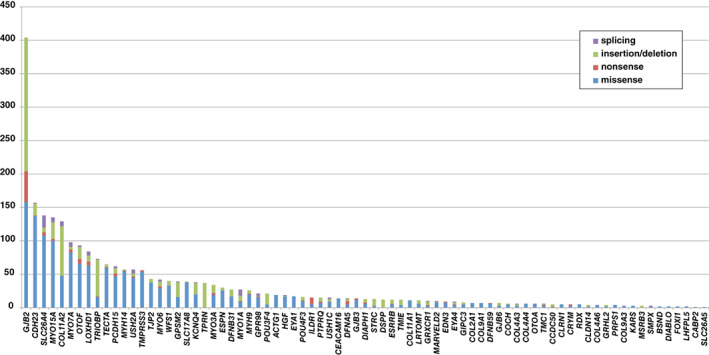
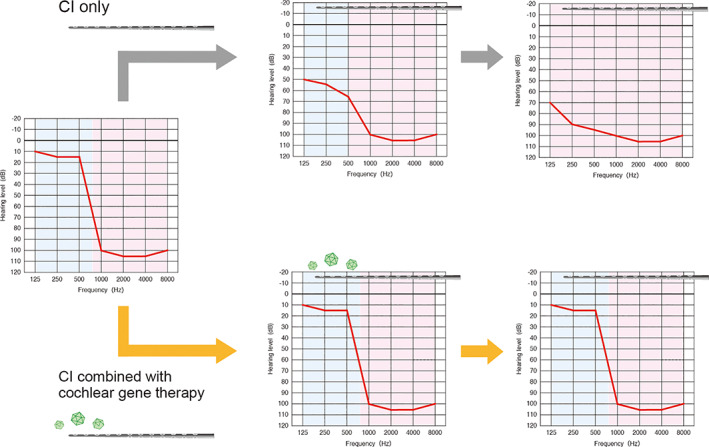
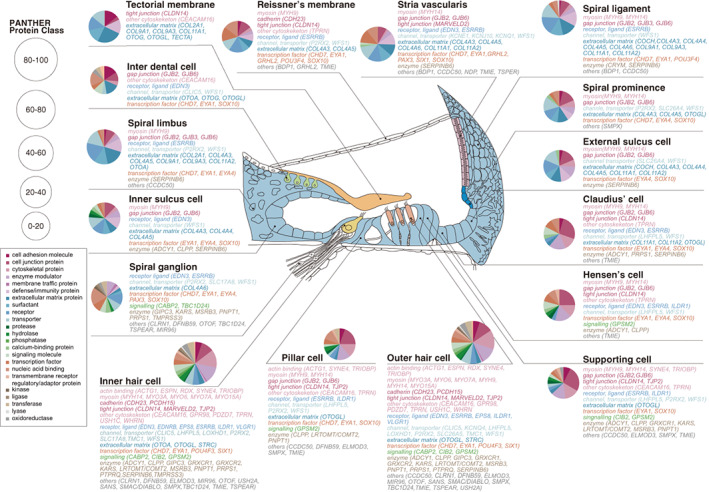
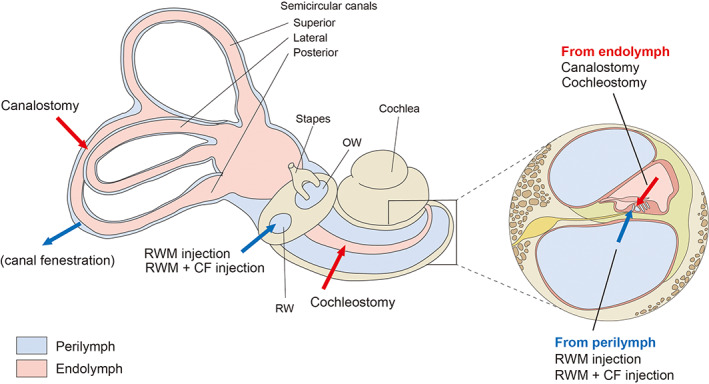
A number of genes are reportedly responsible for hereditary hearing loss, which accounts for over 50% of all congenital hearing loss cases. Recent advances in genetic testing have enabled the identification of pathogenic variants in many cases, and systems have been developed to provide personalized treatment based on etiology. Gene therapy is expected to become an unprecedented curative treatment. Several reports have demonstrated the successful use of cochlear gene therapy to restore auditory function in mouse models of genetic deafness; however, many hurdles remain to its clinical application in humans. Herein, we focus on the frequency of deafness genes in patients with congenital and late-onset progressive hearing loss and discuss the following points regarding which genes need to be targeted to efficiently proceed with clinical application: (a) which cells' genes are expressed within the cochlea, (b) whether gene transfer to the targeted cells is possible using vectors such as adeno-associated virus, (c) what phenotype of hearing loss in patients is exhibited, and (d) whether mouse models exist to verify the effectiveness of treatment. Moreover, at the start of clinical application, gene therapy in combination with cochlear implantation may be useful for cases of progressive hearing loss.
据报道,许多基因与遗传性听力损失有关,遗传性听力损失占所有先天性听力损失病例的50%以上。基因检测的最新进展使得在许多病例中能够识别致病变体,并且已经开发出基于病因提供个性化治疗的系统。基因治疗有望成为一种前所未有的治愈性疗法。一些报告已经证明在遗传性耳聋小鼠模型中成功使用耳蜗基因治疗来恢复听觉功能;然而,其在人类临床应用中仍存在许多障碍。在此,我们关注先天性和迟发性进行性听力损失患者中耳聋基因的频率,并讨论关于哪些基因需要作为靶点以有效推进临床应用的以下几点:(a)耳蜗内哪些细胞的基因表达,(b)使用腺相关病毒等载体是否可能将基因转移到靶细胞,(c)患者表现出何种听力损失表型,以及(d)是否存在用于验证治疗效果的小鼠模型。此外,在临床应用开始时,基因治疗与人工耳蜗植入相结合可能对进行性听力损失病例有用。