Jung Won Taek, Jang Hyun-Seok, Jeon Jun Woo, Kim Byung Hoon
Department of Physics, Incheon National University, Incheon 22012, Republic of Korea.
Intelligent Sensor Convergence Research Center, Incheon National University, Incheon 22012, Republic of Korea.
ACS Omega. 2021 Oct 6;6(41):27080-27088. doi: 10.1021/acsomega.1c03658. eCollection 2021 Oct 19.
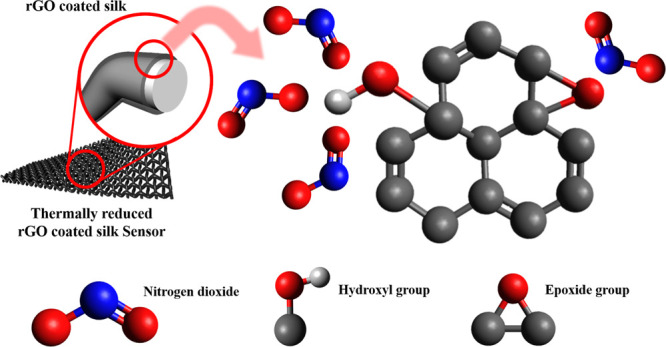
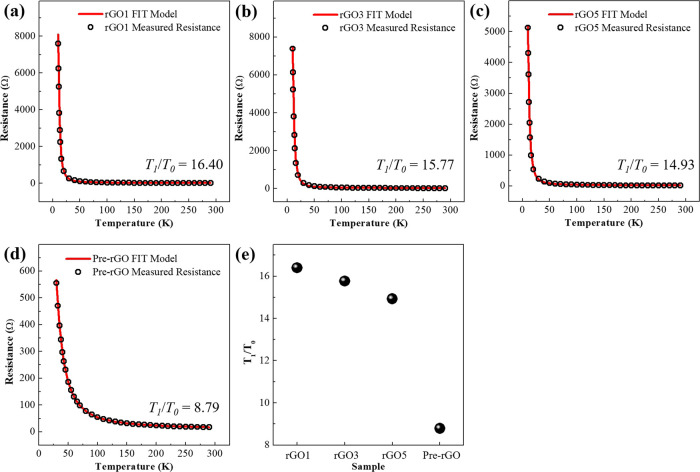
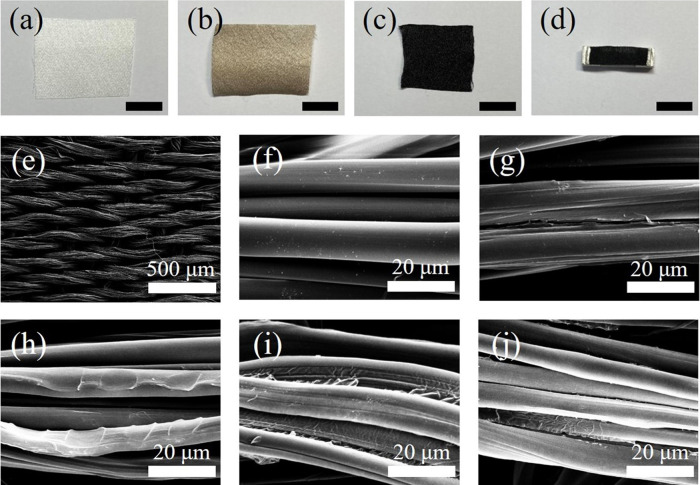
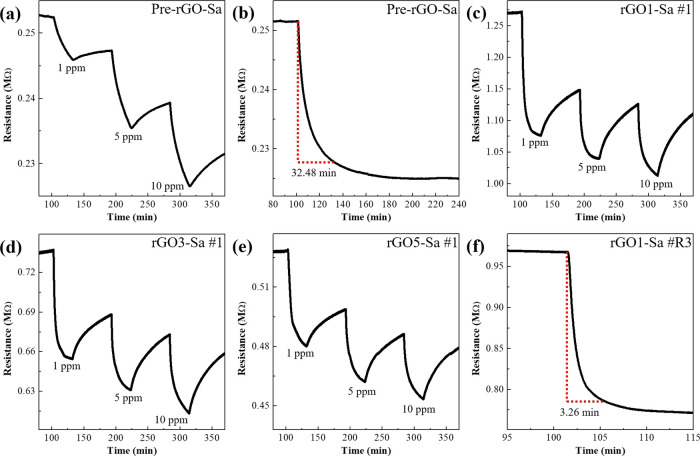
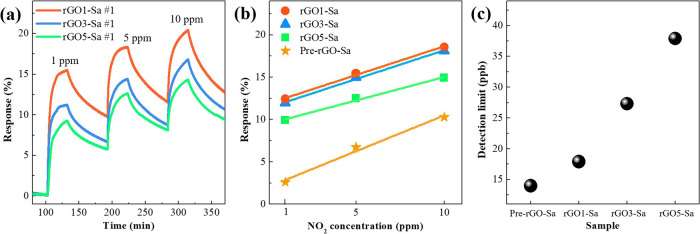
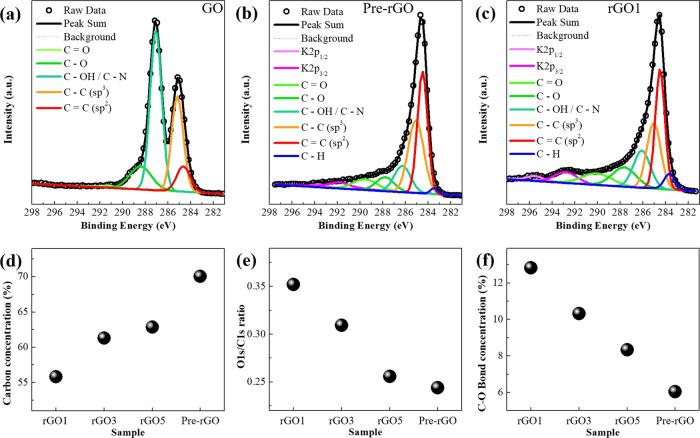
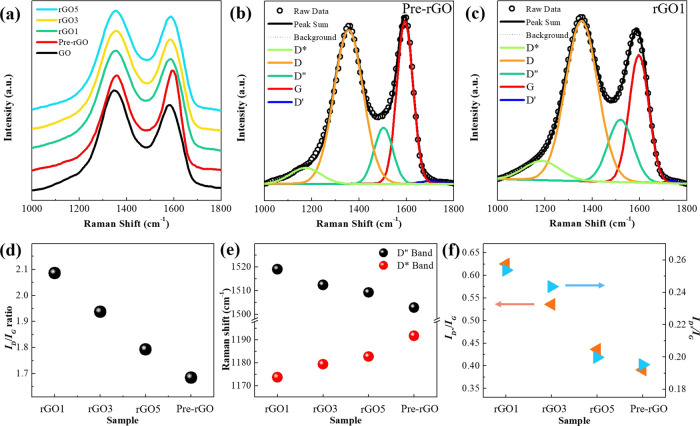
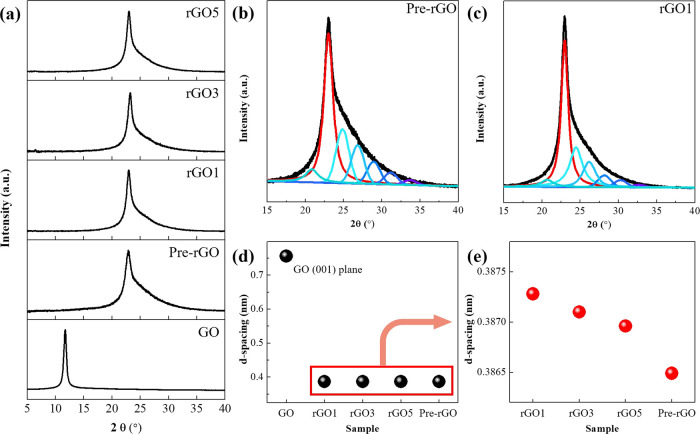
An electronic textile-based NO gas sensor was fabricated using commercial silk and graphene oxide (GO). It showed a fast response time and excellent sensing performance, which was simply accomplished by modifying the heat-treatment process. The heat treatment was conducted at 400 °C and different heating rates of 1, 3, and 5 °C/min. Compared with our previous research, the response time significantly decreased, from 32.5 to 3.26 min, and we found that the highest response was obtained with the sensor treated at a heating rate of 1 °C/min. To find the reason for this enhanced sensing performance, the morphology, structure, and chemical composition of the reduced GO (rGO) were investigated, depending on the thermal treatment process, using scanning electron microscopy, X-ray diffraction, Raman spectroscopy, and X-ray photoelectron spectroscopy. We also measured the temperature-dependent resistance of rGO, which was well described by the fluctuation-induced tunneling (FIT) model. These results revealed that the rGO thermally treated with 1 °C/min of heating rate had the largest amount of oxygen groups. This means that the oxygen functional groups play an important role in NO gas-sensing performance.
采用商用丝绸和氧化石墨烯(GO)制备了一种基于电子纺织品的NO气体传感器。该传感器响应时间快,传感性能优异,通过改进热处理工艺即可简单实现。热处理在400℃下进行,加热速率分别为1、3和5℃/min。与我们之前的研究相比,响应时间显著缩短,从32.5分钟降至3.26分钟,并且我们发现以1℃/min加热速率处理的传感器响应最高。为探究这种增强的传感性能的原因,利用扫描电子显微镜、X射线衍射、拉曼光谱和X射线光电子能谱,根据热处理工艺研究了还原氧化石墨烯(rGO)的形貌、结构和化学成分。我们还测量了rGO随温度变化的电阻,波动诱导隧穿(FIT)模型很好地描述了这一特性。这些结果表明,以1℃/min加热速率进行热处理的rGO具有最多的氧基团。这意味着氧官能团在NO气体传感性能中起重要作用。