State Key Laboratory of Virology, College of Life Sciences, Wuhan University, Wuhan 430072, China.
Guangdong Longfan Biological Science and Technology Company, Shunde District, Foshan 528315, China.
Viruses. 2021 Oct 8;13(10):2029. doi: 10.3390/v13102029.
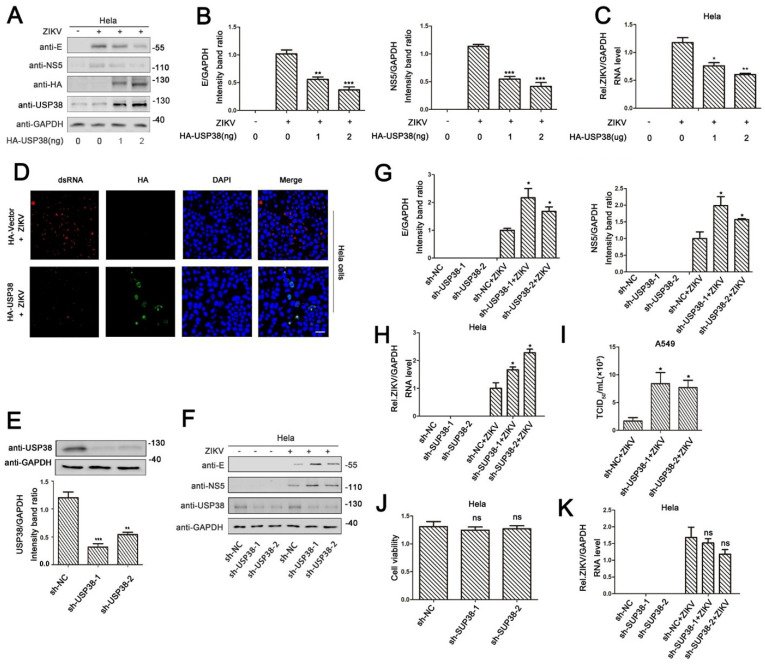
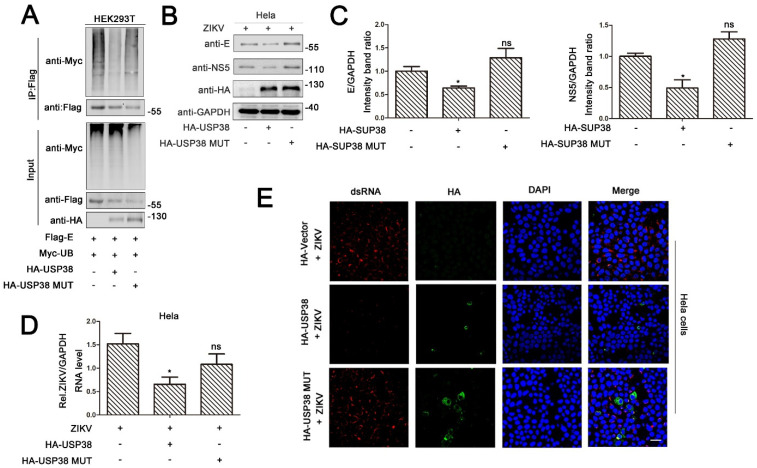
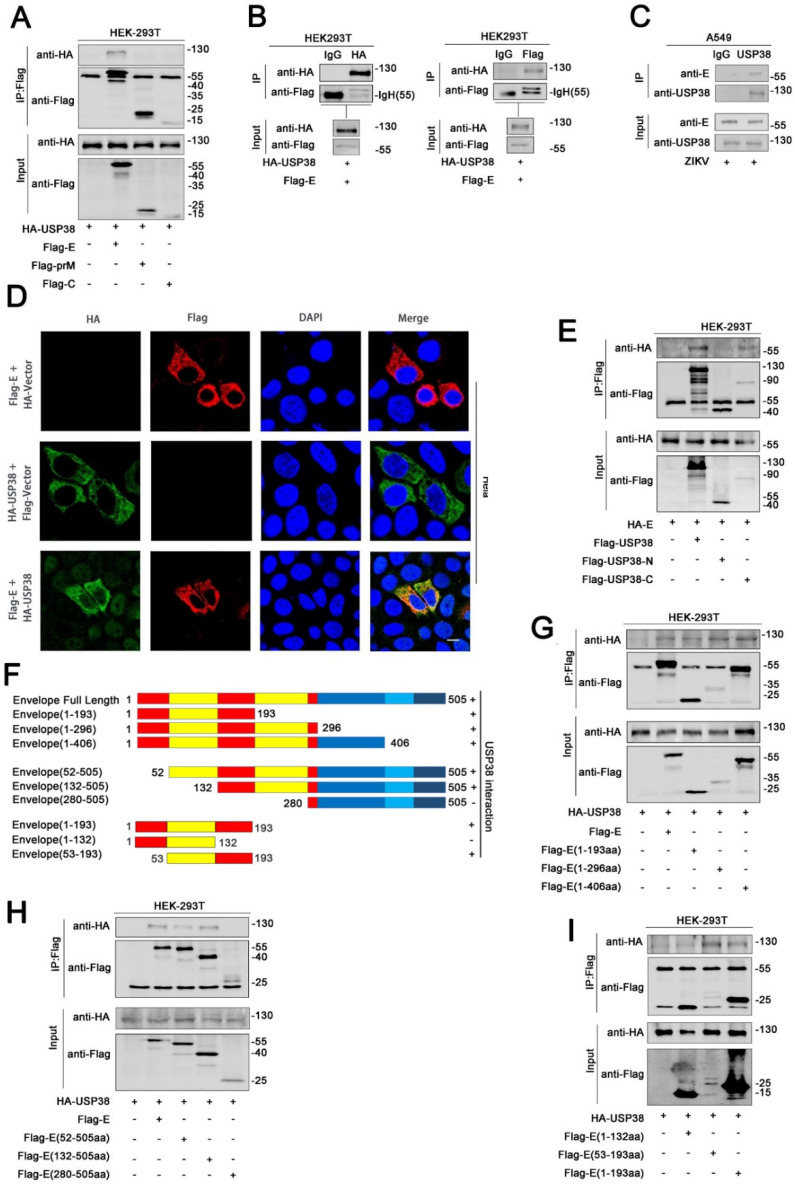
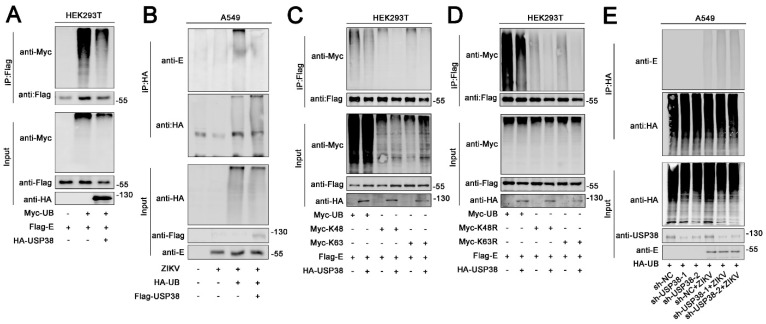
Zika virus (ZIKV) is a mosquito-borne flavivirus, and its infection may cause severe neurodegenerative diseases. The outbreak of ZIKV in 2015 in South America has caused severe human congenital and neurologic disorders. Thus, it is vitally important to determine the inner mechanism of ZIKV infection. Here, our data suggested that the ubiquitin-specific peptidase 38 (USP38) played an important role in host resistance to ZIKV infection, during which ZIKV infection did not affect USP38 expression. Mechanistically, USP38 bound to the ZIKV envelope (E) protein through its C-terminal domain and attenuated its K48-linked and K63-linked polyubiquitination, thereby repressed the infection of ZIKV. In addition, we found that the deubiquitinase activity of USP38 was essential to inhibit ZIKV infection, and the mutant that lacked the deubiquitinase activity of USP38 lost the ability to inhibit infection. In conclusion, we found a novel host protein USP38 against ZIKV infection, and this may represent a potential therapeutic target for the treatment and prevention of ZIKV infection.
Zika 病毒(ZIKV)是一种蚊媒 flavivirus,其感染可能导致严重的神经退行性疾病。2015 年在南美洲爆发的 ZIKV 导致了严重的人类先天性和神经紊乱。因此,确定 ZIKV 感染的内在机制至关重要。在这里,我们的数据表明,泛素特异性肽酶 38(USP38)在宿主抵抗 ZIKV 感染中发挥了重要作用,在此过程中,ZIKV 感染不会影响 USP38 的表达。在机制上,USP38 通过其 C 末端结构域与 ZIKV 包膜(E)蛋白结合,并减弱其 K48 连接和 K63 连接的多泛素化,从而抑制 ZIKV 的感染。此外,我们发现 USP38 的去泛素化酶活性对于抑制 ZIKV 感染至关重要,并且缺乏 USP38 的去泛素化酶活性的突变体丧失了抑制感染的能力。总之,我们发现了一种针对 ZIKV 感染的新型宿主蛋白 USP38,这可能代表了治疗和预防 ZIKV 感染的潜在治疗靶点。