Department of Biological Sciences, University of Toronto, 1265 Military Trail, Toronto, ON, M1C 1A4, Canada.
Department of Cell and Systems Biology, University of Toronto, 25 Harbord Street, Toronto, ON, M5S 3G5, Canada.
BMC Plant Biol. 2021 Oct 25;21(1):486. doi: 10.1186/s12870-021-03234-9.
The 26S proteasome, canonically composed of multi-subunit 19S regulatory (RP) and 20S core (CP) particles, is crucial for cellular proteostasis. Proteasomes are re-modeled, activated, or re-localized and this regulation is critical for plants in response to environmental stresses. The proteasome holoenzyme assembly and dissociation are therefore highly dynamic in vivo. However, the stoichiometric changes of the plant proteasomes and how proteasome associated chaperones vary under common abiotic stresses have not been systematically studied.
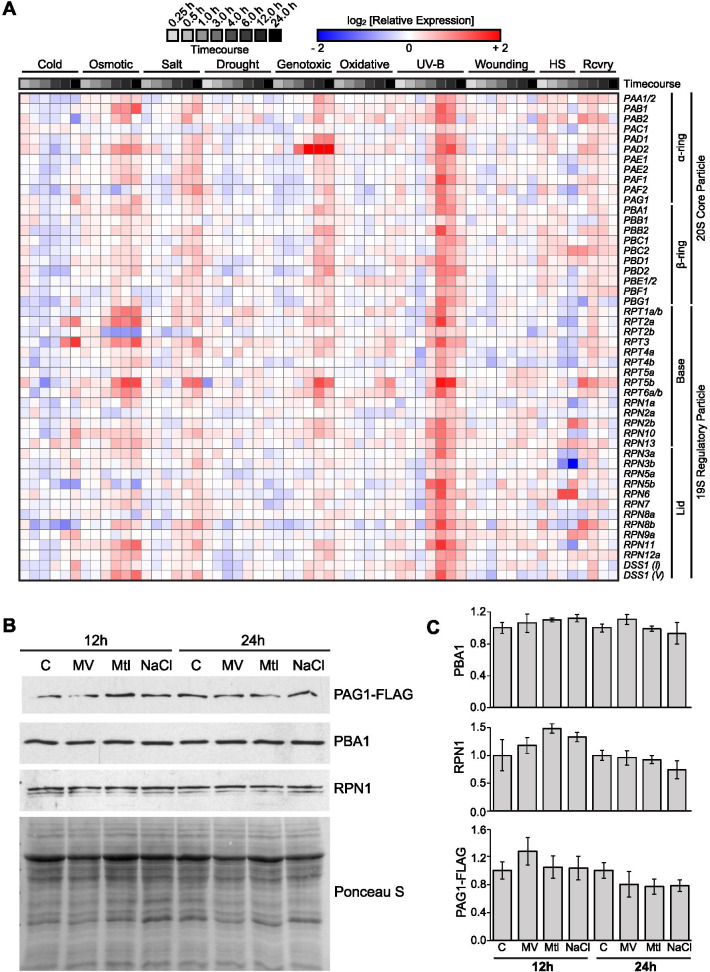
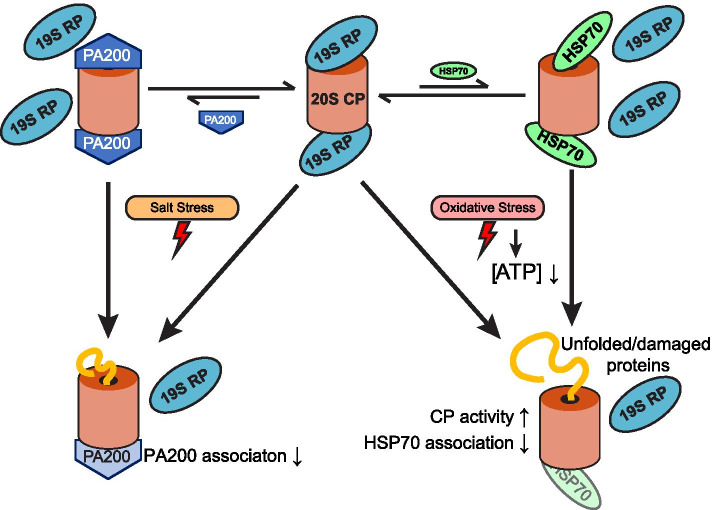
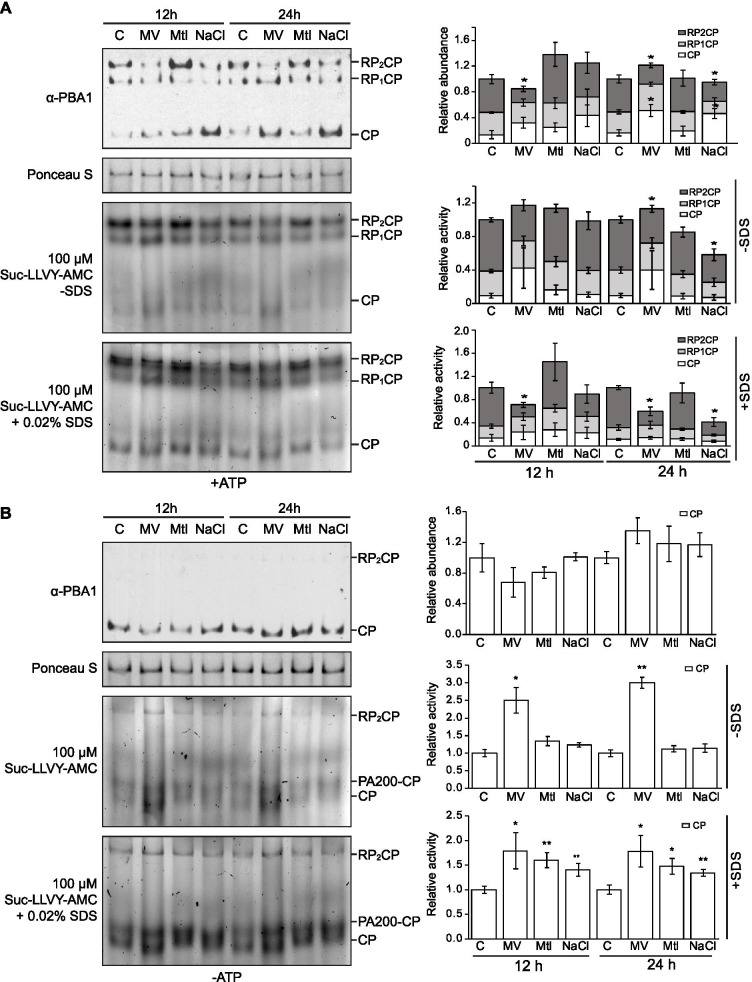
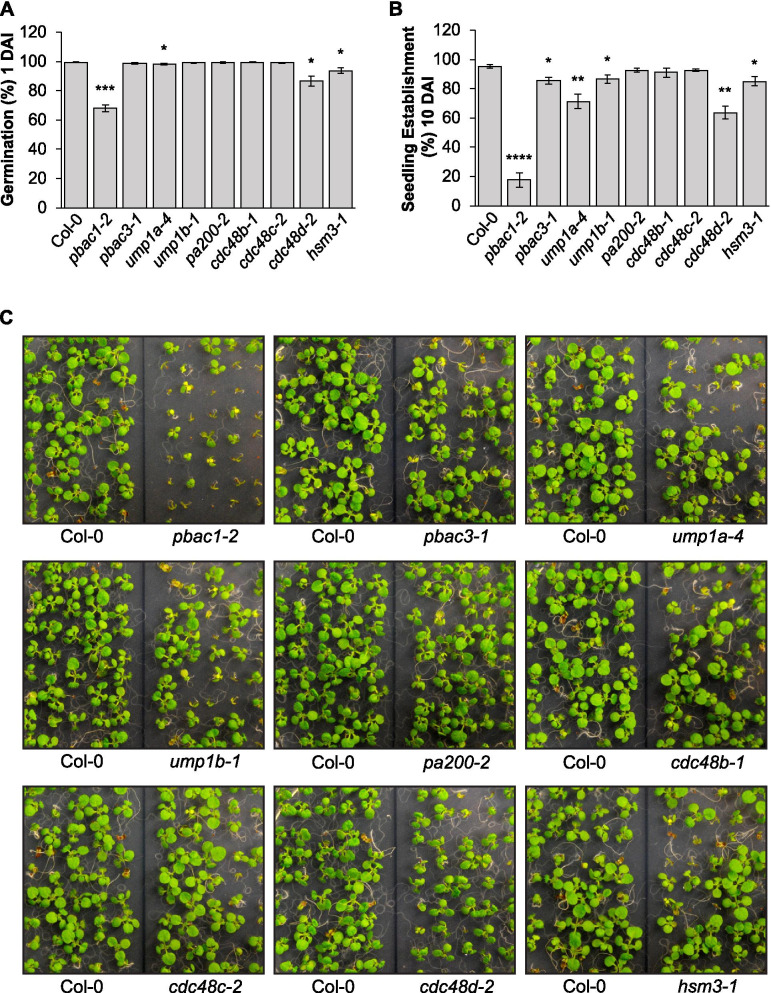
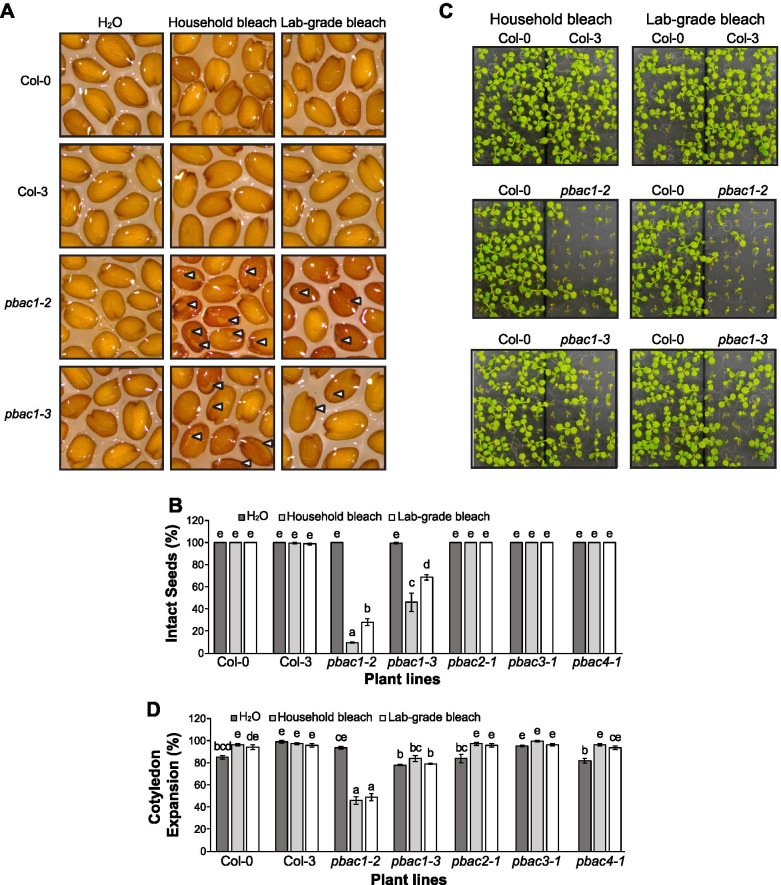
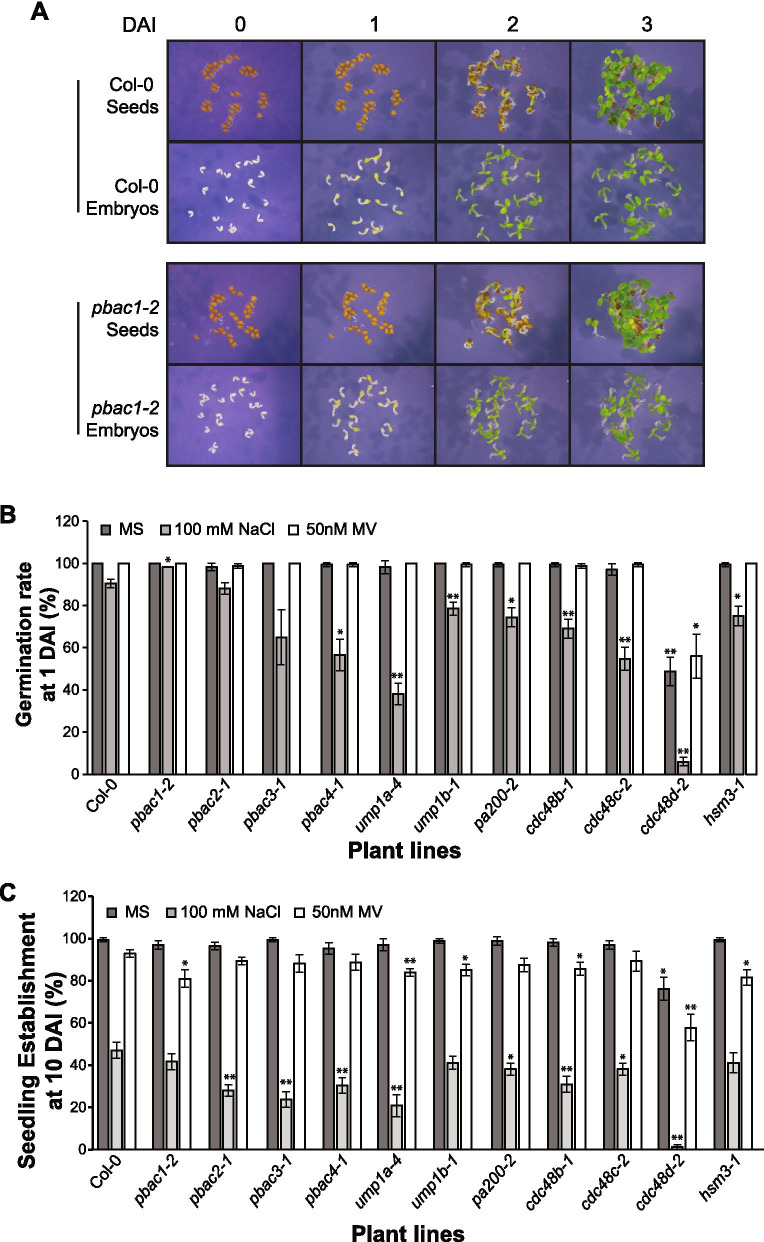
Here, we studied the impact of abiotic stresses on proteasome structure, activity, and interacting partners in Arabidopsis thaliana. We analyzed available RNA expression data and observed that expressions of proteasome coding genes varied substantially under stresses; however, the protein levels of a few key subunits did not change significantly within 24 h. Instead, a switch in the predominant proteasome complex, from 26S to 20S, occurs under oxidative or salt stress. Oxidative stress also reduced the cellular ATP content and the association of HSP70-family proteins to the 20S proteasome, but enhanced the activity of cellular free form CP. Salt stress, on the other hand, did not affect cellular ATP level, but caused subtle changes in proteasome subunit composition and impacted bindings of assembly chaperones. Analyses of an array of T-DNA insertional mutant lines highlighted important roles for several putative assembly chaperones in seedling establishment and stress sensitivity. We also observed that knockout of PBAC1, one of the α-ring assembly chaperones, resulted in reduced germination and tearing of the seed coat following sterilization.
Our study revealed an evolutionarily conserved mechanism of proteasome regulation during oxidative stress, involving dynamic regulation of the holoenzyme formation and associated regulatory proteins, and we also identified a novel role of the PBAC1 proteasome assembly chaperone in seed coat development.
26S 蛋白酶体,经典地由多亚基 19S 调节(RP)和 20S 核心(CP)颗粒组成,对细胞蛋白质稳态至关重要。蛋白酶体被重塑、激活或重新定位,这种调节对于植物应对环境压力至关重要。因此,蛋白酶体全酶的组装和解离在体内是高度动态的。然而,植物蛋白酶体的化学计量变化以及在常见非生物胁迫下与蛋白酶体相关的伴侣蛋白如何变化尚未得到系统研究。
在这里,我们研究了非生物胁迫对拟南芥蛋白酶体结构、活性和相互作用伴侣的影响。我们分析了现有的 RNA 表达数据,观察到在胁迫下,蛋白酶体编码基因的表达发生了显著变化;然而,在 24 小时内,少数关键亚基的蛋白质水平没有明显变化。相反,在氧化或盐胁迫下,主要蛋白酶体复合物从 26S 转变为 20S。氧化应激还降低了细胞内的 ATP 含量和 HSP70 家族蛋白与 20S 蛋白酶体的结合,但增强了细胞游离 CP 的活性。另一方面,盐胁迫不会影响细胞内的 ATP 水平,但会导致蛋白酶体亚基组成的细微变化,并影响组装伴侣的结合。对一系列 T-DNA 插入突变系的分析突出了几个假定的组装伴侣在幼苗建立和胁迫敏感性中的重要作用。我们还观察到,PBAC1(一种α-环组装伴侣)的敲除导致种子灭菌后发芽和种皮撕裂减少。
我们的研究揭示了氧化应激过程中蛋白酶体调节的一种进化保守机制,涉及全酶形成和相关调节蛋白的动态调节,我们还确定了 PBAC1 蛋白酶体组装伴侣在种皮发育中的新作用。