Laboratory of Molecular Neuropharmacology, Graduate School of Pharmaceutical Sciences, Osaka University, Osaka, 565-0871, Japan.
Osaka Medical and Pharmaceutical University, Research and Development Center, Osaka, 569-8686, Japan.
Transl Psychiatry. 2021 Oct 25;11(1):548. doi: 10.1038/s41398-021-01676-1.
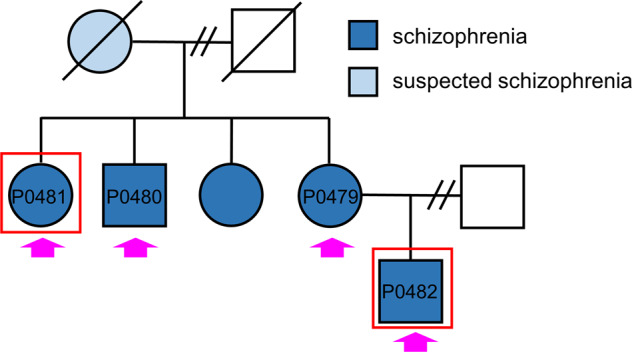
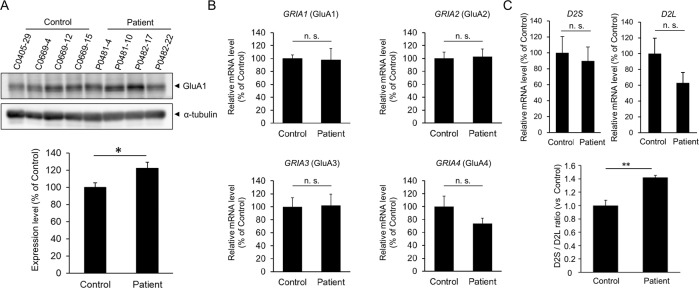
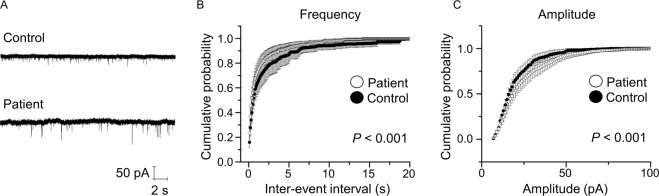
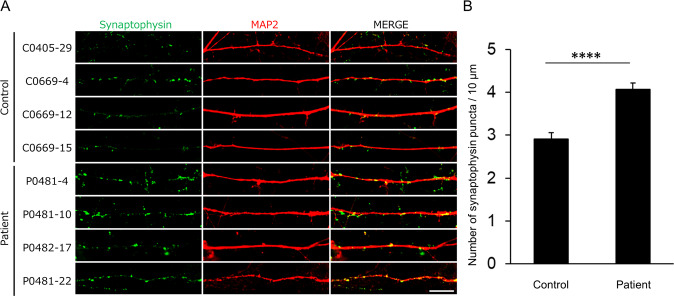
An increasing body of evidence suggests that impaired synapse development and function are associated with schizophrenia; however, the underlying molecular pathophysiological mechanism of the disease remains largely unclear. We conducted a family-based study combined with molecular and cellular analysis using induced pluripotent stem cell (iPSC) technology. We generated iPSCs from patients with familial schizophrenia, differentiated these cells into neurons, and investigated the molecular and cellular phenotypes of the patient's neurons. We identified multiple altered synaptic functions, including increased glutamatergic synaptic transmission, higher synaptic density, and altered splicing of dopamine D2 receptor mRNA in iPSC-derived neurons from patients. We also identified patients' specific genetic mutations using whole-exome sequencing. Our findings support the notion that altered synaptic function may underlie the molecular and cellular pathophysiology of schizophrenia, and that multiple genetic factors cooperatively contribute to the development of schizophrenia.
越来越多的证据表明,突触发育和功能受损与精神分裂症有关;然而,该疾病的潜在分子病理生理机制在很大程度上仍不清楚。我们使用诱导多能干细胞(iPSC)技术进行了一项基于家族的研究,结合了分子和细胞分析。我们从患有家族性精神分裂症的患者中生成了 iPSCs,将这些细胞分化为神经元,并研究了患者神经元的分子和细胞表型。我们发现了多种改变的突触功能,包括谷氨酸能突触传递增加、突触密度增加和多巴胺 D2 受体 mRNA 的剪接改变。我们还使用全外显子组测序鉴定了患者的特定基因突变。我们的研究结果支持这样一种观点,即改变的突触功能可能是精神分裂症的分子和细胞病理生理学的基础,并且多个遗传因素共同导致精神分裂症的发展。