Inflammation and Immune Mediated Diseases Laboratory of Anhui Province, Anhui Institute of Innovative Drugs, School of Pharmacy, Anhui Medical University, Hefei, China.
Department of Neurosurgery, The Second Affiliated Hospital of Anhui Medical University, Hefei, China.
J Cell Physiol. 2022 Feb;237(2):1471-1485. doi: 10.1002/jcp.30606. Epub 2021 Oct 26.
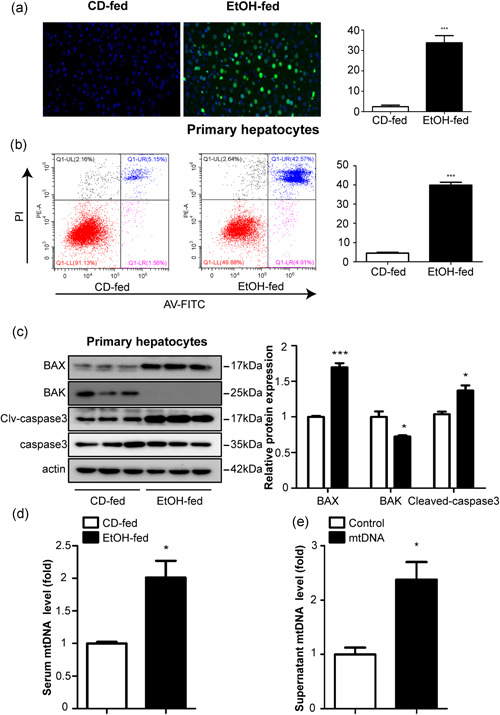
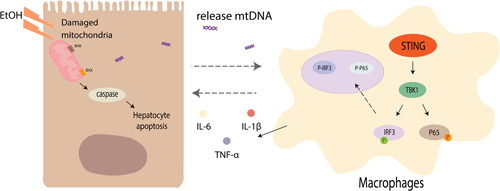
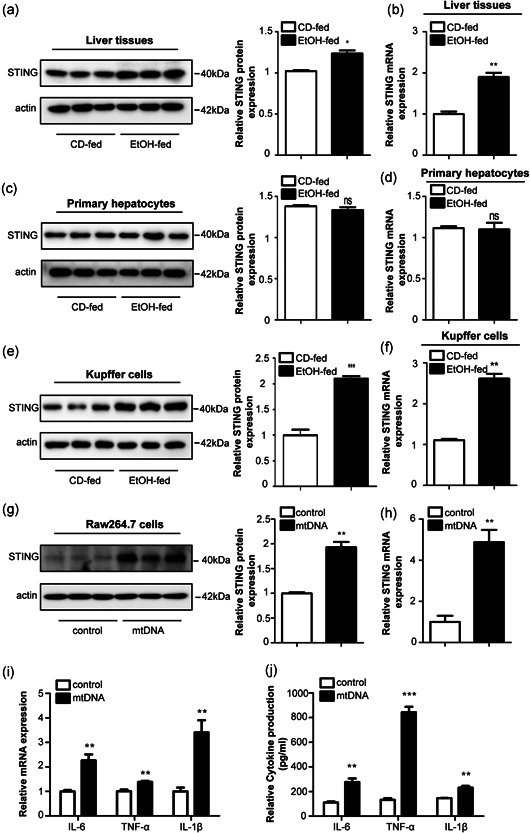
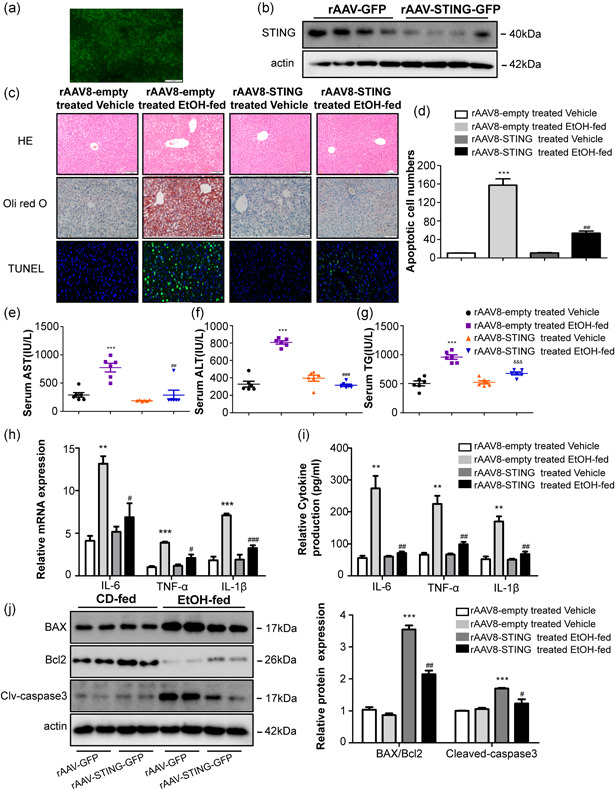
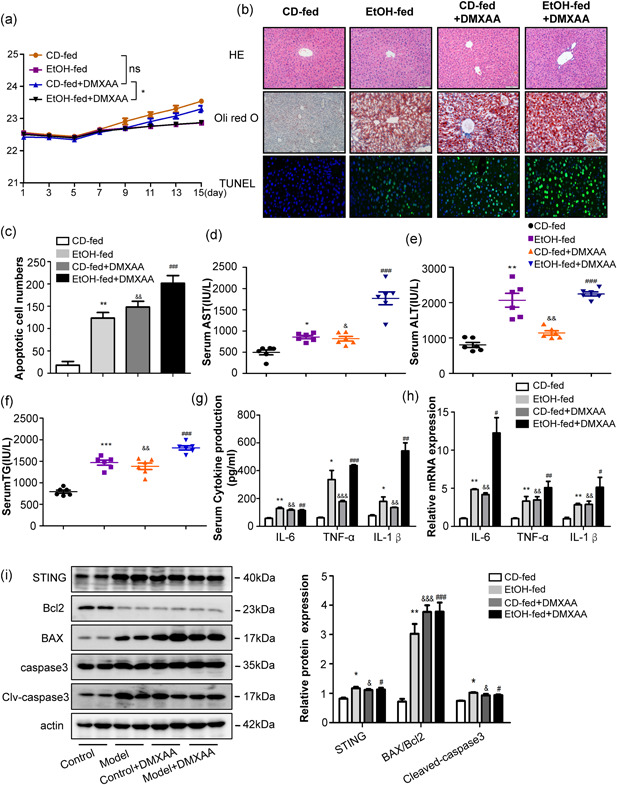
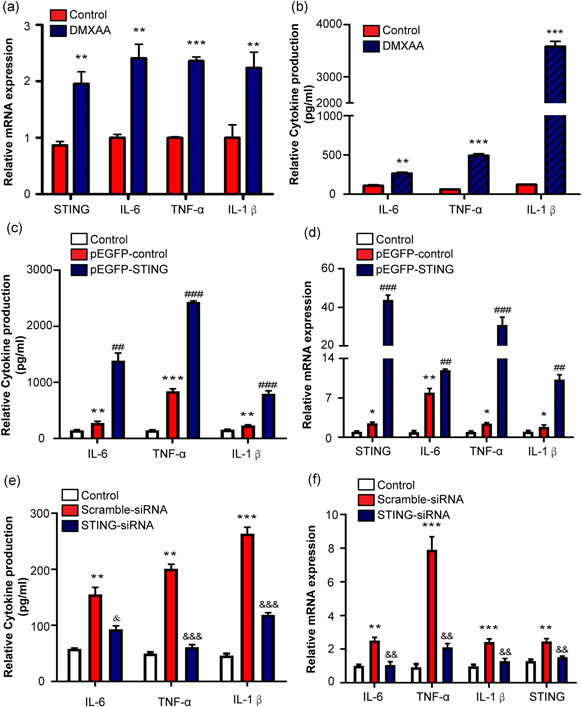
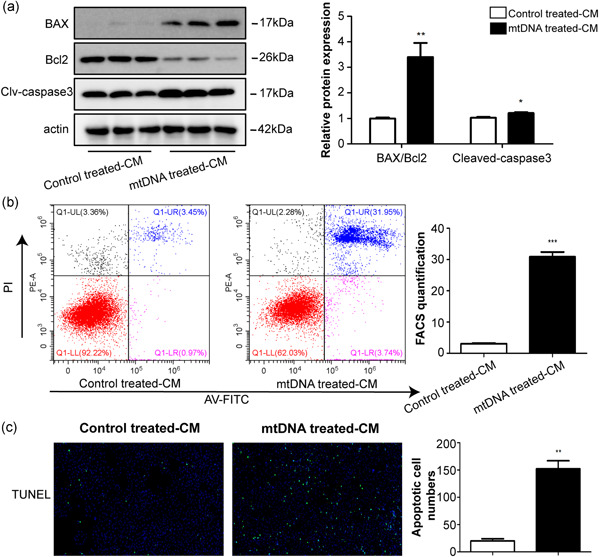
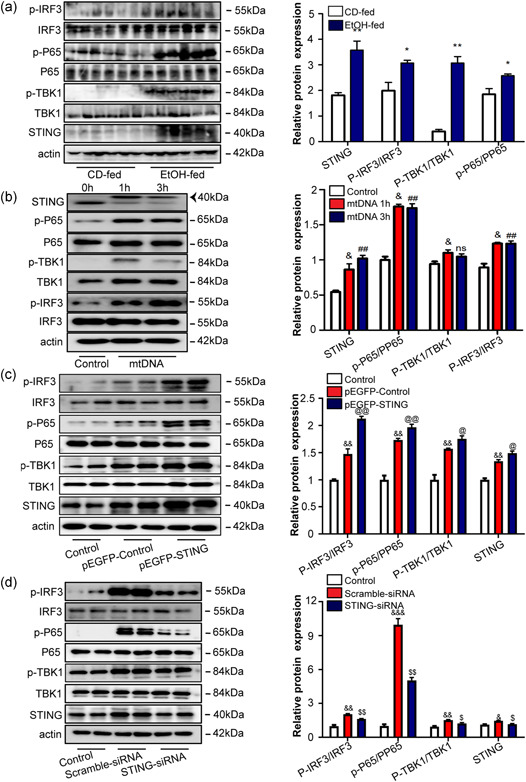
Alcohol metabolism causes hepatocytes to release damage-associated molecular patterns (DAMPs). This includes mitochondrial DNA (mtDNA), which is generated and released from damaged hepatocytes and contributes to liver injury by producing proinflammatory cytokines. STING is a pattern recognition receptor of DAMPs known to control the induction of innate immunity in various pathological processes. However, the expression profile and functions of STING in the Gao binge ethanol model remain poorly understood. We demonstrated that STING is upregulated in the Gao binge ethanol model. STING functions as an mtDNA sensor in the Kupffer cells of the liver and induces STING-signaling pathway-dependent inflammation and further aggravates hepatocyte apoptosis in the Gao binge ethanol model. This study provides novel insights into predicting disease progression and developing targeted therapies for alcoholic liver injury.
酒精代谢导致肝细胞释放损伤相关分子模式(DAMPs)。这包括线粒体 DNA(mtDNA),它是由受损的肝细胞产生并释放的,通过产生促炎细胞因子导致肝损伤。STING 是 DAMPs 的模式识别受体,已知其在各种病理过程中控制先天免疫的诱导。然而,STING 在 Gao binge 乙醇模型中的表达谱和功能仍知之甚少。我们证明了 STING 在 Gao binge 乙醇模型中上调。STING 在肝脏的库普弗细胞中作为 mtDNA 传感器发挥作用,并诱导 STING 信号通路依赖性炎症,并进一步加重 Gao binge 乙醇模型中的肝细胞凋亡。这项研究为预测疾病进展和开发针对酒精性肝损伤的靶向治疗提供了新的见解。