Department of Animal Science & Technology, Shandong Provincial Key Laboratory of Animal Biotechnology and Disease Control and Prevention, Shandong Agricultural University, Taian, Shandong, 271018, P. R. China.
Department of Animal Science & Technology, Shandong Provincial Key Laboratory of Animal Biotechnology and Disease Control and Prevention, Shandong Agricultural University, Taian, Shandong, 271018, P. R. China.
Poult Sci. 2021 Dec;100(12):101480. doi: 10.1016/j.psj.2021.101480. Epub 2021 Sep 16.
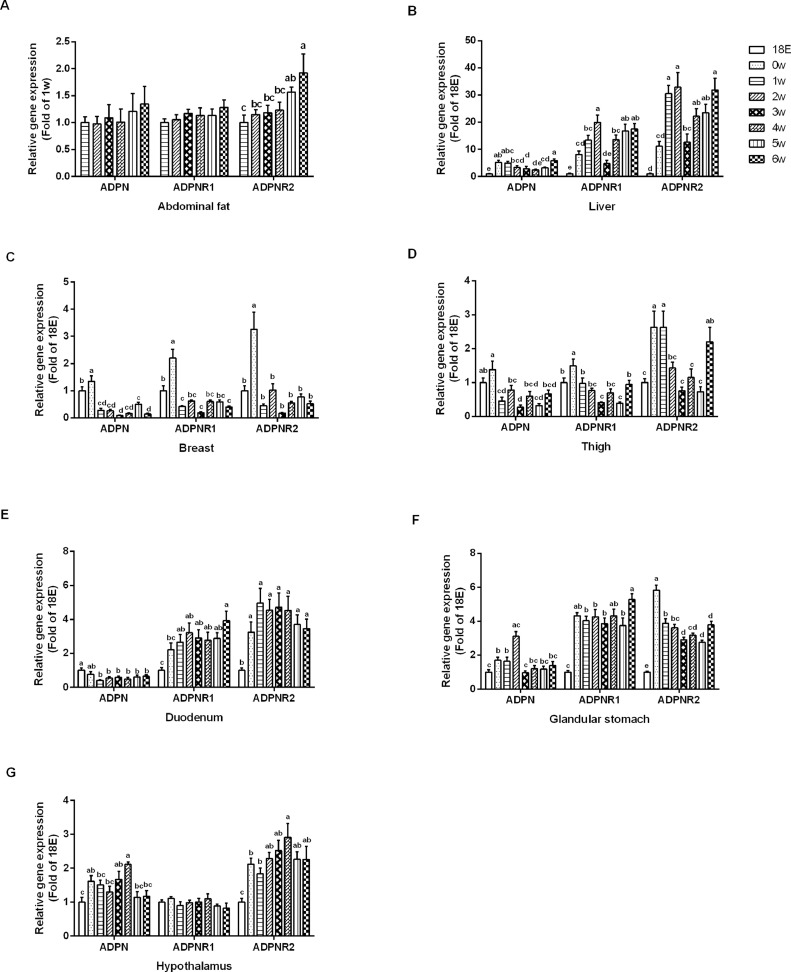
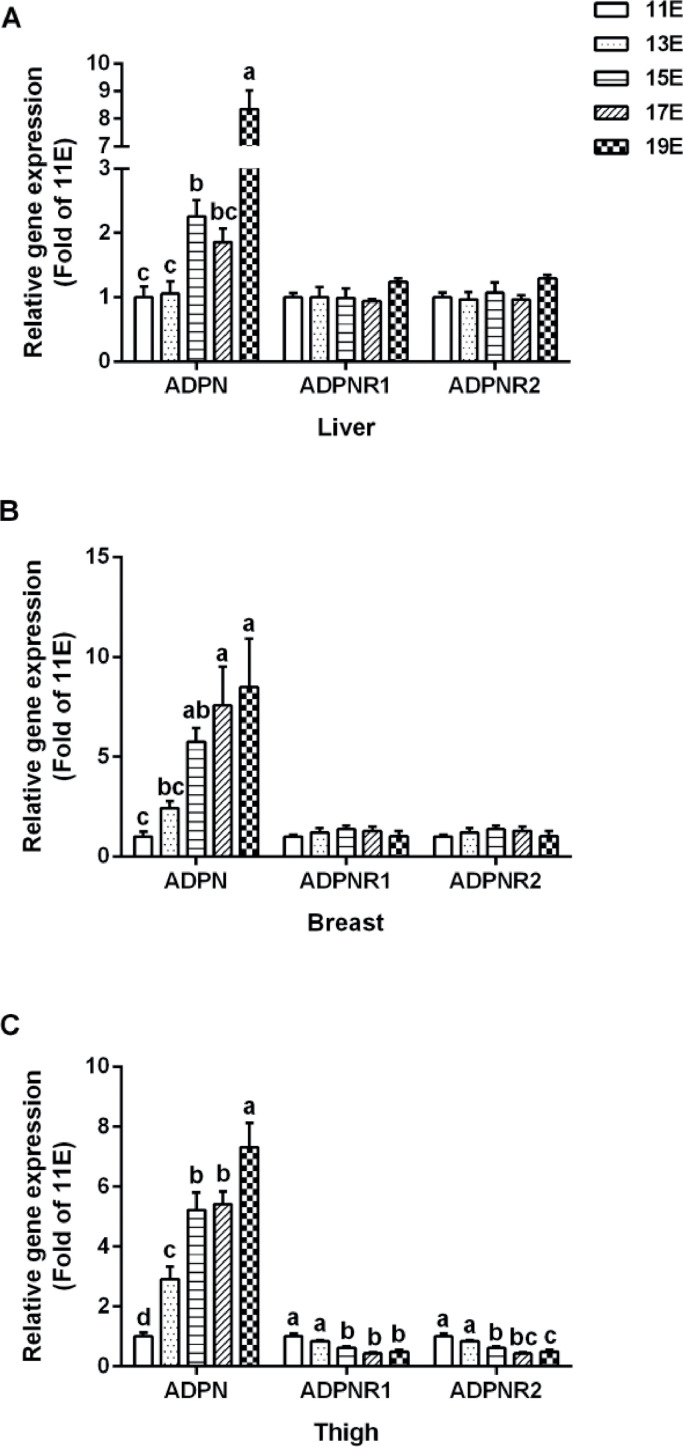
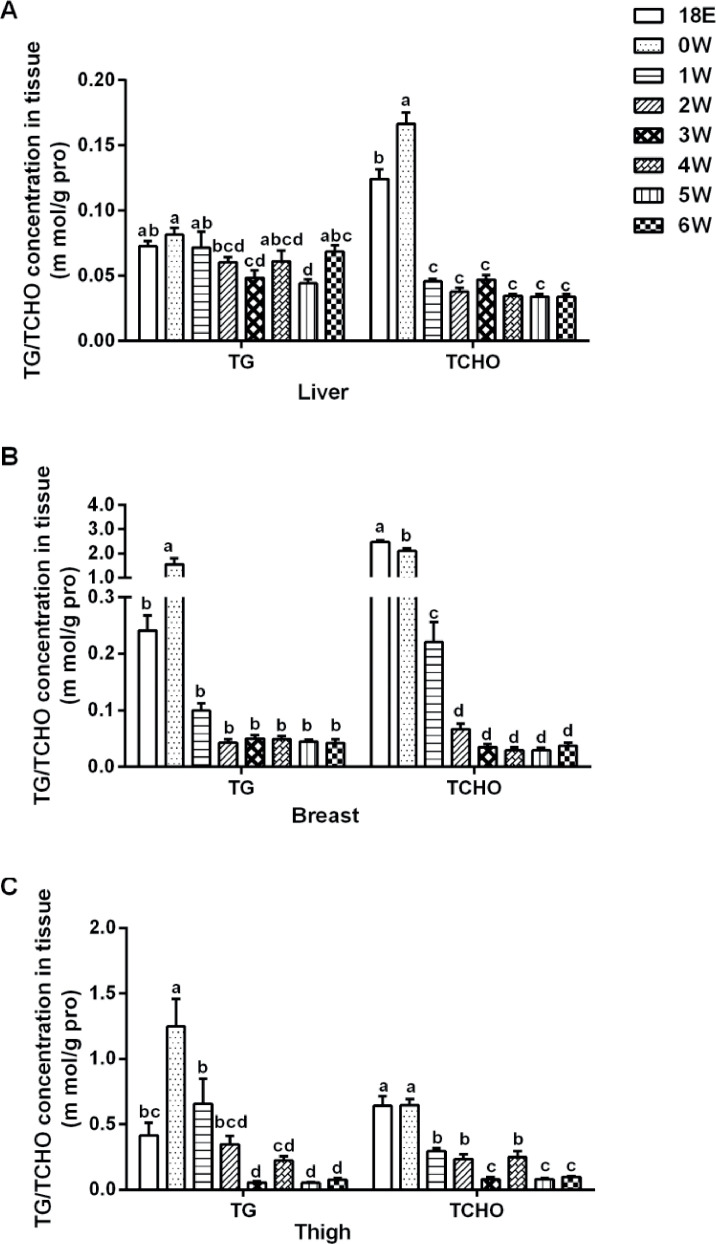
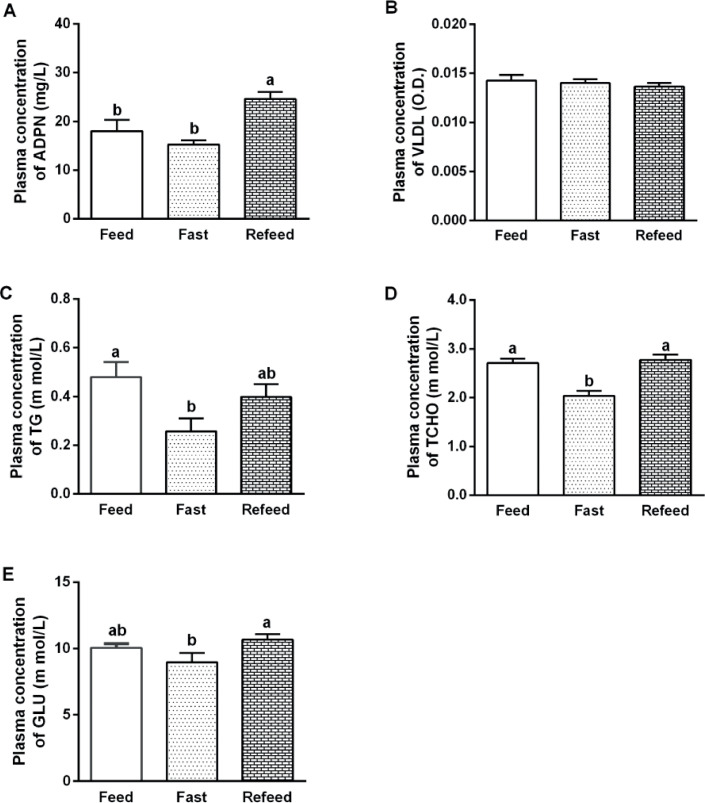
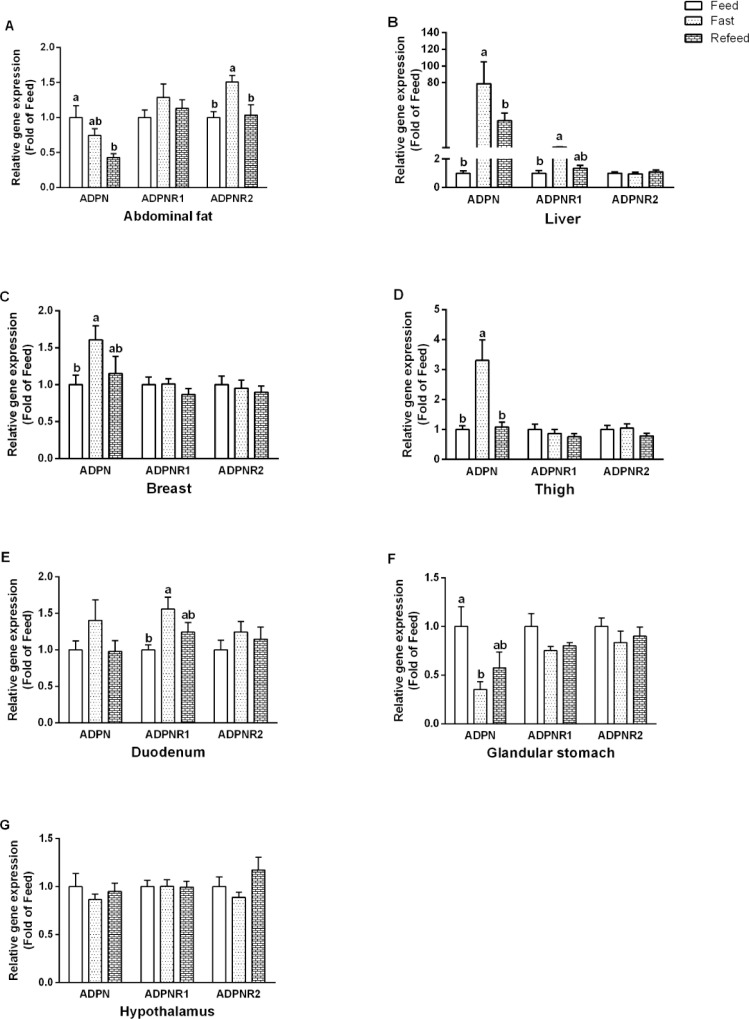
Adiponectin (ADPN) is related to fatty acid synthesis and oxidation in mammals. In chickens, the lipid metabolism, structure and sequence of ADPN are different from that in mammals. The aim of this study was to determine the role of ADPN in broilers lipid metabolism by investigating the temporal and spatial expression profiles of ADPN and its receptors, as well as their response to feed restriction. The results showed that the abdominal fat has the highest expression level, followed by the duodenum, glandular stomach, heart, hypothalamus, liver, and skeletal muscle. Broilers have high energy mobilization during their early stage of growth, in which the fat demand in the liver and muscles is high, thus the expression of ADPN and its receptor are also increased. To study the effects of feed restriction on ADPN and lipid metabolism, broilers were fasted for 12 h and refeed for 2 h. The results showed that fasting decreased the concentration of triglyceride (TG) (P < 0.05) and total cholesterol (TCHO) (P < 0.05) in plasma. The mRNA expression of ADPN in the liver (P < 0.05), breast (P < 0.05) and thigh (P < 0.05), and the mRNA expression of ADPNR1 in the liver (P < 0.05) and duodenum (P < 0.05) were significantly increased in the Fasted group. All above phenomena were recovered after refeeding, suggesting that feed restriction may promote the utilization of fatty acids in active metabolism tissues through ADPN, to guarantee the energy homeostasis of the body. However, the AMP-activated protein kinase (AMPK) signaling pathway and hepatic lipid metabolism were not necessary to cause the above changes under this experimental condition.
脂联素(ADPN)与哺乳动物的脂肪酸合成和氧化有关。在鸡中,ADPN 的脂质代谢、结构和序列与哺乳动物不同。本研究旨在通过研究 ADPN 及其受体的时空表达谱及其对饲料限制的反应,来确定 ADPN 在肉鸡脂质代谢中的作用。结果表明,腹部脂肪的表达水平最高,其次是十二指肠、腺胃、心脏、下丘脑、肝脏和骨骼肌。肉鸡在生长早期具有较高的能量动员能力,此时肝脏和肌肉中的脂肪需求较高,因此 ADPN 及其受体的表达也增加。为了研究饲料限制对 ADPN 和脂质代谢的影响,将肉鸡禁食 12 小时,然后再喂食 2 小时。结果表明,禁食降低了血浆中甘油三酯(TG)(P < 0.05)和总胆固醇(TCHO)(P < 0.05)的浓度。肝脏(P < 0.05)、乳房(P < 0.05)和大腿(P < 0.05)中 ADPN 的 mRNA 表达,以及肝脏(P < 0.05)和十二指肠(P < 0.05)中 ADPNR1 的 mRNA 表达在禁食组中均显著增加。重新喂食后,所有上述现象均得到恢复,这表明饲料限制可能通过 ADPN 促进活跃代谢组织中脂肪酸的利用,以保证机体的能量平衡。然而,在这种实验条件下,AMP 激活的蛋白激酶(AMPK)信号通路和肝脂质代谢并不是引起上述变化所必需的。