Department of Cellular and Molecular Biology, Centro de Investigaciones Biológicas Margarita Salas (CIB-CSIC), Ramiro de Maeztu, 9, 28040, Madrid, Spain.
Institute of Bioengineering, University "Miguel Hernández", 03202, Elche, Spain.
BMC Genomics. 2021 Oct 26;22(1):765. doi: 10.1186/s12864-021-08071-6.
PIWI-interacting RNAs (piRNAs) are an abundant single-stranded type of small non-coding RNAs (sncRNAs), which initially were discovered in gonadal cells, with a role as defenders of genomic integrity in the germline, acting against the transposable elements. With a regular size range of 21-35 nt, piRNAs are associated with a PIWI-clade of Argonaute family proteins. The most widely accepted mechanisms of biogenesis for piRNAs involve the transcription of longer precursors of RNAs to be processed, by complexes of proteins, to functional size, preferentially accommodating uridine residues at the 5' end and 3' methylation to increase the stability of these molecules. piRNAs have also been detected in somatic cells, with diverse potential functions, indicating their high plasticity and pleiotropic activity. Discovered about two decades ago, piRNAs are a large and versatile type of sncRNA and that remain insufficiently identified and analyzed, through next-generation sequencing (NGS), to evaluate their processing, functions, and biogenesis in different cell types and during development. piRNAs' distinction from other sncRNAs has led to controversial results and interpretation difficulties when using existing databases because of the heterogeneity of the criteria used in making the distinction.
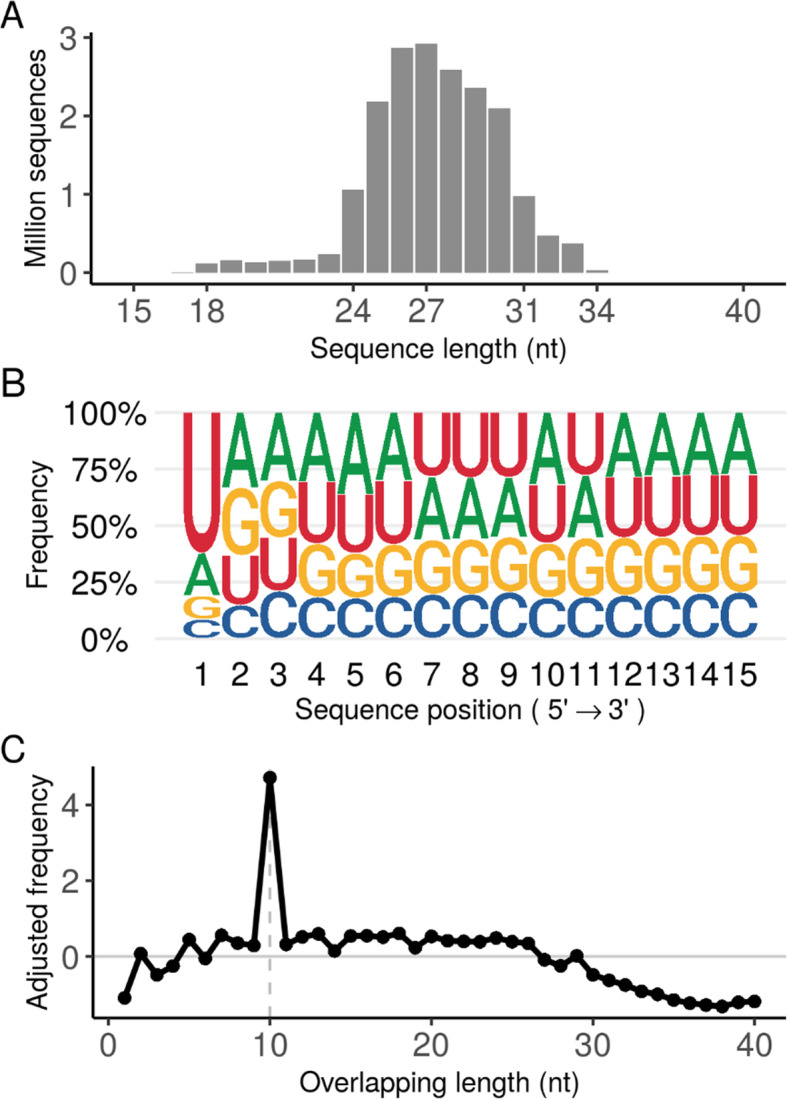
We present "piRNA-IPdb", a database based uniquely on datasets obtaining after the defining characteristic of piRNAs: those small RNAs bound to PIWI proteins. We selected and analyzed sequences from piRBase that exclusively cover the binding to PIWI. We pooled a total of 18,821,815 sequences from RNA-seq after immunoprecipitation that included the binding to any of the mouse PIWI proteins (MILI, MIWI, or MIWI2).
In summary, we present the characteristics and potential use of piRNA-IPdb database for the analysis of bona fide piRNAs.
PIWI 相互作用 RNA(piRNAs)是一种丰富的单链小非编码 RNA(sncRNA),最初在生殖细胞中发现,作为生殖系中基因组完整性的守护者,对抗转座元件。piRNAs 的大小范围通常为 21-35nt,与 Argonaute 家族蛋白的 PIWI 簇相关。piRNA 生物发生的最广泛接受的机制涉及 RNA 更长前体的转录,这些前体通过蛋白质复合物被加工成功能大小,优先在 5'端容纳尿嘧啶残基,并进行 3'甲基化,以增加这些分子的稳定性。piRNAs 也在体细胞中被检测到,具有多种潜在功能,表明其具有高度的可塑性和多效性。piRNAs 是一种大型且多功能的 sncRNA,大约二十年前被发现,但通过下一代测序(NGS)对其在不同细胞类型和发育过程中的加工、功能和生物发生进行评估,其鉴定和分析仍然不足。piRNAs 与其他 sncRNA 的区别导致了使用现有数据库时出现有争议的结果和解释困难,因为在进行区分时使用的标准存在异质性。
我们提出了“piRNA-IPdb”数据库,该数据库完全基于获得的定义 piRNAs 的特征:那些与 PIWI 蛋白结合的小 RNA。我们选择并分析了 piRBase 中仅涵盖与 PIWI 结合的序列。我们总共汇集了 18821815 条来自 RNA-seq 的序列,这些序列在免疫沉淀后包括与任何一种小鼠 PIWI 蛋白(MILI、MIWI 或 MIWI2)的结合。
总之,我们提出了 piRNA-IPdb 数据库的特点和潜在用途,用于分析真正的 piRNAs。