Institute of Tropical Medicine, University of Tübingen, Wilhelmstrasse 27, Tübingen 72074, Germany; Centre de Recherche Médicales de Lambaréné, Lambaréné, Gabon.
Department of Infectious Diseases, Robert Koch Institute, Berlin, Germany.
EBioMedicine. 2021 Nov;73:103648. doi: 10.1016/j.ebiom.2021.103648. Epub 2021 Oct 24.
Rotavirus A (RVA) causes acute gastroenteritis in children <5 years of age in sub-Saharan Africa. In this study, we described the epidemiology and genetic diversity of RVA infecting Gabonese children and examined the antigenic variability of circulating strains in relation to available vaccine strains to maximize the public health benefits of introducing rotavirus vaccine through the Expanded Programme on Immunization (EPI) in Gabon.
Stool samples were collected consecutively between April 2018 and November 2019 from all hospitalized children <5 years with gastroenteritis and community controls without gastroenteritis. Children were tested for rotavirus A by quantitative RT-PCR and subsequently sequenced to identify circulating rotavirus A genotypes in the most vulnerable population. The VP7 and VP4 (VP8*) antigenic epitopes were mapped to homologs of vaccine strains to assess structural variability and potential impact on antigenicity.
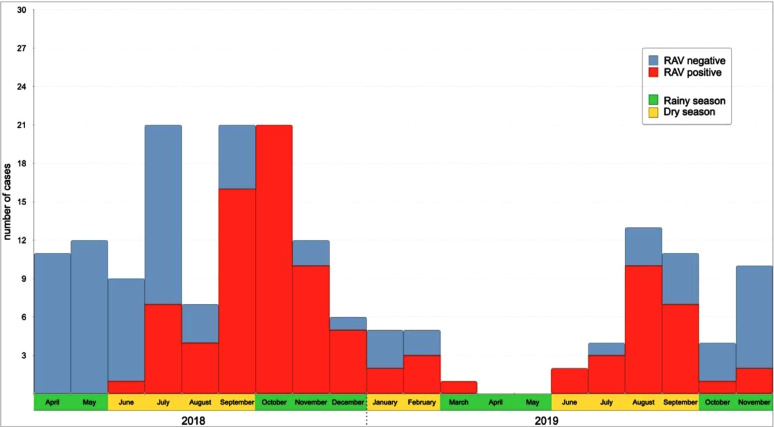
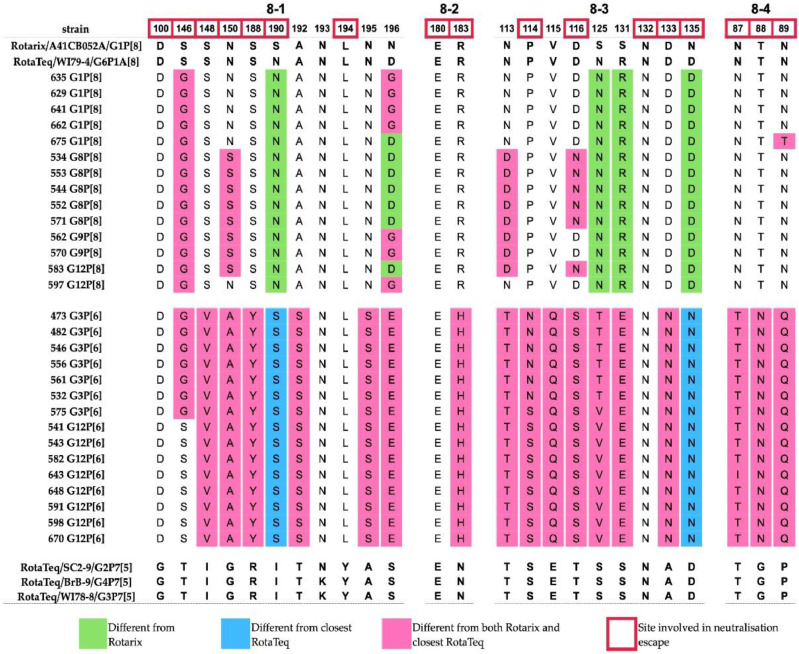
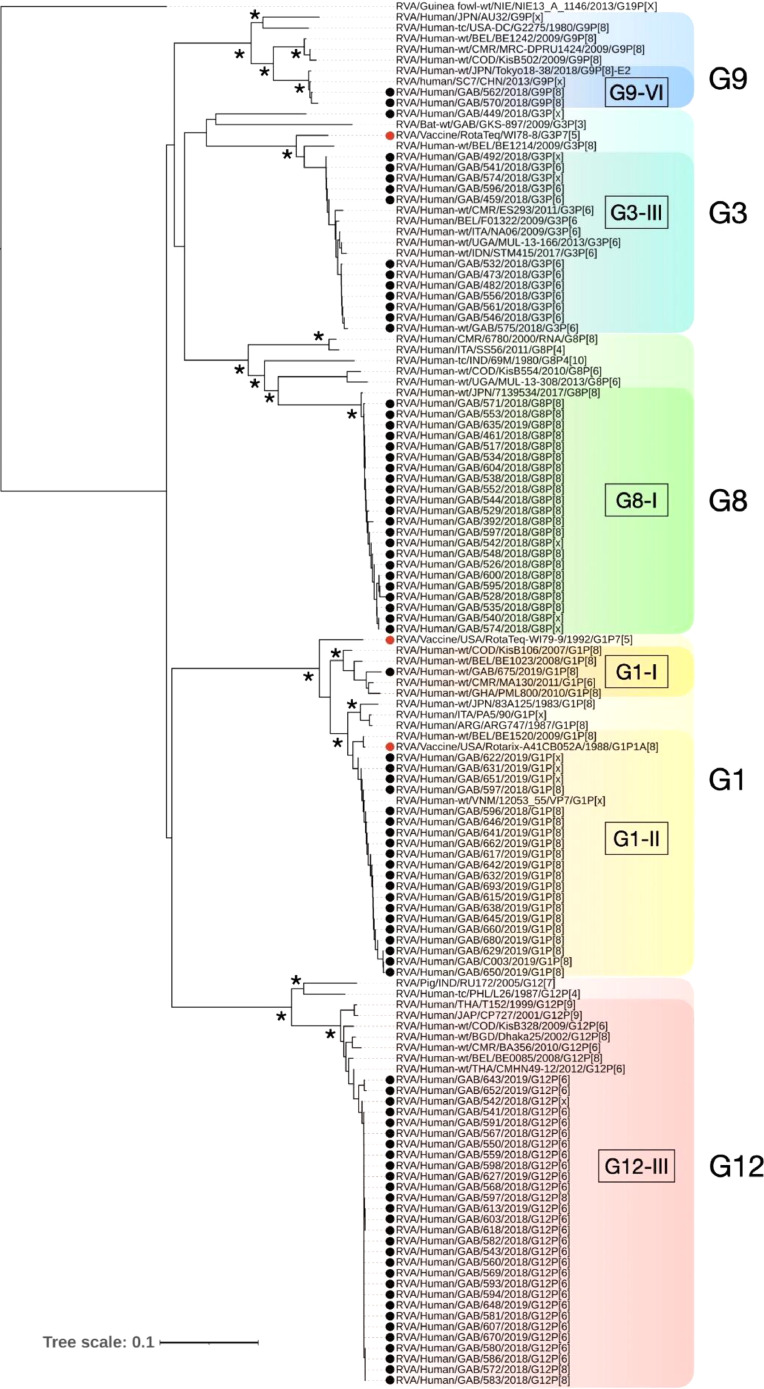
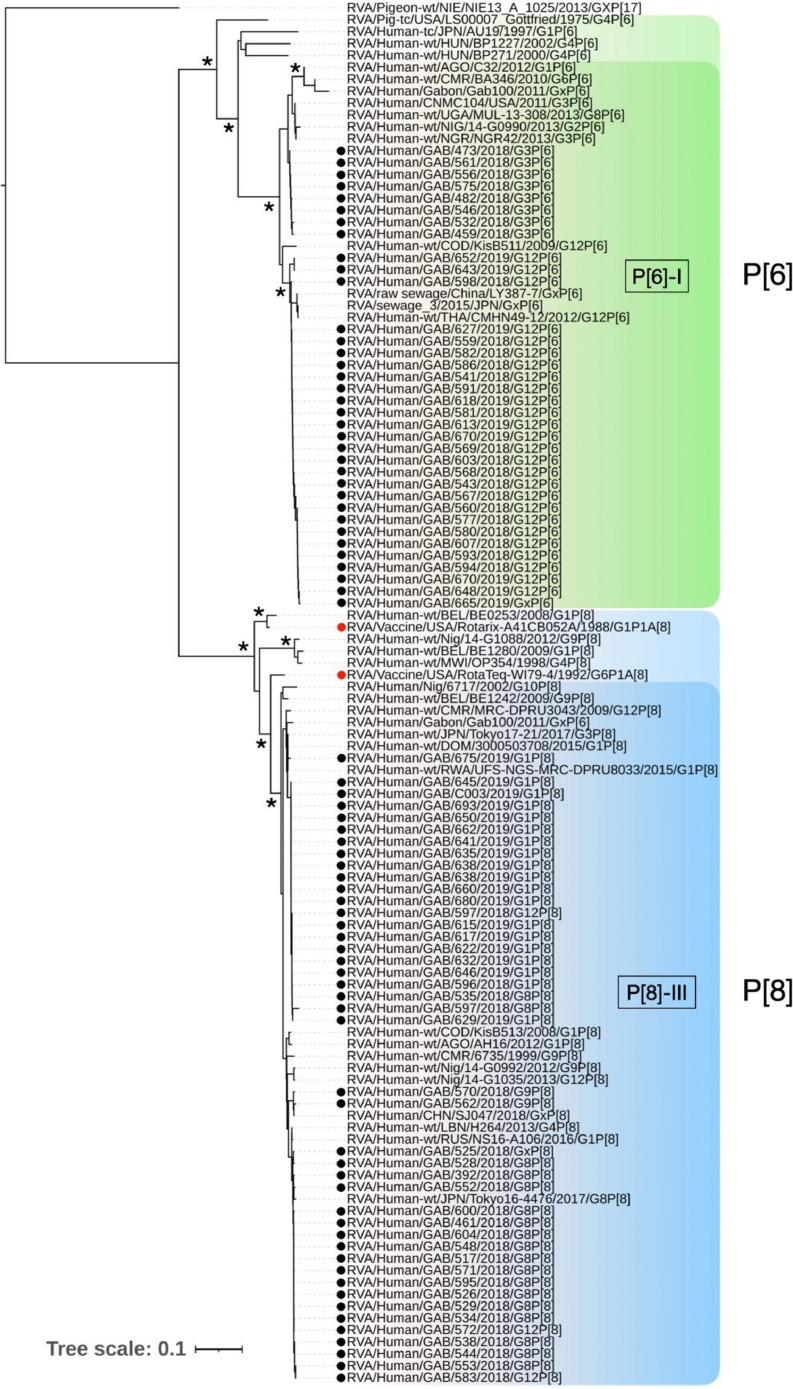
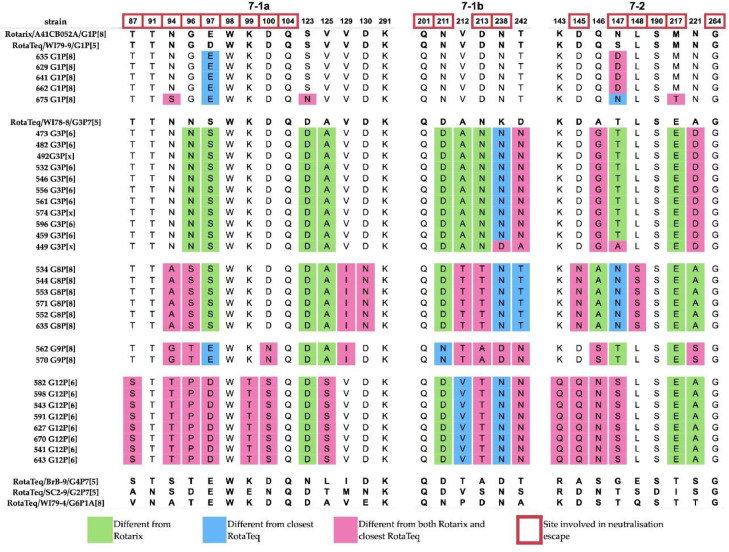
Infections were mostly acquired during the dry season. Rotavirus A was detected in 98/177 (55%) hospitalized children with gastroenteritis and 14/67 (21%) of the control children. The most common RVA genotypes were G1 (18%), G3 (12%), G8 (18%), G9 (2%), G12 (25%), with G8 and G9 reported for the first time in Gabon. All were associated either with P[6] (31%) or P[8] (38%) genotypes. Several non-synonymous substitutions were observed in the antigenic epitopes of VP7 (positions 94 and 147) and VP8* (positions 89, 116, 146 and 150), which may modulate the elicited immune responses.
This study contributes to the epidemiological surveillance of rotavirus A required before the introduction of rotavirus vaccination in the EPI for Gabonese children.
轮状病毒 A(RVA)会导致撒哈拉以南非洲地区 5 岁以下儿童患急性肠胃炎。在这项研究中,我们描述了感染加蓬儿童的 RVA 的流行病学和遗传多样性,并研究了循环毒株的抗原变异性与可用疫苗株的关系,以最大限度地提高通过加蓬扩大免疫规划(EPI)引入轮状病毒疫苗的公共卫生效益。
2018 年 4 月至 2019 年 11 月,连续采集所有因肠胃炎住院的 5 岁以下儿童和无肠胃炎的社区对照儿童的粪便样本。通过定量 RT-PCR 检测轮状病毒 A,随后对样本进行测序,以确定最脆弱人群中循环的轮状病毒 A 基因型。将 VP7 和 VP4(VP8*)抗原表位映射到疫苗株的同源物上,以评估结构变异性和对抗原性的潜在影响。
感染主要发生在旱季。在 177 名因肠胃炎住院的儿童中有 98 名(55%)和 67 名对照儿童中有 14 名(21%)检测到轮状病毒 A。最常见的 RVA 基因型为 G1(18%)、G3(12%)、G8(18%)、G9(2%)、G12(25%),其中 G8 和 G9 是在加蓬首次报告的。所有这些都与 P[6](31%)或 P[8](38%)基因型有关。在 VP7(位置 94 和 147)和 VP8*(位置 89、116、146 和 150)的抗原表位中观察到几个非同义突变,这可能会调节引发的免疫反应。
本研究为加蓬儿童扩大免疫规划引入轮状病毒疫苗前进行轮状病毒 A 的流行病学监测做出了贡献。