Wang Peng, Liu Shouxin, Wang Xiaochun, Cong Qinqin, Lu Jialin
College of Chemical & Pharmaceutical Engineering, Hebei University of Science & Technology, Shijiazhuang, 050018, China.
State Key Laboratory Breeding Base-Hebei Province Key Laboratory of Molecular Chemistry for Drug, Hebei University of Science & Technology, Shijiazhuang, 050018, China.
J Biol Eng. 2021 Oct 27;15(1):25. doi: 10.1186/s13036-021-00275-4.
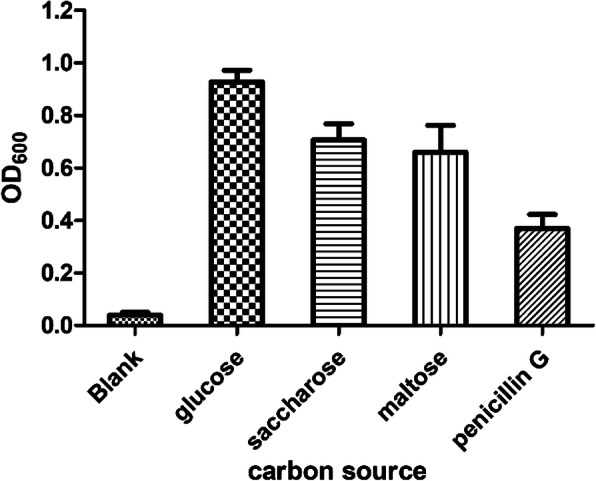
The Paracoccus sp. strain isolated from sludge was identified and evaluated for catalytic activity in the degradation of penicillin G.
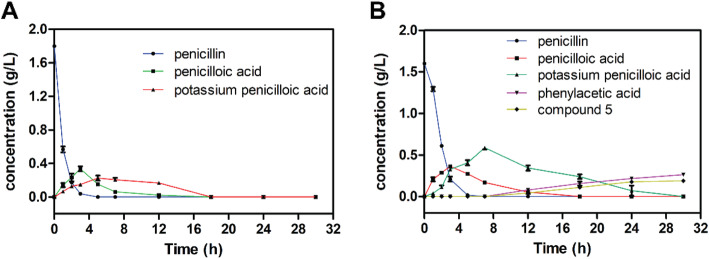
High degradation efficiency and synergistic catalytic effects of the whole cell and visible light without additional catalysts were observed. The key factors influencing the degradation and kinetics of penicillin G were investigated. The results showed the phenylacetic acid, which was produced during penicillin G biodegradation, exhibited stronger inhibiting effects on KDSPL-02. However, this effect was reduced by visible light irradiation without any additional photocatalyst; furthermore, the rate of penicillin G biodegradation was accelerated, reaching a 100% rate in 12 h at a penicillin G concentration of 1.2 g/L. Four key intermediates produced during penicillin G degradation were isolated and identified by LC-MS, H NMR, and C NMR. Enzymes involved in the PAA pathway were proposed from a genomic analysis of KDSPL-02.
These results provide a new method for bio-degrading of penicillin or other antibiotic pollutants using photoaccelerating biocatalysts with greater efficiency and more environmentally friendly conditions.
对从污泥中分离出的副球菌属菌株进行了鉴定,并评估了其对青霉素G的降解催化活性。
观察到在无额外催化剂的情况下,全细胞和可见光具有较高的降解效率和协同催化作用。研究了影响青霉素G降解及其动力学的关键因素。结果表明,青霉素G生物降解过程中产生的苯乙酸对KDSPL-02表现出更强的抑制作用。然而,在无任何额外光催化剂的情况下,可见光照射可降低这种抑制作用;此外,青霉素G的生物降解速率加快,在青霉素G浓度为1.2 g/L时,12小时内降解率达到100%。通过液相色谱-质谱联用仪(LC-MS)、氢核磁共振波谱(H NMR)和碳核磁共振波谱(C NMR)分离并鉴定了青霉素G降解过程中产生的四种关键中间体。通过对KDSPL-02的基因组分析,提出了参与苯乙酸途径的酶。
这些结果提供了一种利用光加速生物催化剂更高效、更环保地生物降解青霉素或其他抗生素污染物的新方法。