Aragão Luiz Guilherme H S, Oliveira Júlia T, Temerozo Jairo R, Mendes Mayara A, Salerno José Alexandre, Pedrosa Carolina S G, Puig-Pijuan Teresa, Veríssimo Carla P, Ornelas Isis M, Torquato Thayana, Vitória Gabriela, Sacramento Carolina Q, Fintelman-Rodrigues Natalia, da Silva Gomes Dias Suelen, Cardoso Soares Vinicius, Souza Letícia R Q, Karmirian Karina, Goto-Silva Livia, Biagi Diogo, Cruvinel Estela M, Dariolli Rafael, Furtado Daniel R, Bozza Patrícia T, Borges Helena L, Souza Thiago M L, Guimarães Marília Zaluar P, Rehen Stevens K
D'Or Institute for Research and Education (IDOR), Rio de Janeiro, Rio de Janeiro, Brazil.
Laboratory on Thymus Research, Oswaldo Cruz Institute (IOC), Rio de Janeiro, Rio de Janeiro, Brazil.
PeerJ. 2021 Oct 8;9:e12262. doi: 10.7717/peerj.12262. eCollection 2021.
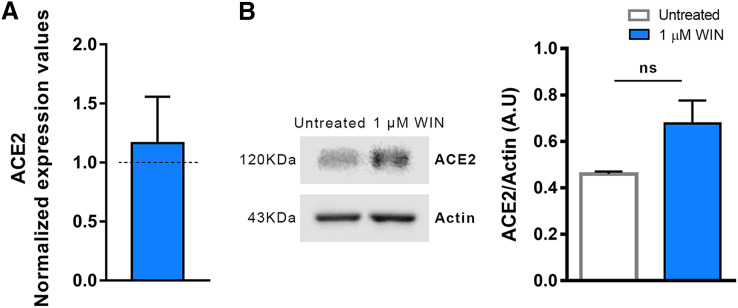
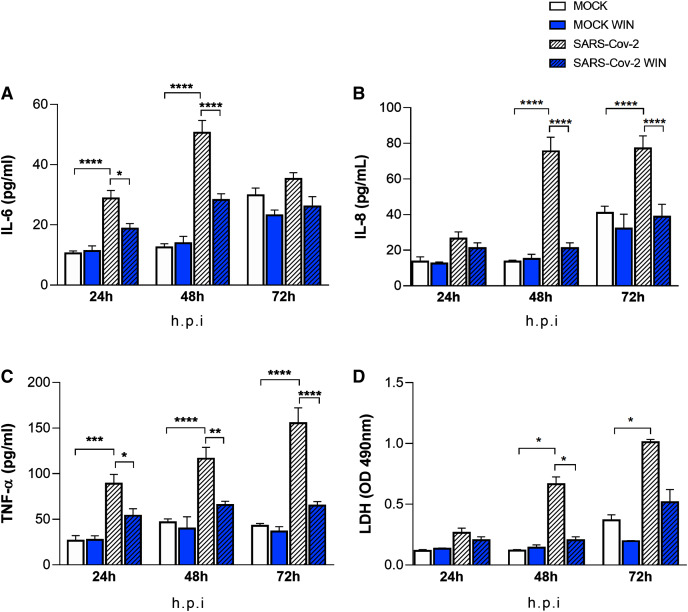
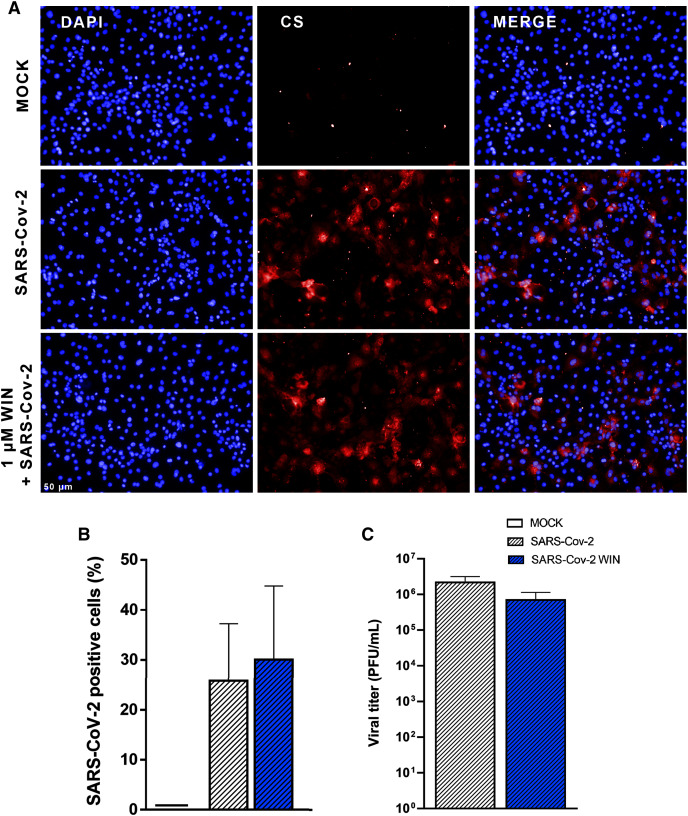
Coronavirus disease 2019 (COVID-19) is caused by severe acute respiratory syndrome coronavirus 2 (SARS-CoV-2), which can infect several organs, especially impacting respiratory capacity. Among the extrapulmonary manifestations of COVID-19 is myocardial injury, which is associated with a high risk of mortality. Myocardial injury, caused directly or indirectly by SARS-CoV-2 infection, can be triggered by inflammatory processes that lead to damage to the heart tissue. Since one of the hallmarks of severe COVID-19 is the "cytokine storm", strategies to control inflammation caused by SARS-CoV-2 infection have been considered. Cannabinoids are known to have anti-inflammatory properties by negatively modulating the release of pro-inflammatory cytokines. Herein, we investigated the effects of the cannabinoid agonist WIN 55,212-2 (WIN) in human iPSC-derived cardiomyocytes (hiPSC-CMs) infected with SARS-CoV-2. WIN did not modify angiotensin-converting enzyme II protein levels, nor reduced viral infection and replication in hiPSC-CMs. On the other hand, WIN reduced the levels of interleukins six, eight, 18 and tumor necrosis factor-alpha (TNF-α) released by infected cells, and attenuated cytotoxic damage measured by the release of lactate dehydrogenase (LDH). Our findings suggest that cannabinoids should be further explored as a complementary therapeutic tool for reducing inflammation in COVID-19 patients.
2019冠状病毒病(COVID-19)由严重急性呼吸综合征冠状病毒2(SARS-CoV-2)引起,该病毒可感染多个器官,尤其会影响呼吸功能。COVID-19的肺外表现之一是心肌损伤,这与高死亡率风险相关。SARS-CoV-2感染直接或间接导致的心肌损伤,可由导致心脏组织损伤的炎症过程引发。由于重症COVID-19的一个标志是“细胞因子风暴”,因此人们考虑了控制SARS-CoV-2感染引起的炎症的策略。已知大麻素通过负向调节促炎细胞因子的释放而具有抗炎特性。在此,我们研究了大麻素激动剂WIN 55,212-2(WIN)对感染SARS-CoV-2的人诱导多能干细胞衍生心肌细胞(hiPSC-CMs)的影响。WIN并未改变血管紧张素转换酶II蛋白水平,也未减少hiPSC-CMs中的病毒感染和复制。另一方面,WIN降低了感染细胞释放的白细胞介素6、8、18和肿瘤坏死因子-α(TNF-α)的水平,并减轻了通过乳酸脱氢酶(LDH)释放测定的细胞毒性损伤。我们的研究结果表明,应进一步探索大麻素作为减轻COVID-19患者炎症的辅助治疗工具。