Shu Xiaomei, Singh Manavi, Karampudi Naga Bhushana Rao, Bridges David F, Kitazumi Ai, Wu Vivian C H, De Los Reyes Benildo G
Department of Plant and Soil Science, Texas Tech University, Lubbock, TX, United States of America.
USDA-ARS, Western Regional Research Center, Produce Safety and Microbiology Research, Albany, CA, United States of America.
PLoS One. 2021 Oct 28;16(10):e0256324. doi: 10.1371/journal.pone.0256324. eCollection 2021.
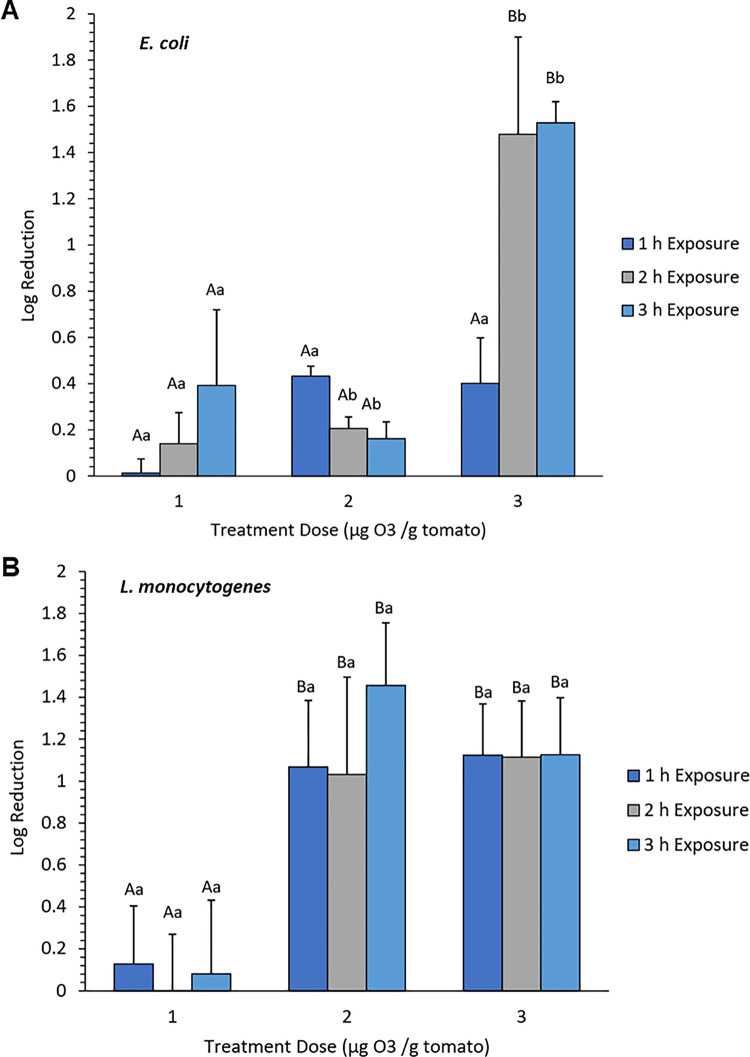
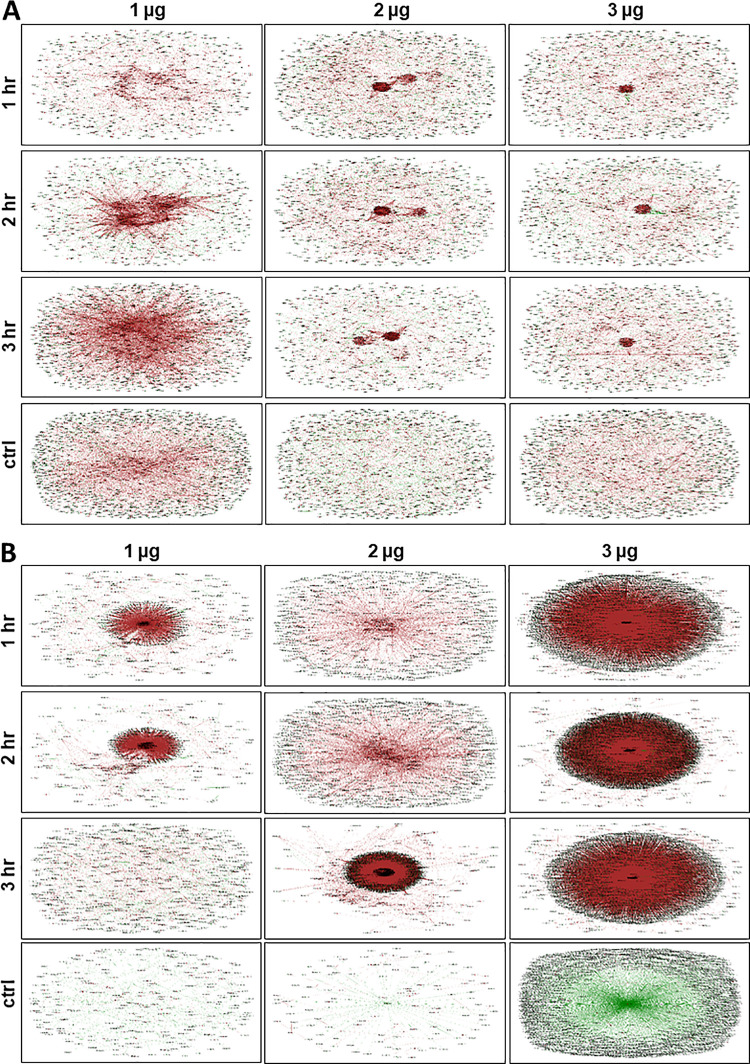
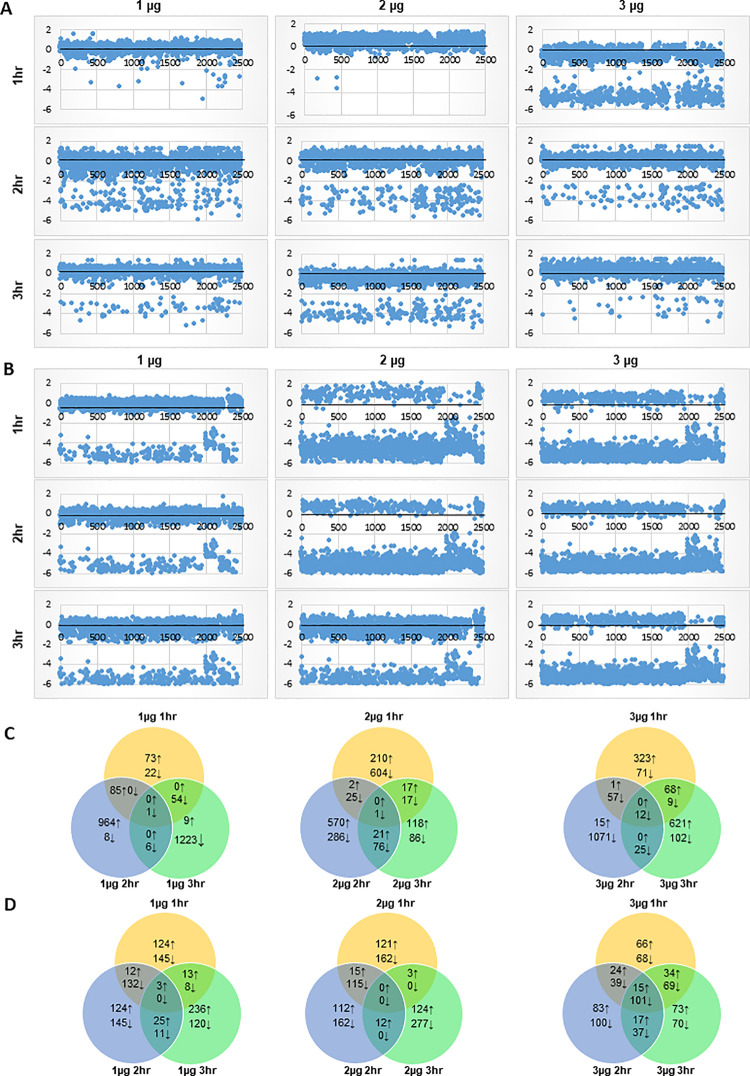
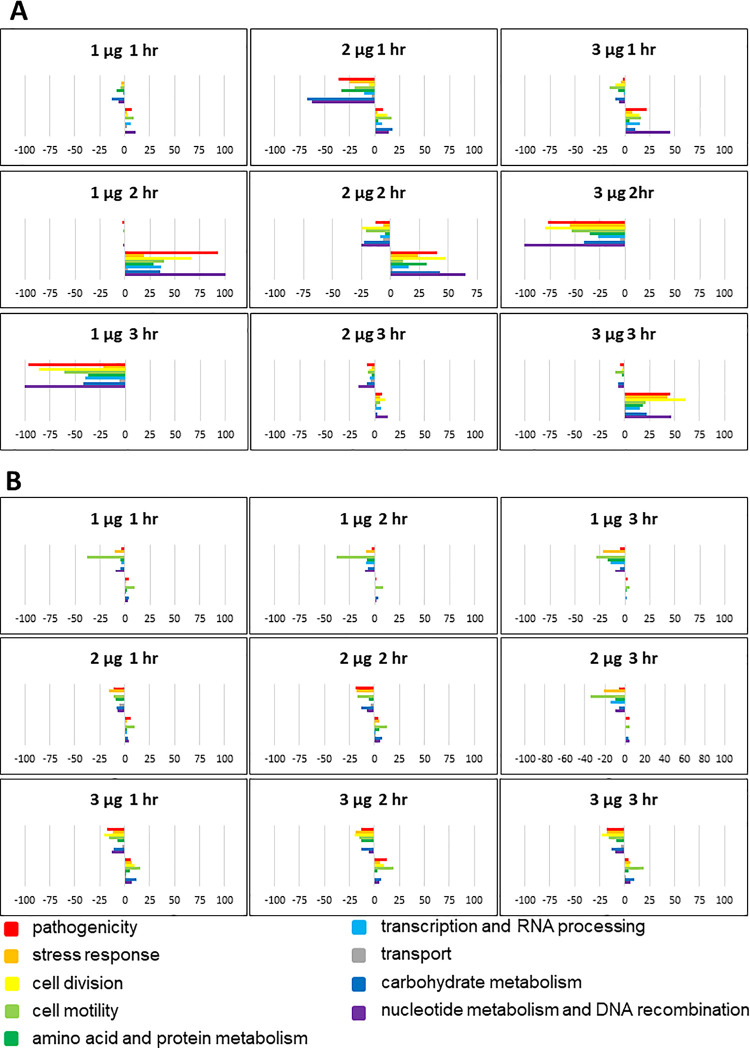
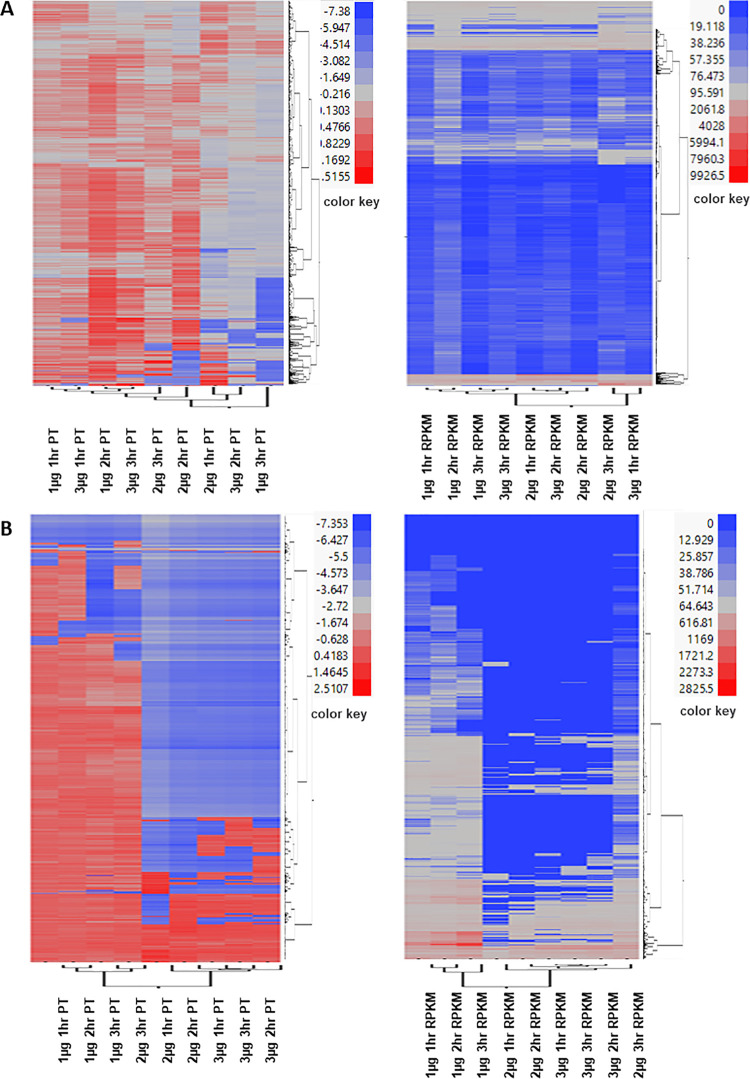
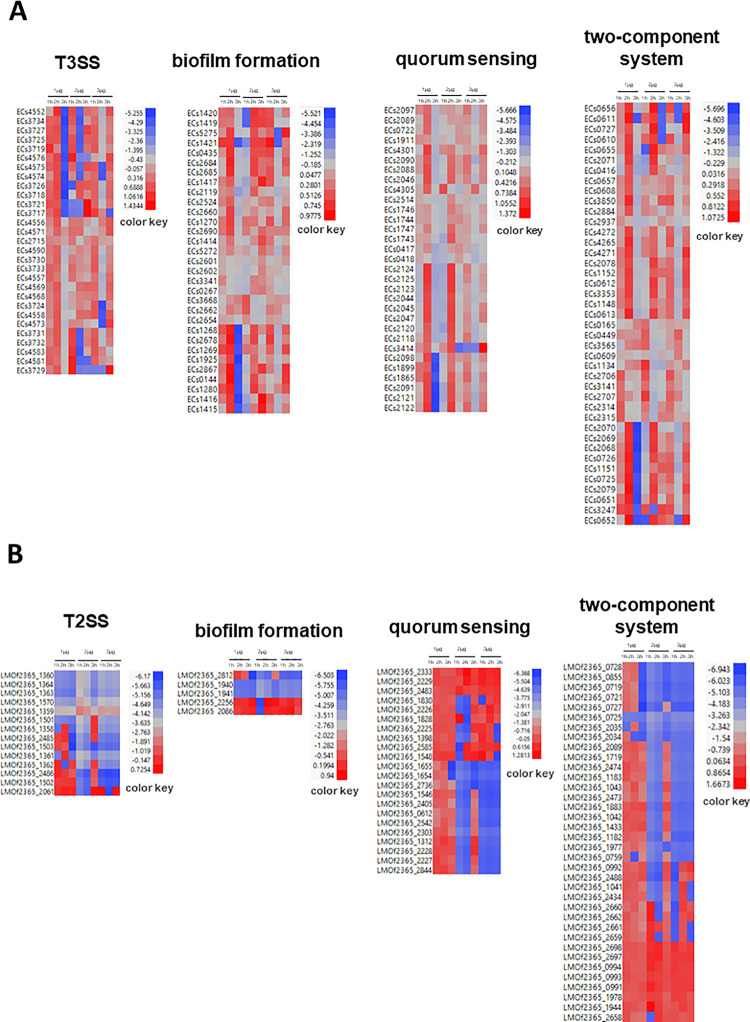
Because of the continuous rise of foodborne illnesses caused by the consumption of raw fruits and vegetables, effective post-harvest anti-microbial strategies are necessary. The aim of this study was to evaluate the anti-microbial efficacy of ozone (O3) against two common causes of fresh produce contamination, the Gram-negative Escherichia coli O157:H7 and Gram-positive Listeria monocytogenes, and to relate its effects to potential mechanisms of xenobiosis by transcriptional network modeling. The study on non-host tomato environment correlated the dose × time aspects of xenobiosis by examining the correlation between bacterial survival in terms of log-reduction and defense responses at the level of gene expression. In E. coli, low (1 μg O3/g of fruit) and moderate (2 μg O3/g of fruit) doses caused insignificant reduction in survival, while high dose (3 μg/g of fruit) caused significant reduction in survival in a time-dependent manner. In L. monocytogenes, moderate dose caused significant reduction even with short-duration exposure. Distinct responses to O3 xenobiosis between E. coli and L. monocytogenes are likely related to differences in membrane and cytoplasmic structure and components. Transcriptome profiling by RNA-Seq showed that primary defenses in E. coli were attenuated after exposure to a low dose, while the responses at moderate dose were characterized by massive upregulation of pathogenesis and stress-related genes, which implied the activation of defense responses. More genes were downregulated during the first hour at high dose, with a large number of such genes getting significantly upregulated after 2 hr and 3 hr. This trend suggests that prolonged exposure led to potential adaptation. In contrast, massive downregulation of genes was observed in L. monocytogenes regardless of dose and exposure duration, implying a mechanism of defense distinct from that of E. coli. The nature of bacterial responses revealed by this study should guide the selection of xenobiotic agents for eliminating bacterial contamination on fresh produce without overlooking the potential risks of adaptation.
由于食用生水果和蔬菜导致的食源性疾病持续增加,有效的采后抗菌策略是必要的。本研究的目的是评估臭氧(O3)对新鲜农产品污染的两种常见致病菌——革兰氏阴性大肠杆菌O157:H7和革兰氏阳性单核细胞增生李斯特菌的抗菌效果,并通过转录网络建模将其影响与异生物质的潜在机制联系起来。对非寄主番茄环境的研究通过检查细菌存活的对数减少与基因表达水平的防御反应之间的相关性,关联了异生物质的剂量×时间方面。在大肠杆菌中,低剂量(1μg O3/g果实)和中等剂量(2μg O3/g果实)导致存活率的降低不显著,而高剂量(3μg/g果实)导致存活率随时间显著降低。在单核细胞增生李斯特菌中,中等剂量即使短时间暴露也会导致显著降低。大肠杆菌和单核细胞增生李斯特菌对O3异生物质的不同反应可能与膜和细胞质结构及成分的差异有关。通过RNA-Seq进行的转录组分析表明,大肠杆菌在暴露于低剂量后其主要防御功能减弱,而中等剂量时的反应特征是致病和应激相关基因的大量上调,这意味着防御反应的激活。高剂量时,在最初1小时内更多基因被下调,大量此类基因在2小时和3小时后显著上调。这种趋势表明长时间暴露导致了潜在的适应性。相比之下,无论剂量和暴露持续时间如何,在单核细胞增生李斯特菌中均观察到大量基因下调,这意味着其防御机制与大肠杆菌不同。本研究揭示的细菌反应性质应指导选择异生物质以消除新鲜农产品上的细菌污染,同时不忽视潜在的适应性风险。