Department of Reproductive Endocrinology, Reproductive Medicine Center, Zhejiang Provincial People's Hospital, Affiliated People's Hospital, Hangzhou Medical College, Hangzhou, China.
Department of Cell Biology and Medical Genetics, Zhejiang University School of Medicine, Hangzhou, China.
J Ovarian Res. 2021 Oct 28;14(1):143. doi: 10.1186/s13048-021-00900-2.
FOXL2 mutations in human cause Blepharophimosis, ptosis, and epicanthus inversus syndrome (BPES). While type II BPES solely features eyelid abnormality, type I BPES involves not only eyelid but also ovary, leading to primary ovarian insufficiency (POI) and female infertility. Current mainstream reproductive option for type I BPES is embryo or oocyte donation. Attempts on assisted reproductive technology (ART) aiming biological parenthood in this population were sparse and mostly unsuccessful.
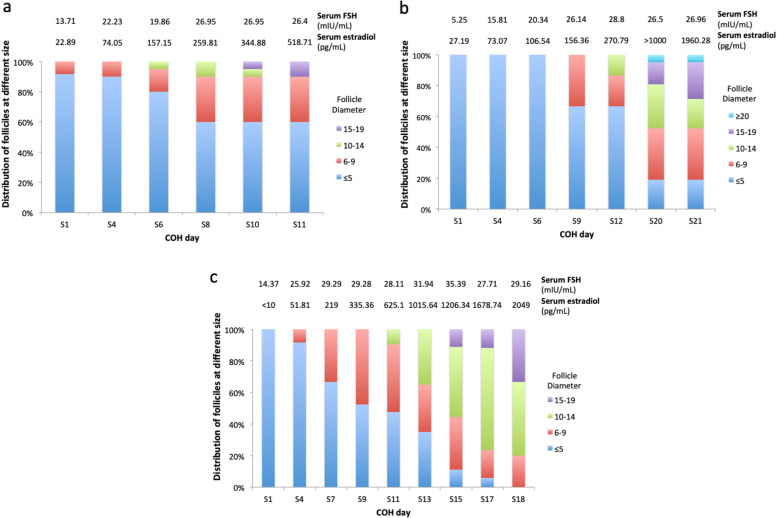
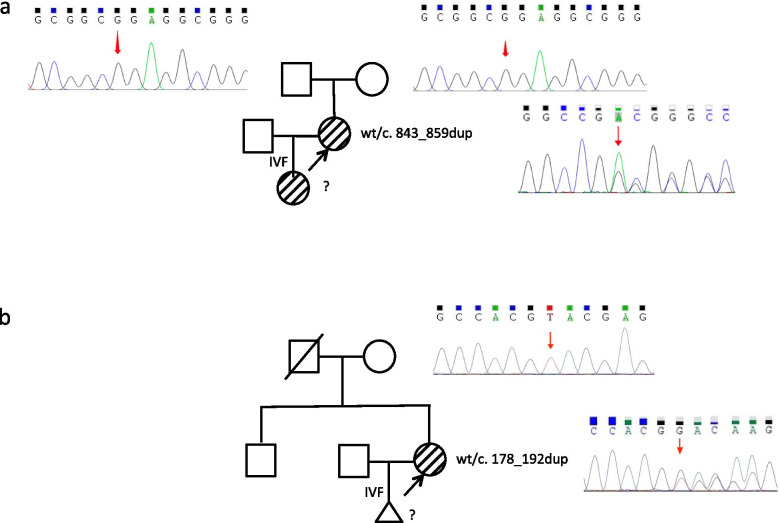
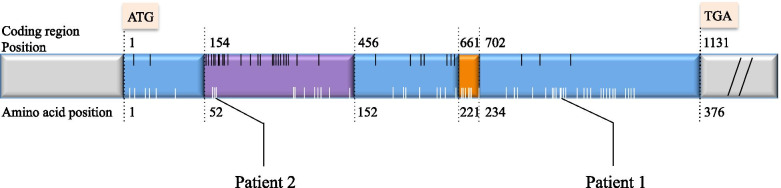
Two Chinese type I BPES patients with low anti-müllerian hormone (AMH) and elevated follicle stimulating hormone (FSH) presented with primary infertility in their early 30s. Genetic studies confirmed two heterozygous duplication mutations that were never reported previously in East Asian populations. They received in vitro fertilization (IVF) treatment and both exhibited resistance to gonadotropin and difficulty in retrieving oocytes in repeated cycles. Doubled to quadrupled total gonadotropin doses were required to awaken follicular response. Patient 1 delivered a baby girl with the same eyelid phenotype and patient 2 had ongoing live intrauterine pregnancy at the time of manuscript submission.
This is the second reported live birth of biological offspring in type I BPES patients, and first success using IVF techniques. It confirmed that ART is difficult but feasible in type I BPES. It further alerts clinicians and genetic counsellors to type female BPES patients with caution in view of the precious and potentially narrowed reproductive window.
FOXL2 基因突变会导致人类患上睑裂狭小-上睑下垂-内眦赘皮综合征(BPES)。其中,2 型 BPES 仅表现为眼睑异常,1 型 BPES 不仅累及眼睑,还累及卵巢,导致原发性卵巢功能不全(POI)和女性不孕。目前,1 型 BPES 的主流生殖选择是胚胎或卵母细胞捐赠。针对该人群实现亲代生育的辅助生殖技术(ART)尝试很少,且大多不成功。
两名中国 1 型 BPES 患者,抗苗勒管激素(AMH)水平低,促卵泡激素(FSH)水平高,均在 30 岁出头时出现原发性不孕。基因研究证实了她们均携带此前从未在东亚人群中报道过的杂合性重复突变。她们接受了体外受精(IVF)治疗,均对促性腺激素表现出抵抗,并且在反复周期中取卵困难。需要加倍甚至四倍的总促性腺激素剂量才能唤醒卵泡反应。患者 1 生下了一个具有相同眼睑表型的女婴,患者 2 在投稿时仍处于活胎宫内妊娠中。
这是第二例报道的 1 型 BPES 患者的活产生物学后代,也是首次使用 IVF 技术成功的案例。它证实了 ART 在 1 型 BPES 中虽然困难,但具有可行性。它进一步提醒临床医生和遗传咨询师在考虑到宝贵且潜在狭窄的生殖窗口时,要谨慎对待有生育需求的女性 1 型 BPES 患者。