Wang Shan-Zheng, Jia Jun, Chen Chang-Hong
Department of Orthopaedics, Zhongda Hospital, Medical School of Southeast University, 87 Ding Jia Qiao Road, Nanjing, Jiangsu 210009, China.
Department of Orthopaedics, The 904th Hospital of Joint Logistic Support Force, PLA, 101 Xingyuan North Road, Wuxi, Jiangsu 214000, China.
Stem Cells Int. 2021 Oct 19;2021:7690006. doi: 10.1155/2021/7690006. eCollection 2021.
Osteoporosis is a worldwide medical and socioeconomic burden characterized by systemic impairment of bone strength and microstructure. Exosomes derived from adipose-derived stem cells (ADSCs-Exos) have been confirmed to play effective roles in the repair of various tissues and organs. This study was aimed at investigating the role of ADSCs-Exos and a novel long noncoding RNA KCNQ1OT1 played in osteoporosis as well as the underlying mechanism.
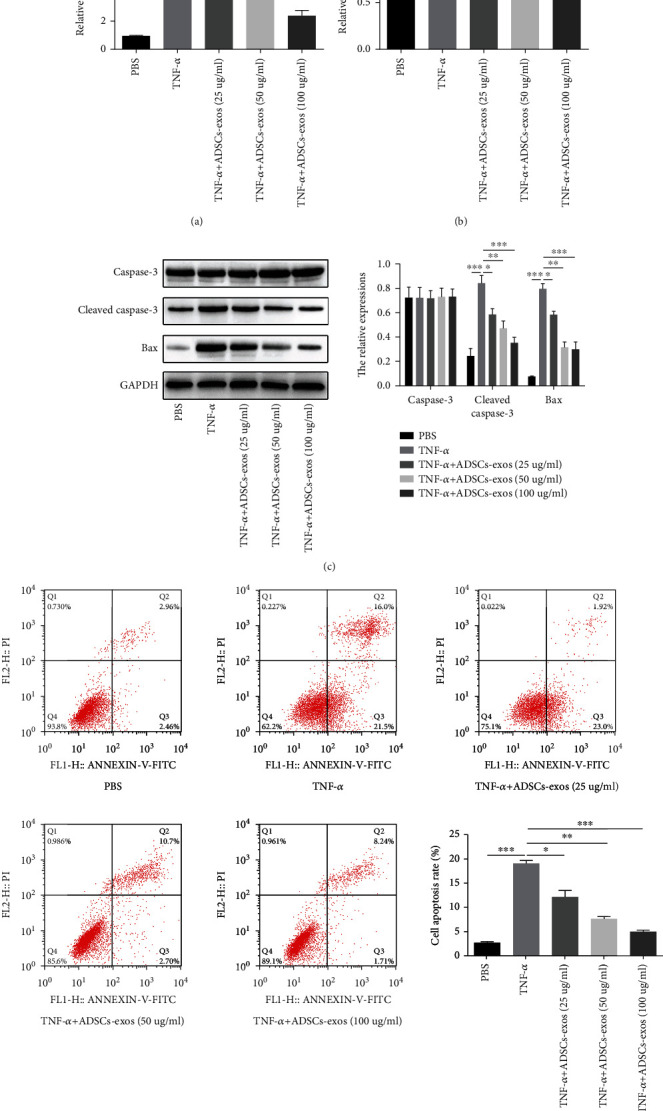
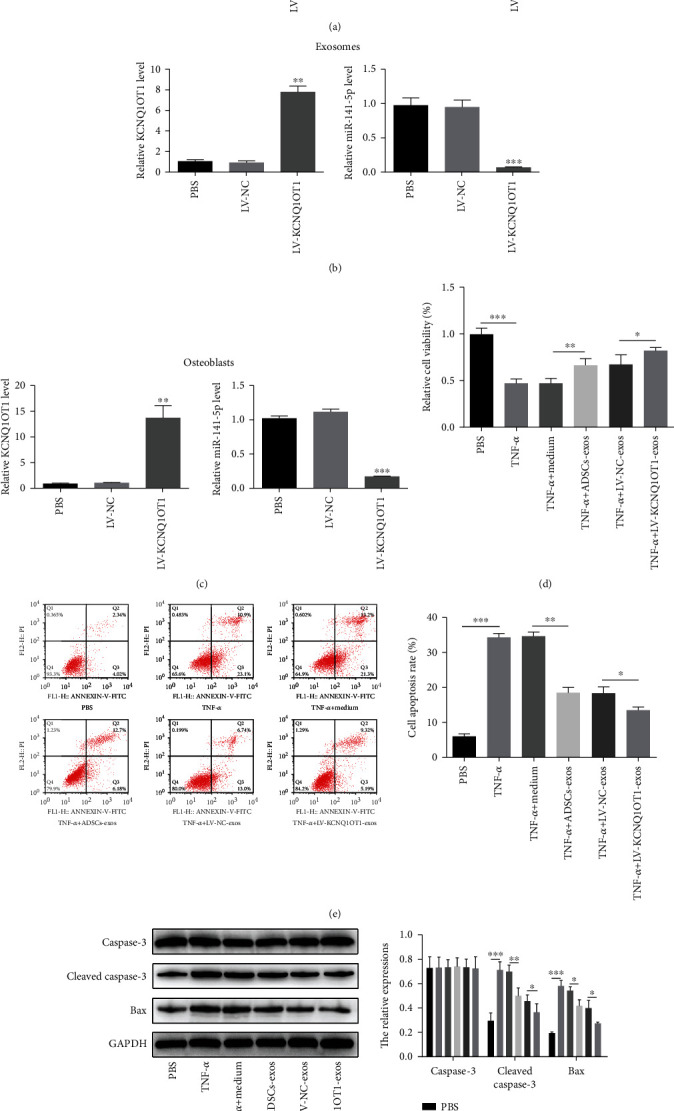
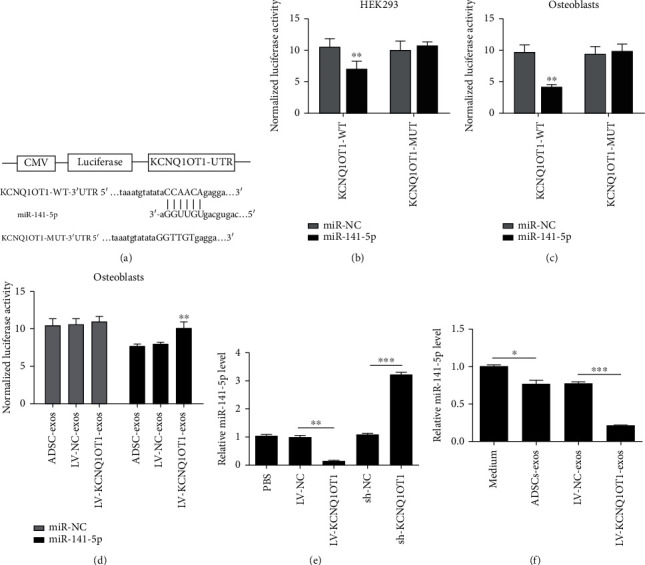
Primary osteoblasts were treated with different doses of tumor necrosis factor- (TNF-) (0, 1, 2.5, 5, and 10 ng/ml) and then cocultured with ADSCs-Exos or exosome-derived from lnc-KCNQ1OT1-modified ADSCs (KCNQ1OT1-Exos). The expression of miRNA-141-5p (miR-141-5p) and lnc-KCNQ1OT1 was evaluated by quantitative real-time polymerase chain reaction (qRT-PCR). The protein expression of cleaved-caspase-3, caspase-3, and Bax was determined by Western blot. Cell viability and apoptosis were assessed by Cell Counting Kit-8 (CCK-8) and flow cytometry analysis, respectively. The binding sites between KCNQ1OT1 and miR-141-5p were validated by dual-luciferase reporter assay.
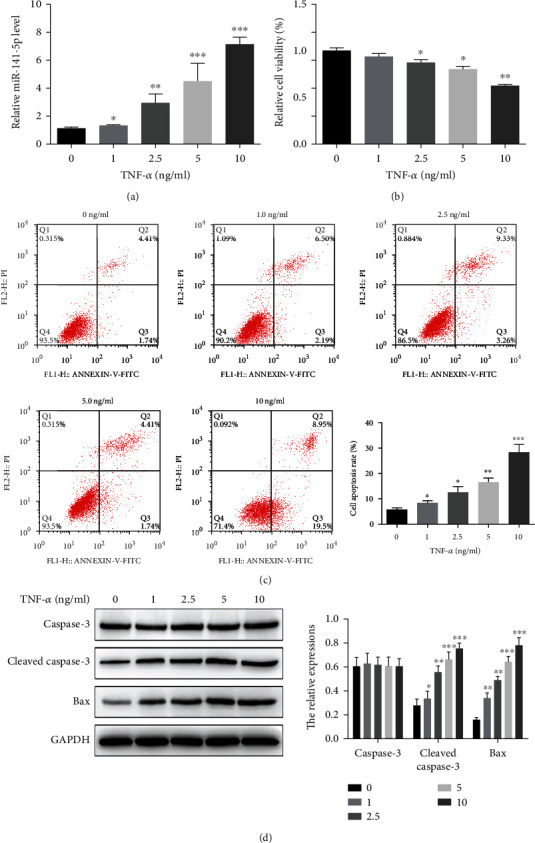
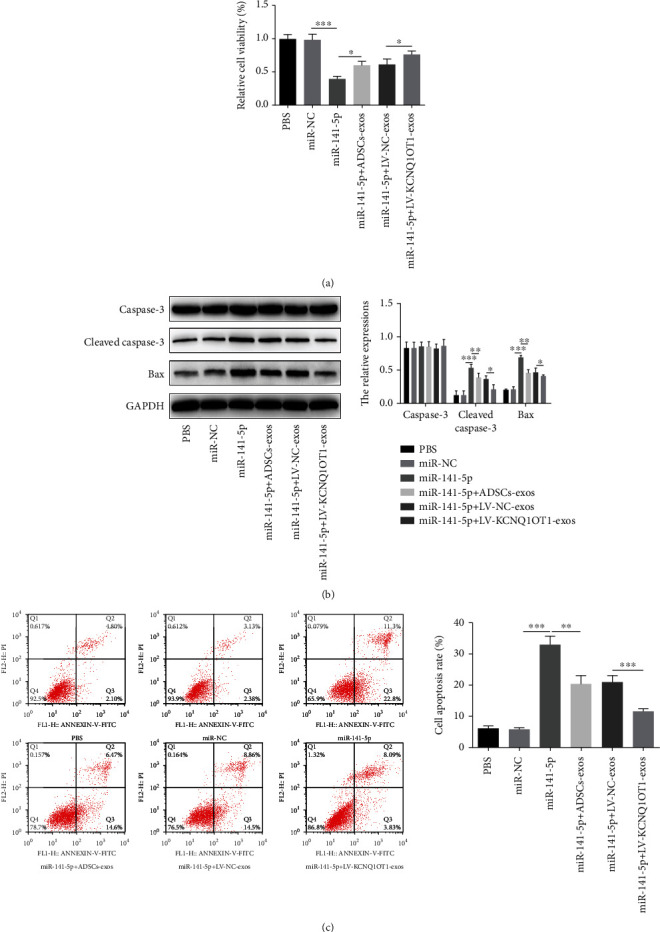
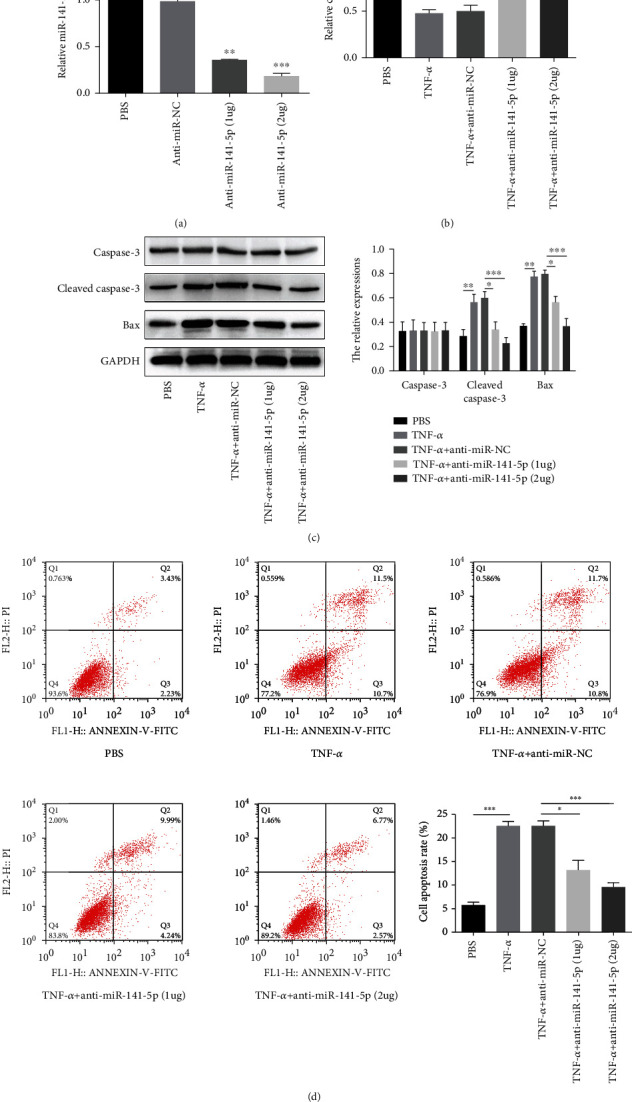
TNF- dose-dependently increased miR-141-5p expression, inhibited viability, and promoted apoptosis of osteoblasts. However, miR-141-5p silencing or cocultured with ADSCs-Exos attenuated these effects. In addition, KCNQ1OT1-Exos could more significantly attenuate the induced cytotoxicity and apoptosis compared to ADSCs-Exos. Moreover, miR-141-5p was confirmed as the target of KCNQ1OT1 by luciferase reporter assay.
ADSCs-Exos can attenuate cytotoxicity and apoptosis of TNF--induced primary osteoblasts. KCNQ1OT1-Exos have a more significant inhibitory effect compared to ADSCs-Exos by the function of sponging miR-141-5p, suggesting that KCNQ1OT1-Exos can be promising agents in osteoporosis treatment.
骨质疏松症是一种全球性的医学和社会经济负担,其特征为骨强度和微观结构的系统性损害。脂肪来源干细胞外泌体(ADSCs-Exos)已被证实可在各种组织和器官的修复中发挥有效作用。本研究旨在探讨ADSCs-Exos和一种新型长链非编码RNA KCNQ1OT1在骨质疏松症中的作用及其潜在机制。
用不同剂量的肿瘤坏死因子-α(TNF-α)(0、1、2.5、5和10 ng/ml)处理原代成骨细胞,然后与ADSCs-Exos或源自lnc-KCNQ1OT1修饰的ADSCs的外泌体(KCNQ1OT1-Exos)共培养。通过定量实时聚合酶链反应(qRT-PCR)评估miRNA-141-5p(miR-141-5p)和lnc-KCNQ1OT1的表达。通过蛋白质印迹法测定裂解的半胱天冬酶-3、半胱天冬酶-3和Bax的蛋白表达。分别通过细胞计数试剂盒-8(CCK-8)和流式细胞术分析评估细胞活力和凋亡。通过双荧光素酶报告基因测定验证KCNQ1OT1与miR-141-5p之间的结合位点。
TNF-α剂量依赖性地增加miR-141-5p表达,抑制成骨细胞活力并促进其凋亡。然而,miR-141-5p沉默或与ADSCs-Exos共培养可减弱这些作用。此外,与ADSCs-Exos相比,KCNQ1OT1-Exos可更显著地减弱诱导的细胞毒性和凋亡。此外,荧光素酶报告基因测定证实miR-141-5p是KCNQ1OT1的靶标。
ADSCs-Exos可减弱TNF-α诱导的原代成骨细胞的细胞毒性和凋亡。与ADSCs-Exos相比,KCNQ1OT1-Exos通过海绵化miR-141-5p的功能具有更显著的抑制作用,表明KCNQ1OT1-Exos有望成为骨质疏松症治疗的药物。