Chen Bo, Liu Wen, Chen Yanbing, She Quan, Li Min, Zhao HongYe, Zhao Weihong, Peng Zhihang, Wu Jianqing
Department of Geriatrics, Jiangsu Provincial Key Laboratory of Geriatrics, First Affiliated Hospital, Nanjing Medical University, Nanjing, China.
First Clinical Medical College of Nanjing Medical University, Nanjing, China.
Front Med (Lausanne). 2021 Oct 12;8:719530. doi: 10.3389/fmed.2021.719530. eCollection 2021.
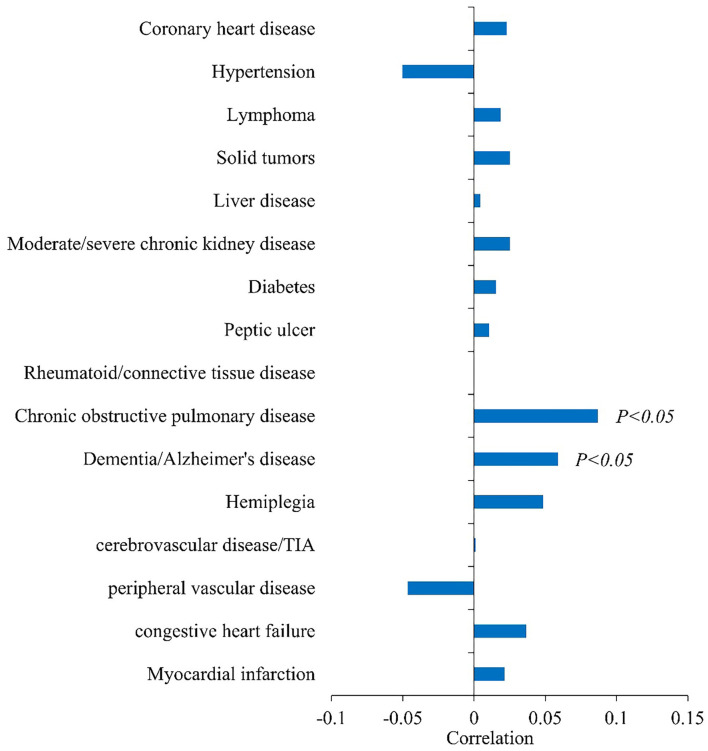
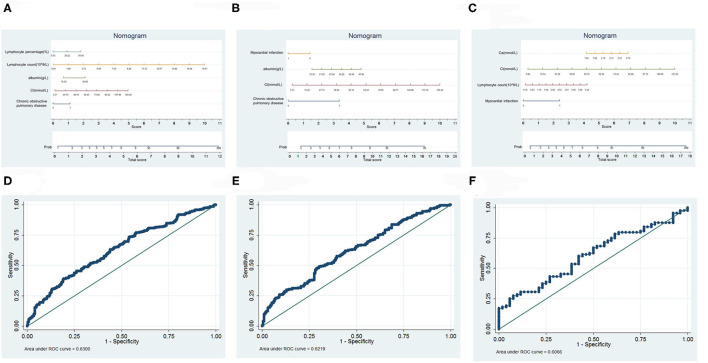
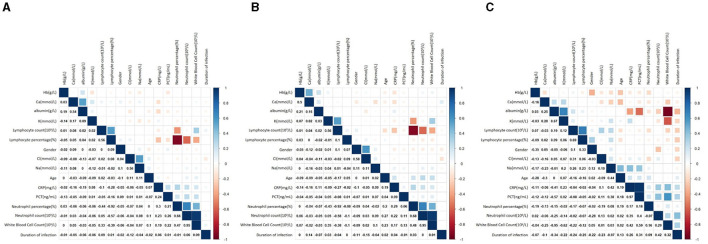
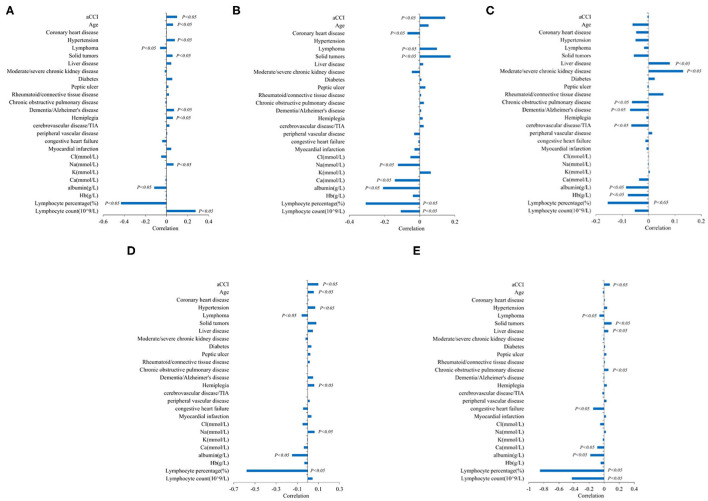
Malnutrition and comorbidity are two common geriatric syndromes. The pathology of pneumonia is multifactorial, making its diagnosis and management a great challenge. Hospital-acquired pneumonia (HAP) and community-acquired pneumonia (CAP) are two main types of pneumonia. However, the effect of geriatric syndromes on pneumonia and its prognosis have not been clearly explored. We collected the relevant electronic data of inpatients aged over 65 years and diagnosed with pneumonia in the Geriatrics Department Building of the First Affiliated Hospital with Nanjing Medical University between December 2018 and December 2019, and further divided them into HAP group and CAP group. The correlations of age, age-adjusted Charlson Comorbidity Index (aCCI), basic diseases and nutritional indexes (i.e., albumin, electrolyte, hemoglobin) with pneumonia and prognosis were analyzed. We analyzed the associations between infection prognosis/infection level and age, nutritional status, aCCI and underlying diseases, using linear regression model. The box plot was applied to present infection outcome, and the nomogram was built for predicting infection outcomes. We utilized the heat map to show the associations between nutritional status and infection level/outcome in all infected patients, HAP, and CAP. The final study comprised samples of 669 pneumonia patients divided into HAP group ( = 517) and CAP group ( = 152). In all patients, the infection outcome was negatively correlated with age ( = 0.013). The level of albumin was negatively correlated with infection prognosis in all patients ( = 0.03), and negatively correlated with neutrophil count and CRP ( = 0.008, < 0.001). ACCI was positively correlated with CRP ( = 0.003). The prognosis was negatively associated with age and albumin level. In the patients with basic dementia/Alzheimer's disease and chronic obstructive pulmonary disease/asthma, the prognosis was worse. There was a correlation between poor nutritional status-related indexes and inflammatory indexes. A poor nutritional status might predict a high risk of pneumonia in elderly adults. Advanced age and comorbidities were risk factors for the occurrence and poor prognosis of pneumonia. Therefore, comorbidities should be well-treated in the elderly with pneumonia.
营养不良和共病是两种常见的老年综合征。肺炎的病理是多因素的,这使其诊断和治疗成为一项巨大挑战。医院获得性肺炎(HAP)和社区获得性肺炎(CAP)是肺炎的两种主要类型。然而,老年综合征对肺炎及其预后的影响尚未得到明确探究。我们收集了2018年12月至2019年12月期间在南京医科大学第一附属医院老年医学科大楼住院的65岁以上且被诊断为肺炎的患者的相关电子数据,并将他们进一步分为HAP组和CAP组。分析了年龄、年龄校正的查尔森共病指数(aCCI)、基础疾病和营养指标(即白蛋白、电解质、血红蛋白)与肺炎及预后的相关性。我们使用线性回归模型分析了感染预后/感染水平与年龄、营养状况、aCCI和基础疾病之间的关联。应用箱线图展示感染结局,并构建列线图用于预测感染结局。我们利用热图展示所有感染患者、HAP患者和CAP患者中营养状况与感染水平/结局之间 的关联。最终研究包括669例肺炎患者样本,分为HAP组(=517)和CAP组(=152)。在所有患者中,感染结局与年龄呈负相关(=0.013)。白蛋白水平在所有患者中与感染预后呈负相关(=0.03),与中性粒细胞计数和CRP呈负相关(=0.008,<0.001)。ACCI与CRP呈正相关(=0.003)。预后与年龄和白蛋白水平呈负相关。在患有基础痴呆/阿尔茨海默病和慢性阻塞性肺疾病/哮喘的患者中,预后更差。营养状况不佳相关指标与炎症指标之间存在相关性。营养状况不佳可能预示着老年人患肺炎的高风险。高龄和共病是肺炎发生和预后不良的危险因素。因此,对于患有肺炎的老年人,应妥善治疗共病。