
热休克蛋白110、90、70和60家族的全癌综合分析
Comprehensive Pan-Cancer Analysis of Heat Shock Protein 110, 90, 70, and 60 Families.
作者信息
Yan Li-Rong, Shen Shi-Xuan, Wang Ang, Ding Han-Xi, Liu Ying-Nan, Yuan Yuan, Xu Qian
机构信息
Tumor Etiology and Screening Department of Cancer Institute and General Surgery, The First Affiliated Hospital of China Medical University, Key Laboratory of Cancer Etiology and Prevention, China Medical University, Liaoning Provincial Education Department, Shenyang, China.
出版信息
Front Mol Biosci. 2021 Oct 12;8:726244. doi: 10.3389/fmolb.2021.726244. eCollection 2021.
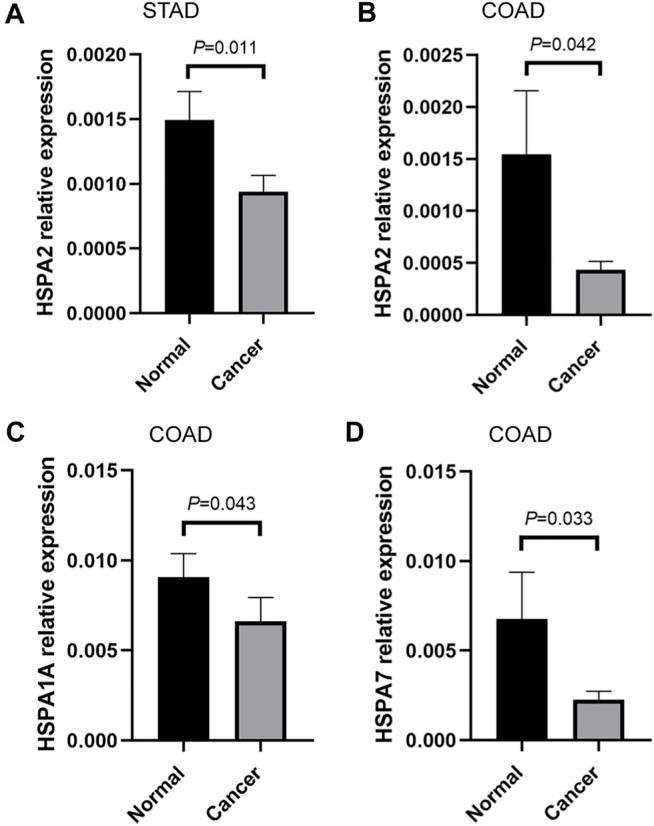
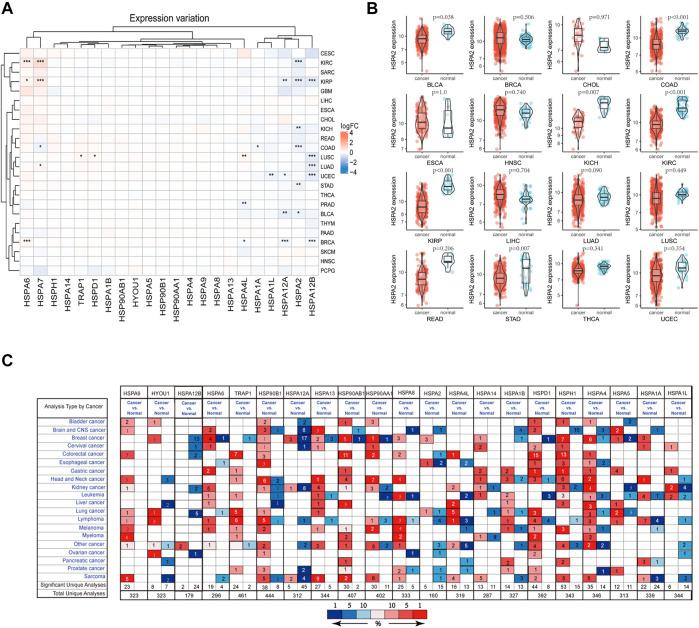
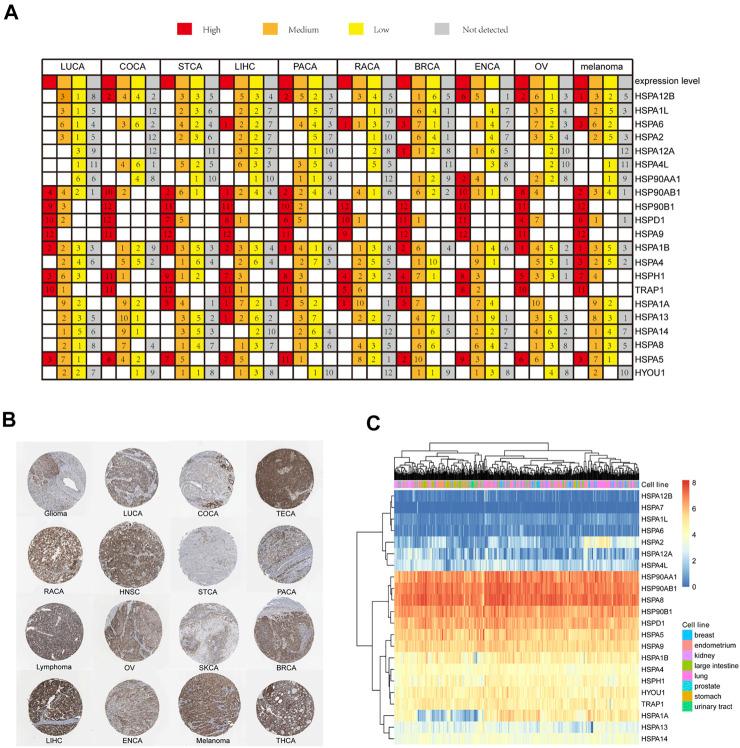
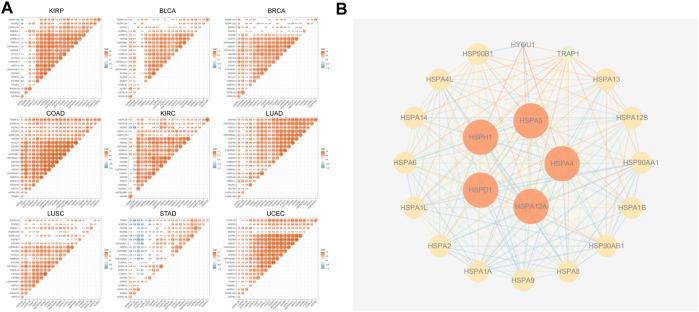
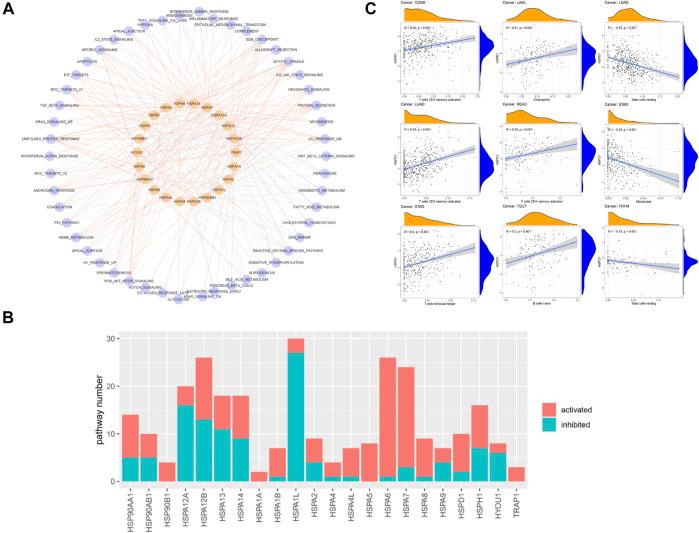
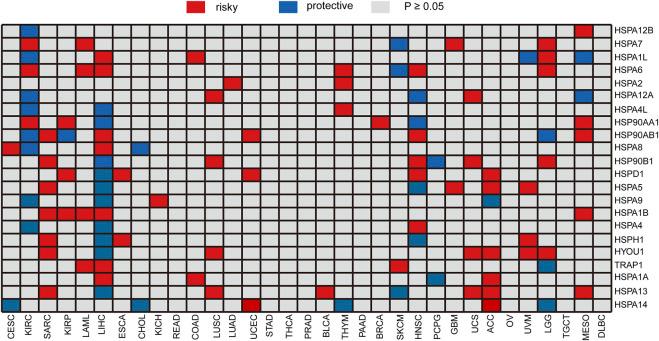
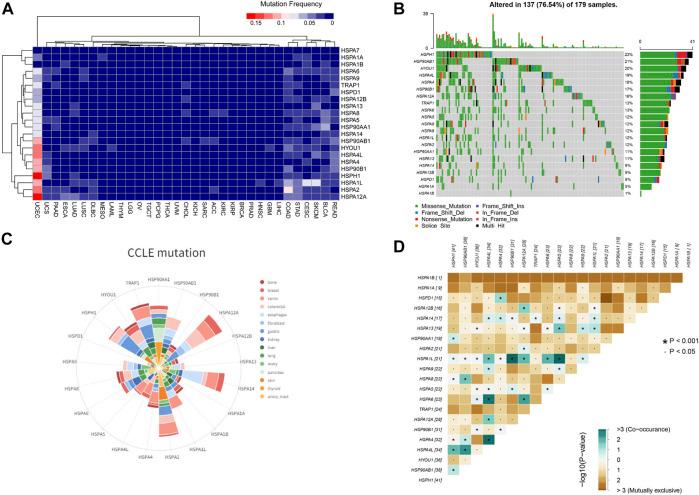
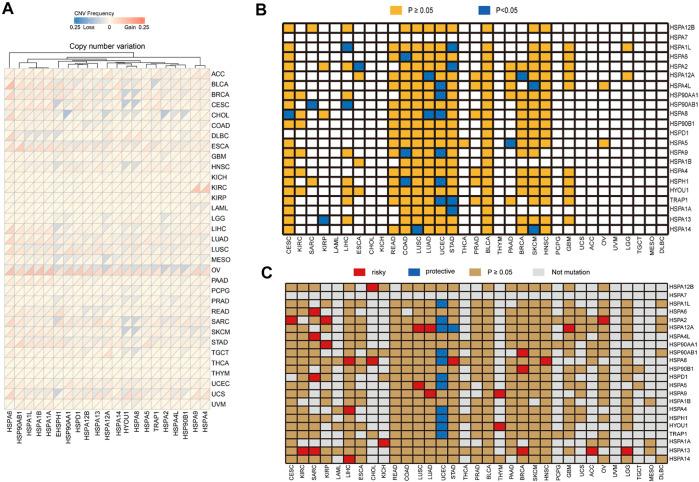
Here we carried out a panoramic analysis of the expression and prognosis of HSP110, HSP90, HSP70, and HSP60 families in 33 types of cancer, with the aim of deepening the systematic understanding of heat shock proteins (HSPs) in cancer. Next-generation sequencing data of multiple tumors were downloaded from TCGA, CCLE and Oncomine databases. RStudio 3.6.1 was used to analyze HSP110, HSP90, HSP70 and HSP60 families based on their expression in 33 types of cancer. The validations (stomach adenocarcinoma and colon adenocarcinoma tissues) were performed by qRT-PCR. HSPs were differentially expressed in different cancers. The results revealed mainly positive correlations among the expressions of HSPs in different cancers. Expressions of HSP family members were generally associated with poor prognosis in respiratory, digestive, urinary and reproductive system tumors and associated with good prognosis in cholangiocarcinoma, pheochromocytoma and paraganglioma. TCGA mutation analysis showed that HSP gene mutation rate in cancers was 0-23%. CCLE mutation analysis indicated that HSP gene mutation rate in 828 cell lines from 15 tumors was 0-17%. CNV analysis revealed that HSPs have different degrees of gene amplifications and deletions in cancers. Gene mutations of 15 HSPs influenced their protein expressions in different cancers. Copy number amplifications and deletions of 22 HSPs also impacted protein expression levels in pan-cancer. HSP gene mutation was generally a poor prognosis factor in cancers, except for uterine corpus endometrial carcinoma. CNVs in 14 HSPs showed varying influences on survival status in different cancers. HSPs may be involved in the activation and inhibition of multiple cancer-related pathways. HSP expressions were closely correlated with 22 immune cell infiltrations in different cancers. The qRT-PCR validation results showed that HSPA2 was down-regulated in stomach adenocarcinoma and colon adenocarcinoma; HSPA7 and HSPA1A also were down-regulated in colon adenocarcinoma. HSPA2-HSPA7 (r = 0.031, = 0.009) and HSPA1A-HSPA7 (r = 0.516, < 0.001) were positive correlation in colon adenocarcinoma. These analysis and validation results show that HSP families play an important role in the occurrence and development of various tumors and are potential tumor diagnostic and prognostic biomarkers as well as anti-cancer therapeutic targets.
在此,我们对33种癌症中热休克蛋白110(HSP110)、热休克蛋白90(HSP90)、热休克蛋白70(HSP70)和热休克蛋白60(HSP60)家族的表达及预后进行了全景分析,旨在加深对癌症中热休克蛋白(HSPs)的系统认识。从癌症基因组图谱(TCGA)、癌症细胞系百科全书(CCLE)和Oncomine数据库下载了多种肿瘤的二代测序数据。使用RStudio 3.6.1根据HSP110、HSP90、HSP70和HSP60家族在33种癌症中的表达情况进行分析。通过定量逆转录聚合酶链反应(qRT-PCR)进行验证(胃腺癌和结肠腺癌组织)。HSPs在不同癌症中存在差异表达。结果显示,不同癌症中HSPs的表达之间主要呈正相关。HSP家族成员的表达在呼吸、消化、泌尿和生殖系统肿瘤中通常与预后不良相关,而在胆管癌、嗜铬细胞瘤和副神经节瘤中与预后良好相关。TCGA突变分析表明,癌症中HSP基因突变率为0% - 23%。CCLE突变分析表明,来自15种肿瘤的828个细胞系中HSP基因突变率为0% - 17%。拷贝数变异(CNV)分析显示,HSPs在癌症中存在不同程度的基因扩增和缺失。15种HSPs的基因突变影响了它们在不同癌症中的蛋白质表达。22种HSPs的拷贝数扩增和缺失也影响了泛癌中的蛋白质表达水平。除子宫体子宫内膜癌外,HSP基因突变在癌症中通常是一个预后不良因素。14种HSPs的CNV对不同癌症的生存状态有不同影响。HSPs可能参与多种癌症相关通路的激活和抑制。HSPs的表达与不同癌症中22种免疫细胞浸润密切相关。qRT-PCR验证结果显示,HSPA2在胃腺癌和结肠腺癌中下调;HSPA7和HSPA1A在结肠腺癌中也下调。在结肠腺癌中,HSPA2 - HSPA7(r = 0.031,P = 0.009)和HSPA1A - HSPA7(r = 0.516,P < 0.001)呈正相关。这些分析和验证结果表明,HSP家族在各种肿瘤的发生和发展中起重要作用,是潜在的肿瘤诊断和预后生物标志物以及抗癌治疗靶点。
 Zotero 插件