Nippi Research Institute of Biomatrix, Toride, Ibaraki, Japan.
Department of Cell Biology and Histology, Akita University School of Medicine, Akita, Japan.
PLoS One. 2021 Oct 29;16(10):e0258699. doi: 10.1371/journal.pone.0258699. eCollection 2021.
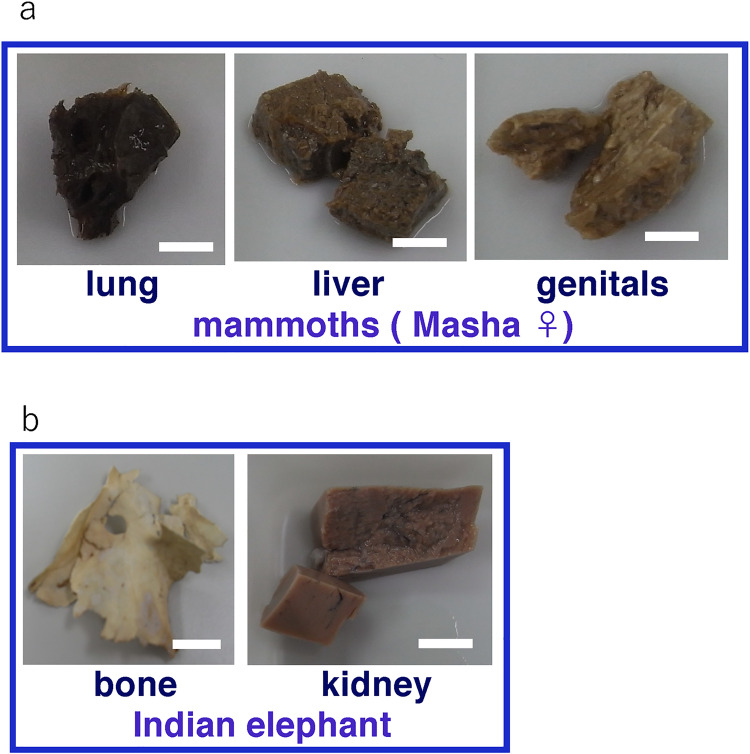
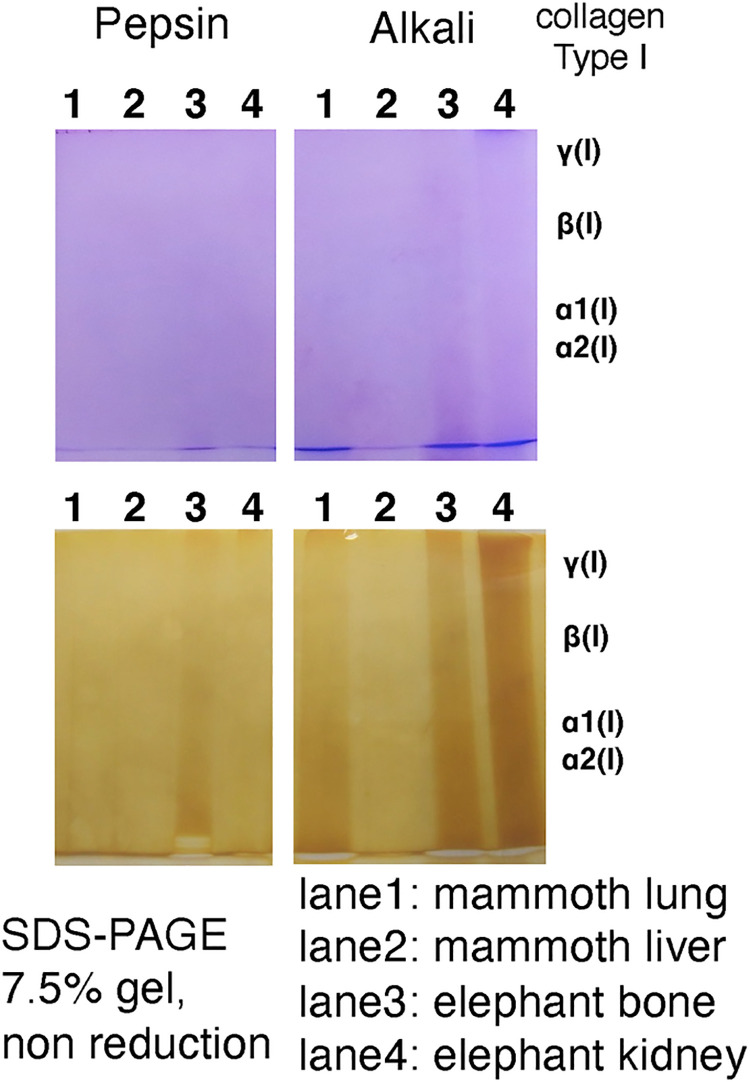
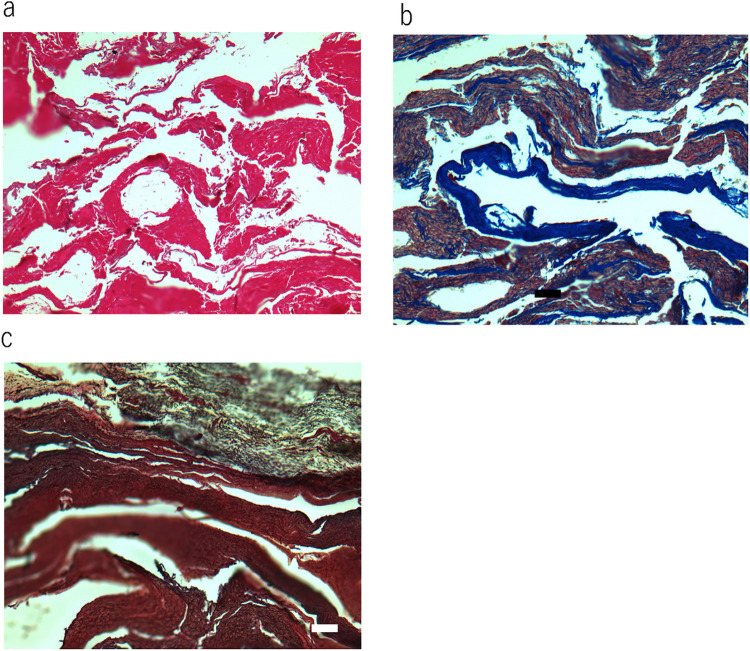
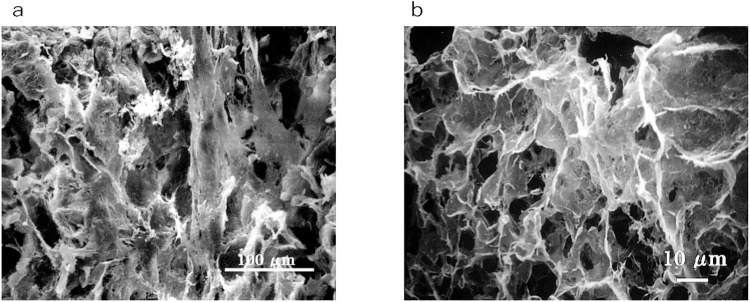
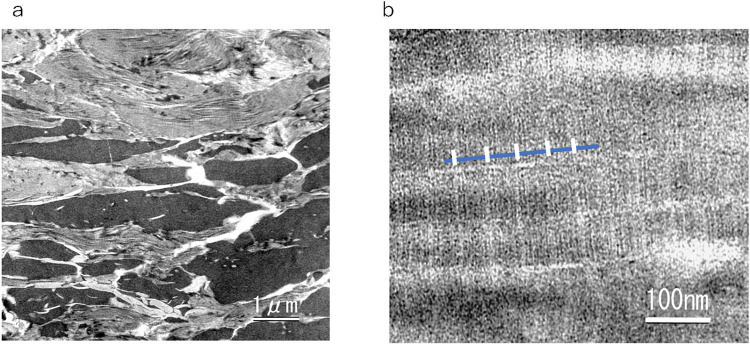
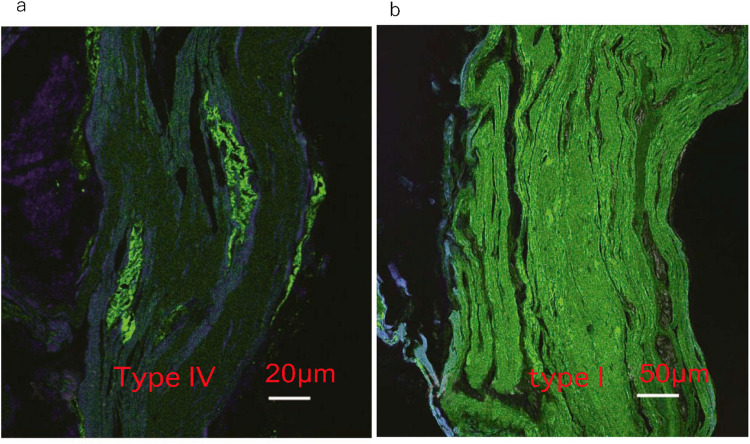
We investigated the characteristics of extracellular matrix (ECM) in the soft tissue of two frozen baby woolly mammoths (Mammuthus primigenius) that died and were buried in Siberian permafrost approximately 40,000 years ago. Morphological and biochemical analyses of mammoth lung and liver demonstrated that those soft tissues were preserved at the gross anatomical and histological levels. The ultrastructure of ECM components, namely a fibrillar structure with a collagen-characteristic pattern of cross-striation, was clearly visible with transmission and scanning electron microscopy. Type I and type IV collagens were detected by immunohistochemical observation. Quantitative amino acid analysis of liver and lung tissues of the baby mammoths indicated that collagenous protein is selectively preserved in these tissues as a main protein. Type I and type III collagens were detected as major components by means of liquid chromatography-mass spectrometry analysis after digestion with trypsin. These results indicate that the triple helical collagen molecule, which is resistant to proteinase digestion, has been preserved in the soft tissues of these frozen mammoths for 40,000 years.
我们研究了两只生活在 4 万年前、死于西伯利亚永久冻土层并被埋葬的长毛猛犸象(Mammuthus primigenius)软组织的细胞外基质(ECM)的特征。对猛犸象肺和肝的形态学和生物化学分析表明,这些软组织在大体解剖和组织学水平上得到了保存。用透射电子显微镜和扫描电子显微镜可清楚地观察到 ECM 成分的纤维状结构,具有胶原特征的交叉条纹图案。免疫组织化学观察检测到 I 型和 IV 型胶原。对幼猛犸象的肝和肺组织进行的定量氨基酸分析表明,胶原蛋白作为主要蛋白质在这些组织中得到了选择性保存。通过胰蛋白酶消化后,利用液相色谱-质谱分析检测到 I 型和 III 型胶原作为主要成分。这些结果表明,在这些冷冻猛犸象的软组织中,抵抗蛋白酶消化的三螺旋胶原分子已经保存了 4 万年。