Sichuan Provincial Center for Mental Health, Sichuan Academy of Medical Sciences & Sichuan Provincial People's Hospital, Chengdu 610072, China; Key Laboratory of psychosomatic medicine, Chinese Academy of Medical Sciences, Chengdu 610072, China.
Sichuan Provincial Center for Mental Health, Sichuan Academy of Medical Sciences & Sichuan Provincial People's Hospital, Chengdu 610072, China; Key Laboratory of psychosomatic medicine, Chinese Academy of Medical Sciences, Chengdu 610072, China.
J Affect Disord. 2022 Jan 15;297:301-308. doi: 10.1016/j.jad.2021.10.088. Epub 2021 Oct 29.
The coronavirus disease (COVID-19) pandemic has been a continuous global threat since the first identification of the disease in December 2019. COVID-19 vaccination is a crucial preventive approach that can halt this pandemic. However, many factors affect the willingness of the public to be vaccinated against COVID-19 at the early stage of the vaccination programme. We used network analysis to investigate the interrelation of vaccination willingness and its associated factors.
A population-representative sample of 539 Chinese adults completed a battery of online self-assessments, including those on vaccination willingness, health status, attitude towards vaccines, COVID-19-related psychological elements and other variables. Network analysis was performed using the R qgraph package.
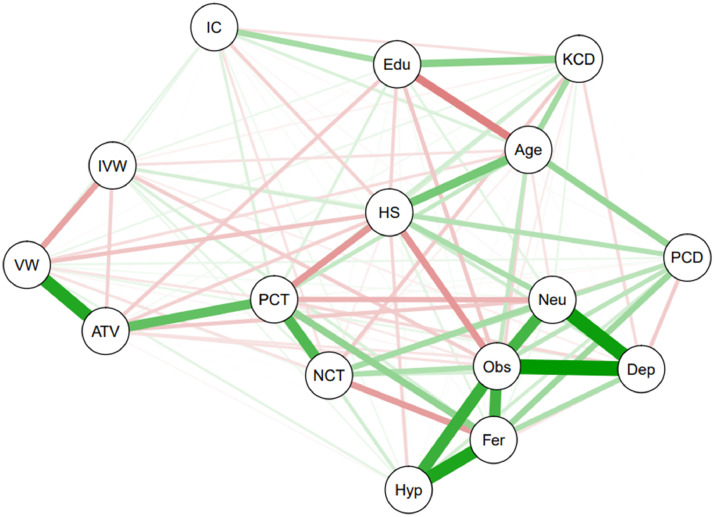
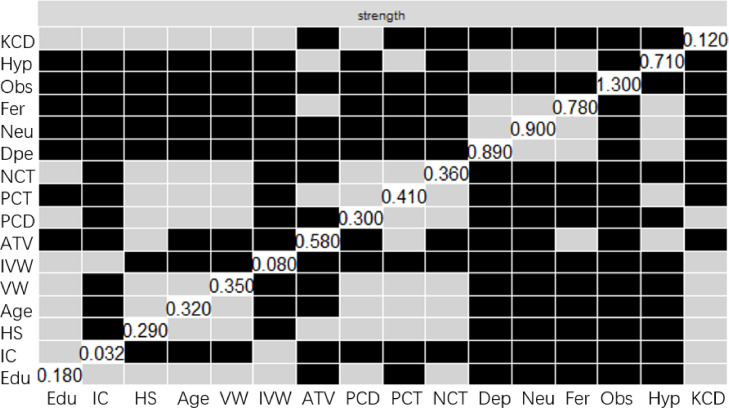
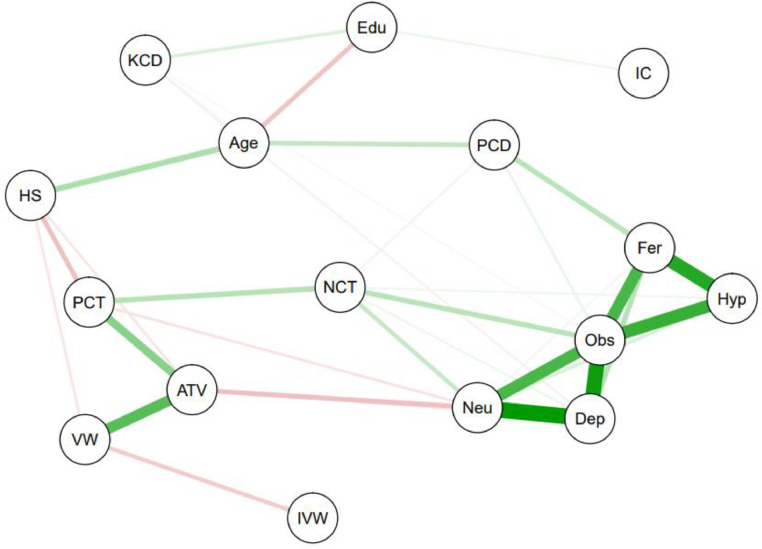
In total, 445 (82.6%) participants scored high on their willingness to vaccinate. Attitude towards vaccines, the influence of people around an individual and health status were directly significantly related to vaccination willingness. The betweenness of age was the highest and, the emotional states had the strongest centrality.
Network analysis is not sufficient to determine the causal relationships of the links between nodes. In addition, there are other latent essential elements that were not evaluated. Finally, the sample size was relatively small.
Network analysis showed that attitude toward vaccines and emotional states are the most critical factors affecting vaccination willingness, which indicates that we should pay attention to the impact of the dissemination of Internet information on vaccination willingness and public emotional states during a pandemic which is very important for promoting vaccination programs.
自 2019 年 12 月首次发现该疾病以来,冠状病毒病(COVID-19)大流行一直是持续的全球威胁。COVID-19 疫苗接种是一种重要的预防方法,可以阻止这一大流行。然而,在疫苗接种计划的早期,许多因素会影响公众对 COVID-19 疫苗接种的意愿。我们使用网络分析来研究疫苗接种意愿及其相关因素的相互关系。
一个具有代表性的 539 名中国成年人的人群样本完成了一系列在线自我评估,包括疫苗接种意愿、健康状况、对疫苗的态度、与 COVID-19 相关的心理因素和其他变量。使用 R qgraph 包进行网络分析。
总共有 445 名(82.6%)参与者对疫苗接种意愿评分较高。对疫苗的态度、周围人的影响和健康状况与疫苗接种意愿直接显著相关。年龄的中间度最高,情绪状态的中心度最强。
网络分析不足以确定节点之间链接的因果关系。此外,还有其他未评估的潜在重要因素。最后,样本量相对较小。
网络分析表明,对疫苗的态度和情绪状态是影响疫苗接种意愿的最关键因素,这表明我们应该注意在大流行期间互联网信息传播对疫苗接种意愿和公众情绪状态的影响,这对于促进疫苗接种计划非常重要。