Department of Gynecology, Leiden University Medical Center, Leiden, The Netherlands.
Department of Medical Oncology, Oncode Institute, Leiden University Medical Center, Leiden, The Netherlands.
J Immunother Cancer. 2021 Oct;9(10). doi: 10.1136/jitc-2021-003671.
A profound insight into the immune landscape of vulvar squamous cell carcinoma (VSCC) is lacking. Here, an in-depth interrogation of T cell infiltration, local immune contexture, signaling pathways and checkpoint molecule expression was performed in early-stage and late-stage VSCC.
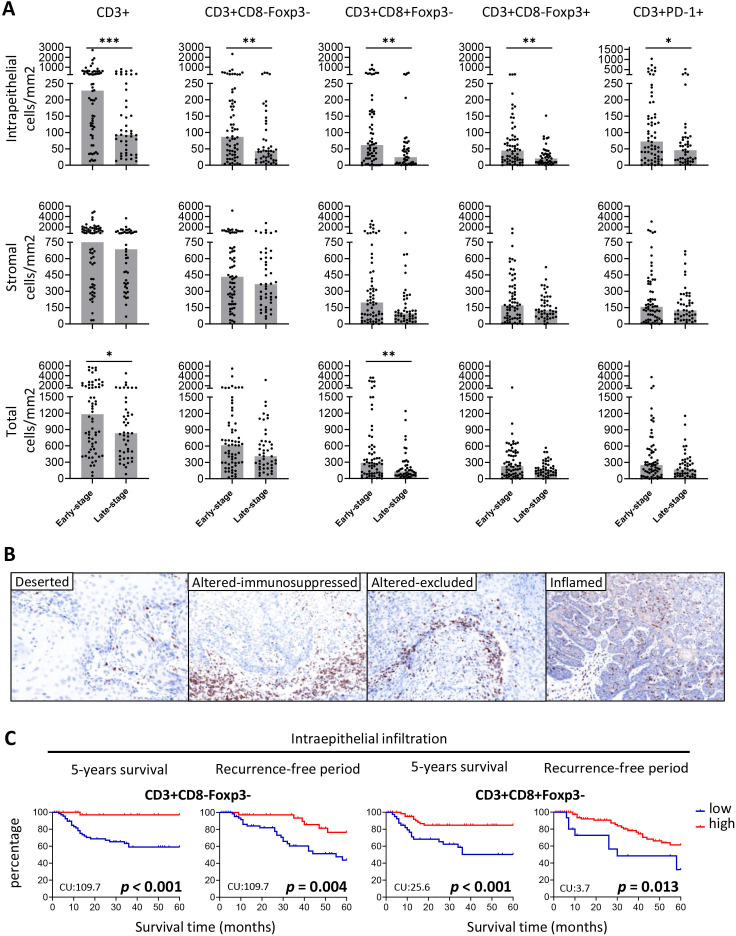
The type, location, and infiltration pattern of T cells were studied in 109 patients with primary VSCC FIGO stage I-III. RNA expression of genes involved in immune oncology and oncogenic signaling pathways was analyzed in 40 VSCC, matched for prognostic clinicopathological variables, analyzed for HPV and p53 status, and selected based on T cell infiltration.
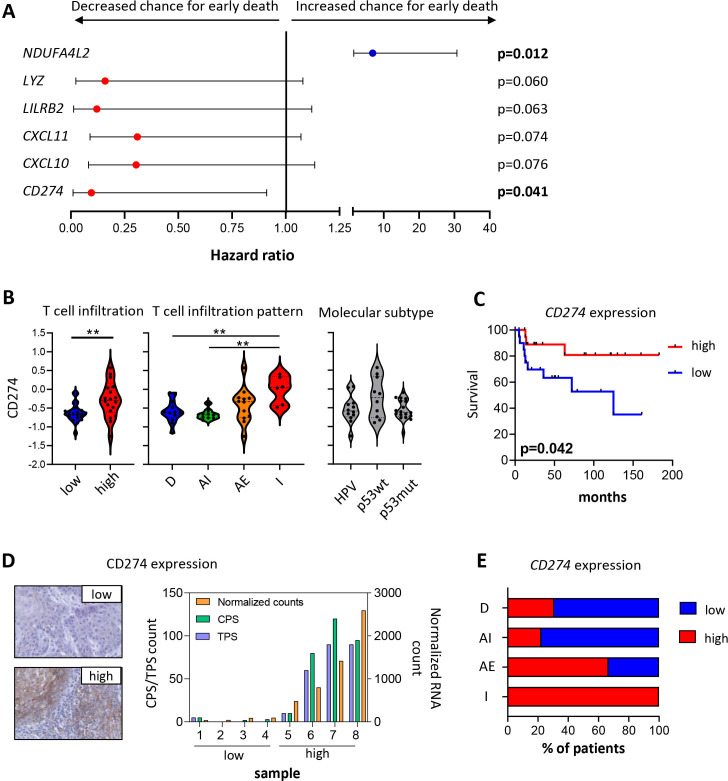
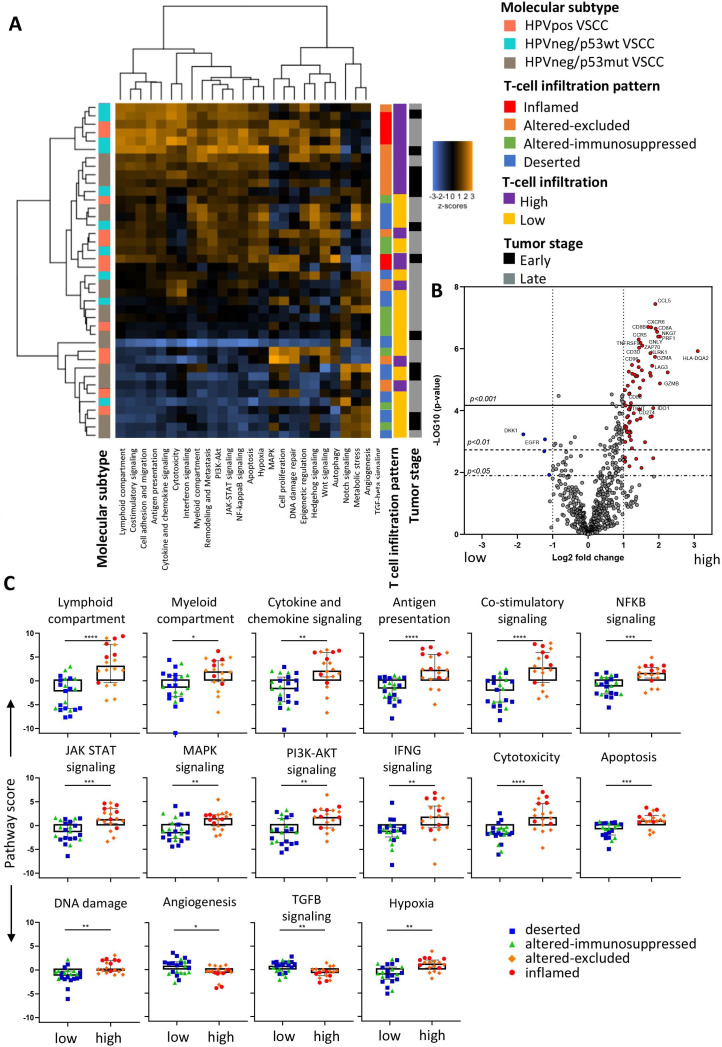
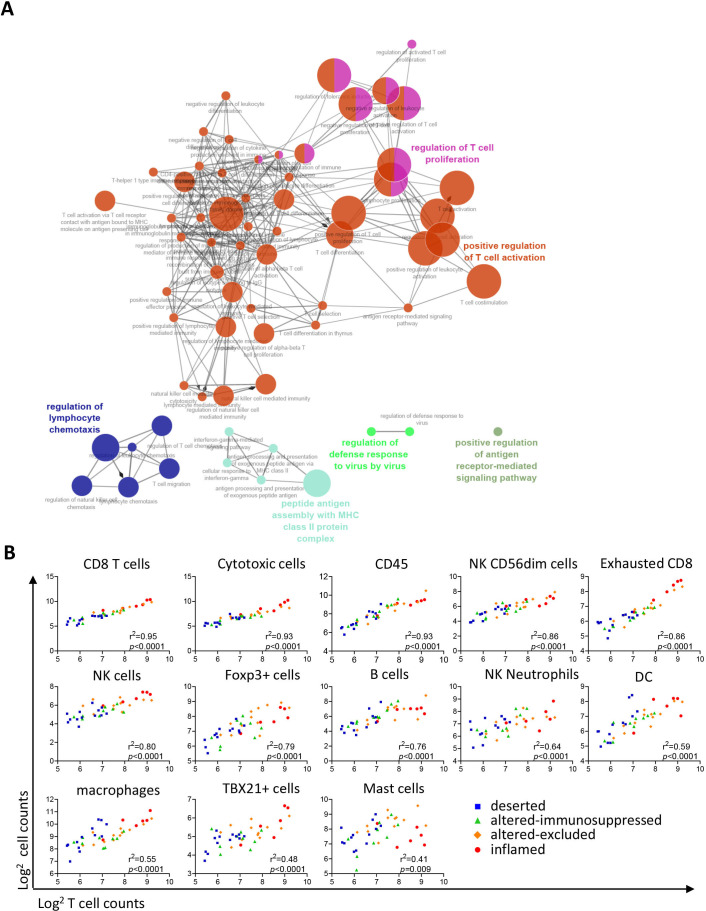
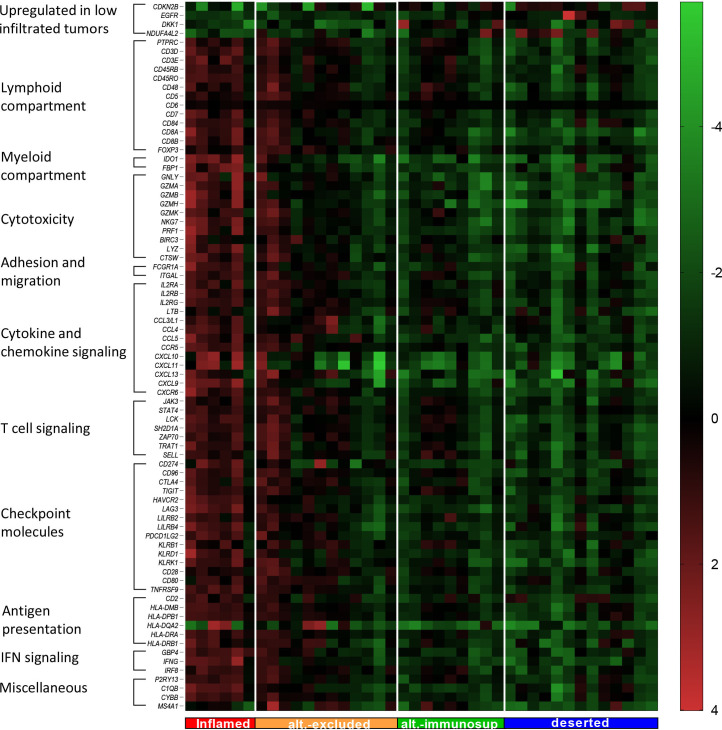
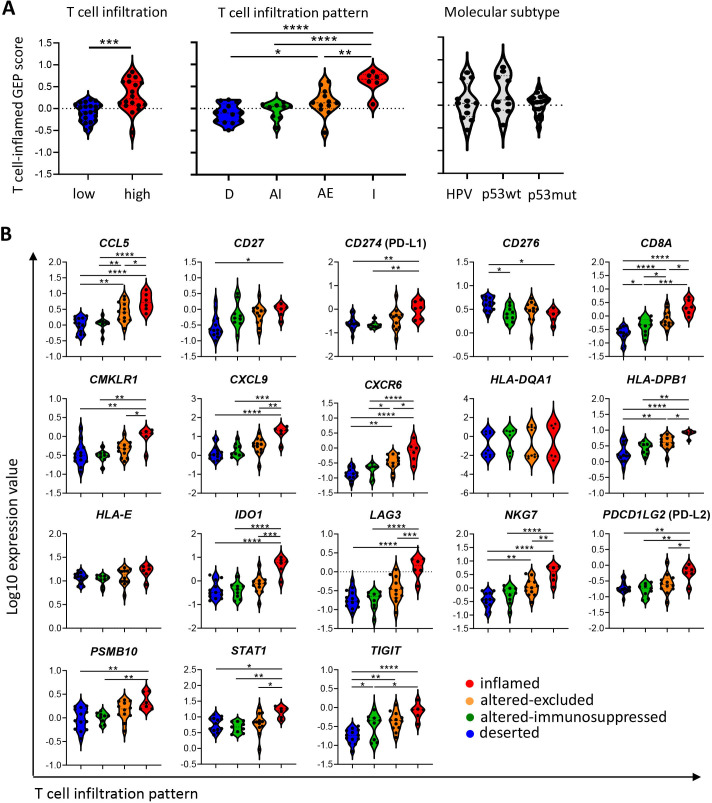
High intraepithelial infiltration with CD4 or CD8 T cells was associated with longer overall and recurrence-free survival and formed an independent prognostic factor, outperforming molecular subtype and stage of the disease. Strong T cell infiltrated VSCC displayed a coordinated immune response reflected by a positive association between T cells and different lymphocyte and myeloid cell subsets. The expression of genes involved in the migration of T cells and myeloid cells, T cell activation and costimulation, interferon (IFN)-γ signaling, cytotoxicity and apoptosis was higher than in low infiltrated tumors. An active immune signaling profile was observed in all inflamed, part of the altered-excluded and not in altered-immunosuppressed or deserted VSCC. While several checkpoint molecules were overexpressed, only expression displayed discriminatory ability and clinical usefulness. High expression was detected in all inflamed and ~60% of the altered-excluded VSCC.
An active immune signaling profile is present in 35% of primary FIGO I-III VSCCs, suggesting potential responsiveness to neoadjuvant PD-1/PD-L1 immunotherapy.
对外阴鳞状细胞癌(VSCC)的免疫景观缺乏深刻的认识。在这里,对早期和晚期 VSCC 中的 T 细胞浸润、局部免疫结构、信号通路和检查点分子表达进行了深入探讨。
对 109 例FIGO Ⅰ-Ⅲ期原发性 VSCC 患者的 T 细胞类型、位置和浸润模式进行了研究。对 40 例 VSCC 进行了免疫肿瘤学和致癌信号通路相关基因的 RNA 表达分析,这些 VSCC 匹配了预后临床病理变量,分析了 HPV 和 p53 状态,并根据 T 细胞浸润进行了选择。
上皮内高浸润 CD4 或 CD8 T 细胞与总生存和无复发生存延长相关,并形成独立的预后因素,优于分子亚型和疾病分期。强 T 细胞浸润的 VSCC 表现出协调的免疫反应,表现为 T 细胞与不同的淋巴细胞和髓样细胞亚群之间存在正相关。参与 T 细胞和髓样细胞迁移、T 细胞激活和共刺激、干扰素(IFN)-γ信号、细胞毒性和凋亡的基因表达高于低浸润肿瘤。在所有炎症性、部分改变排除性和非改变免疫抑制性或荒漠性 VSCC 中观察到活跃的免疫信号谱。虽然一些检查点分子过表达,但只有 表达具有区分能力和临床实用性。高 表达在所有炎症性和~60%的改变排除性 VSCC 中均有检测到。
35%的原发性 FIGO I-III VSCC 存在活跃的免疫信号谱,提示对新辅助 PD-1/PD-L1 免疫治疗有潜在反应性。