Division of Neuroscience, IRCCS San Raffaele Scientific Institute, 20132, Milan, Italy.
Center for Genomic Science of IIT@SEMM, Istituto Italiano di Tecnologia (IIT), 20139, Milan, Italy.
Nat Commun. 2021 Oct 29;12(1):6237. doi: 10.1038/s41467-021-26519-x.
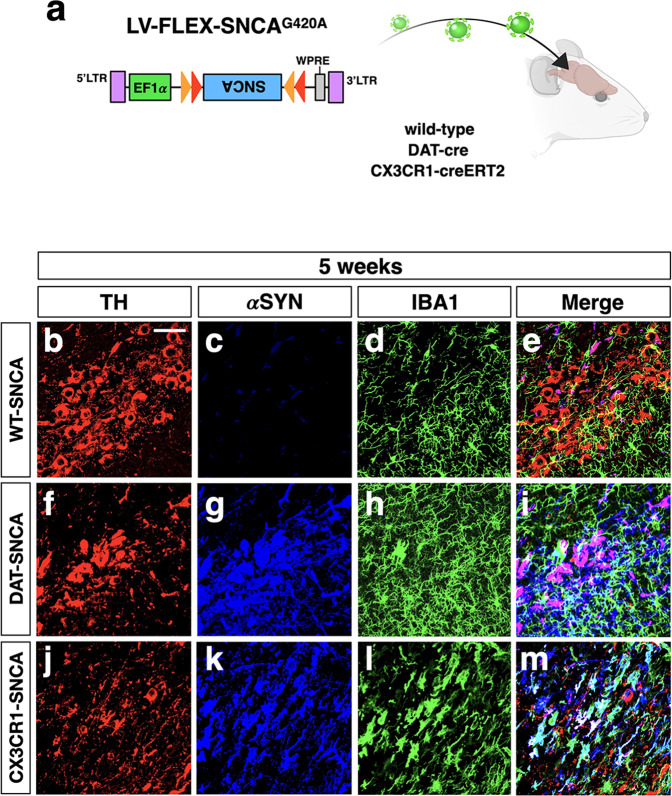
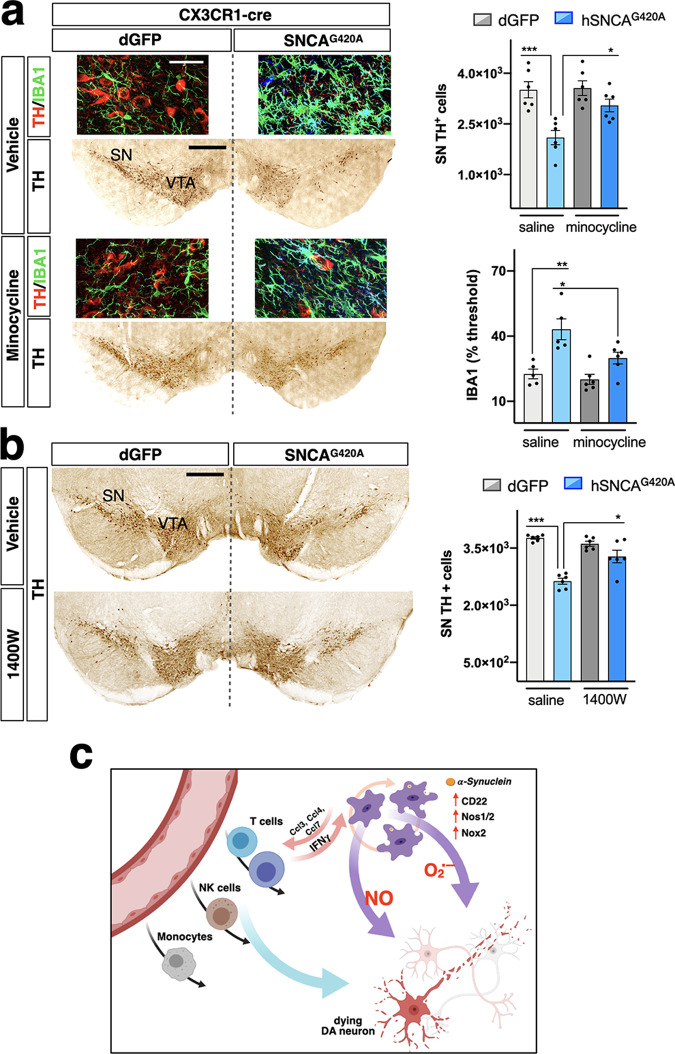
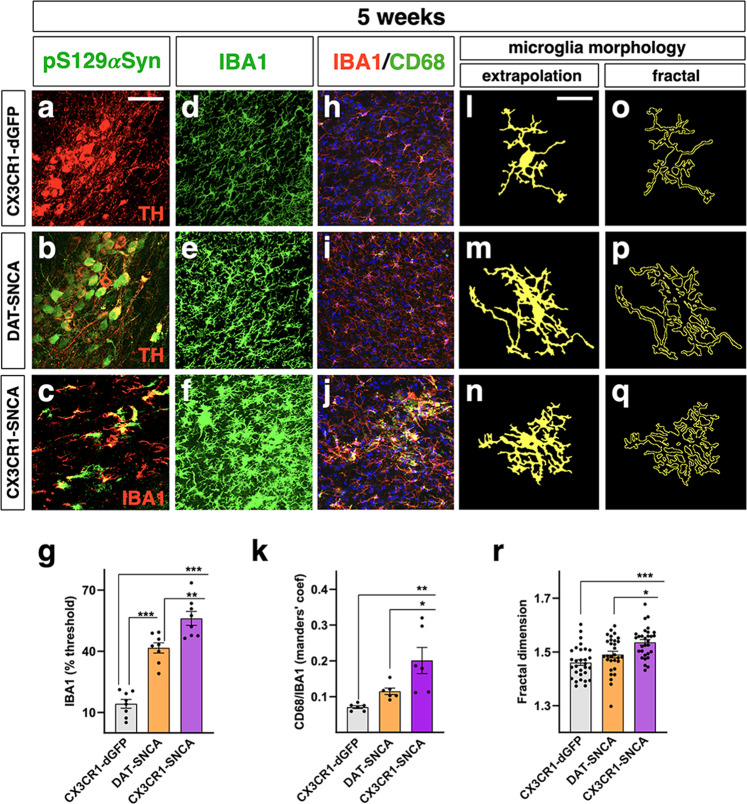
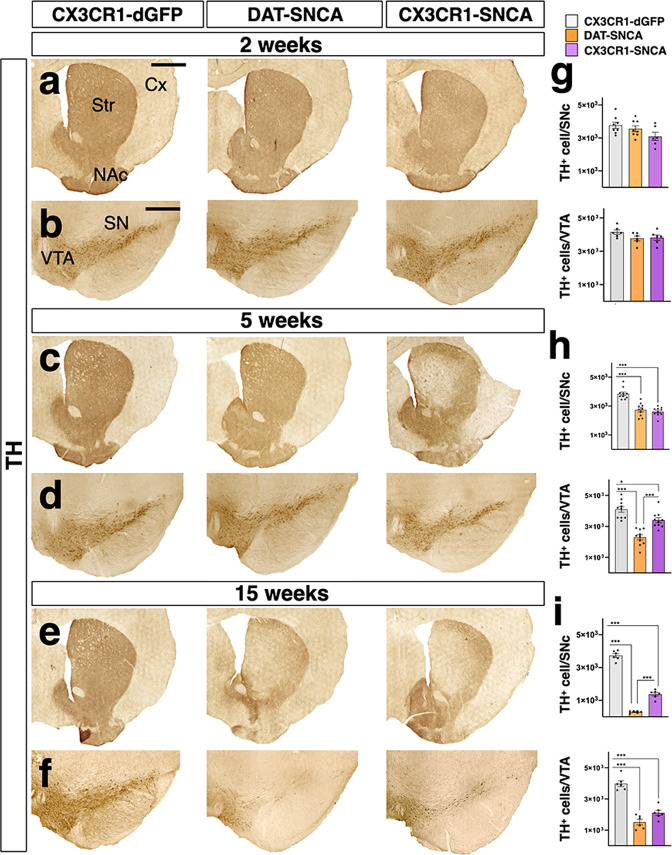
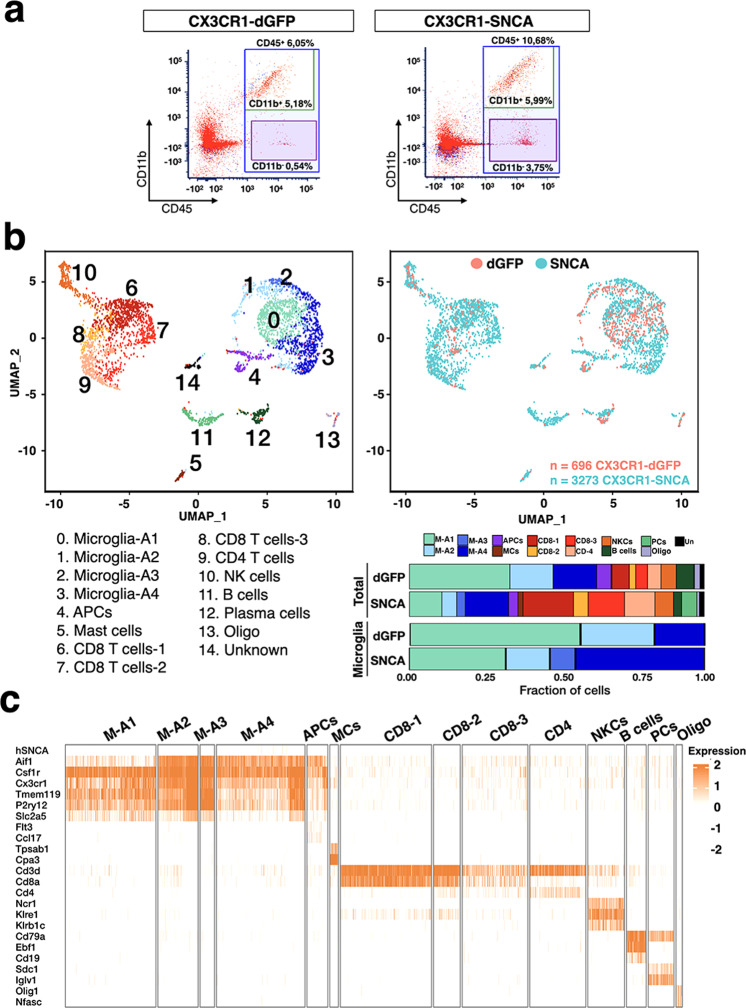
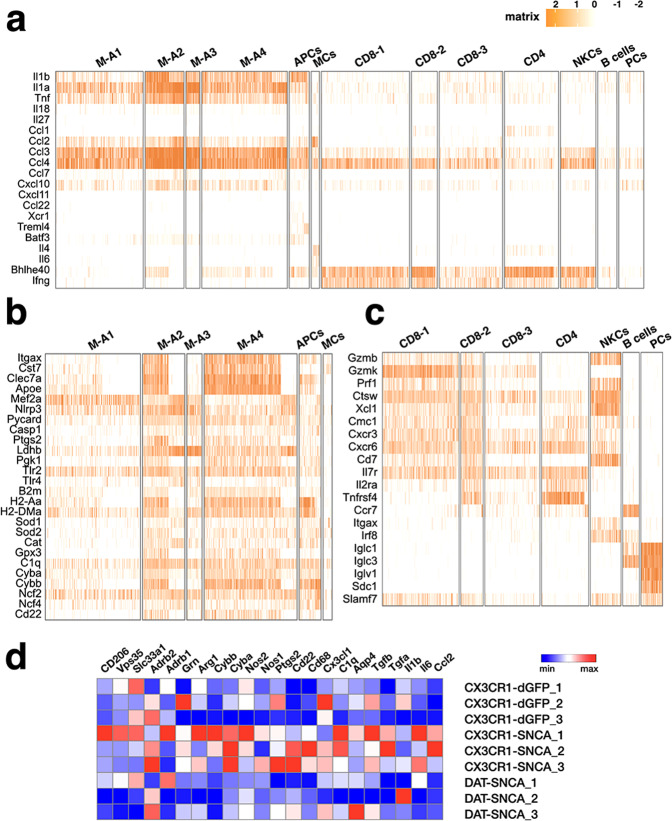
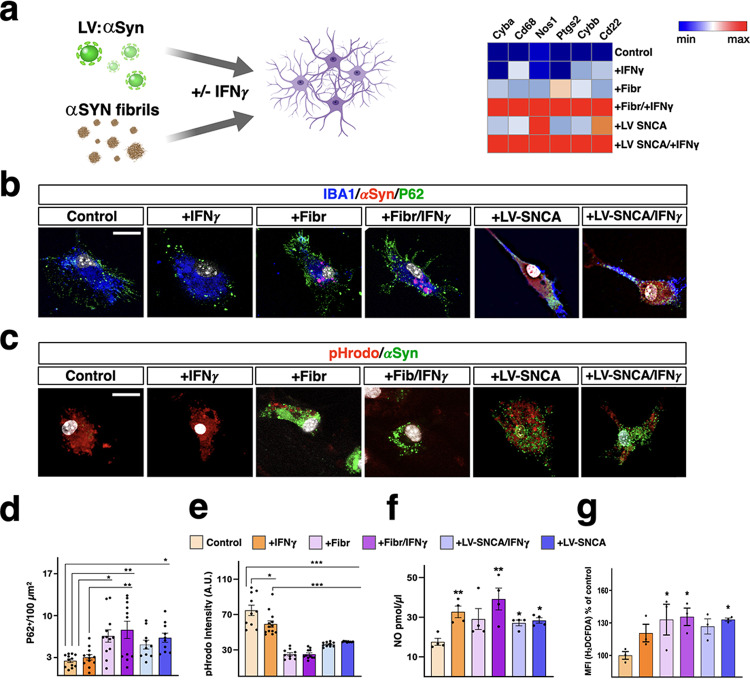
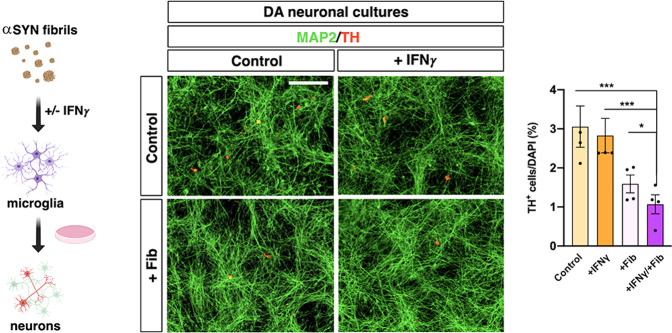
Recent findings in human samples and animal models support the involvement of inflammation in the development of Parkinson's disease. Nevertheless, it is currently unknown whether microglial activation constitutes a primary event in neurodegeneration. We generated a new mouse model by lentiviral-mediated selective α-synuclein (αSYN) accumulation in microglial cells. Surprisingly, these mice developed progressive degeneration of dopaminergic (DA) neurons without endogenous αSYN aggregation. Transcriptomics and functional assessment revealed that αSYN-accumulating microglial cells developed a strong reactive state with phagocytic exhaustion and excessive production of oxidative and proinflammatory molecules. This inflammatory state created a molecular feed-forward vicious cycle between microglia and IFNγ-secreting immune cells infiltrating the brain parenchyma. Pharmacological inhibition of oxidative and nitrosative molecule production was sufficient to attenuate neurodegeneration. These results suggest that αSYN accumulation in microglia induces selective DA neuronal degeneration by promoting phagocytic exhaustion, an excessively toxic environment and the selective recruitment of peripheral immune cells.
最近在人类样本和动物模型中的发现支持炎症参与帕金森病的发展。然而,目前尚不清楚小胶质细胞的激活是否构成神经退行性变的主要事件。我们通过慢病毒介导的选择性α-突触核蛋白(αSYN)在小胶质细胞中的积累,产生了一种新的小鼠模型。令人惊讶的是,这些小鼠在没有内源性αSYN 聚集的情况下,逐渐出现多巴胺能(DA)神经元的退化。转录组学和功能评估显示,积累αSYN 的小胶质细胞表现出强烈的反应状态,吞噬作用耗竭和氧化和促炎分子的过度产生。这种炎症状态在浸润脑实质的小胶质细胞和 IFNγ 分泌免疫细胞之间形成了一个分子正反馈恶性循环。氧化和硝化分子产生的药理学抑制足以减轻神经退行性变。这些结果表明,αSYN 在小胶质细胞中的积累通过促进吞噬作用耗竭、过度毒性环境和外周免疫细胞的选择性募集,诱导选择性的 DA 神经元退化。