Zhen Gehua, Dan Yang, Wang Ruomei, Dou Ce, Guo Qiaoyue, Zarr Melissa, Liu Linda N, Chen Lieping, Deng Ruoxian, Li Yusheng, Shao Zengwu, Cao Xu
Department of Orthopedic Surgery, Institute of Cell Engineering, Johns Hopkins University School of Medicine, Baltimore, MD, USA.
Department of Orthopedics, Union Hospital, Tongji Medical College, Huazhong University of Science and Technology, Wuhan, China.
Bone Res. 2021 Nov 1;9(1):47. doi: 10.1038/s41413-021-00161-1.
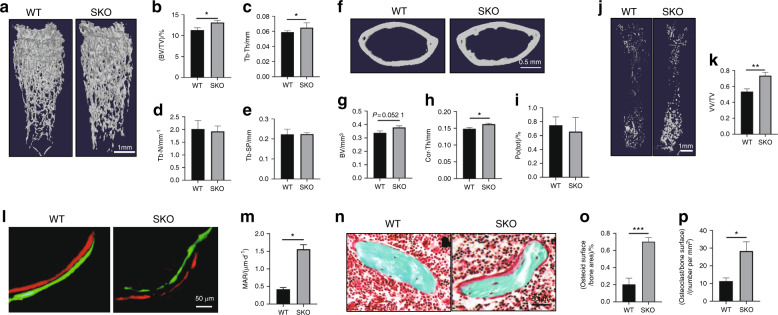
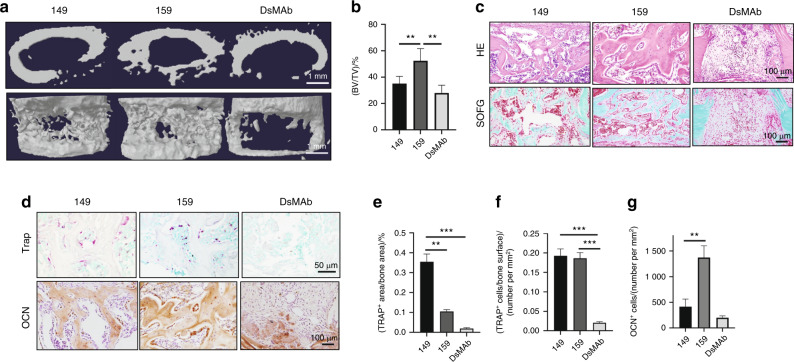
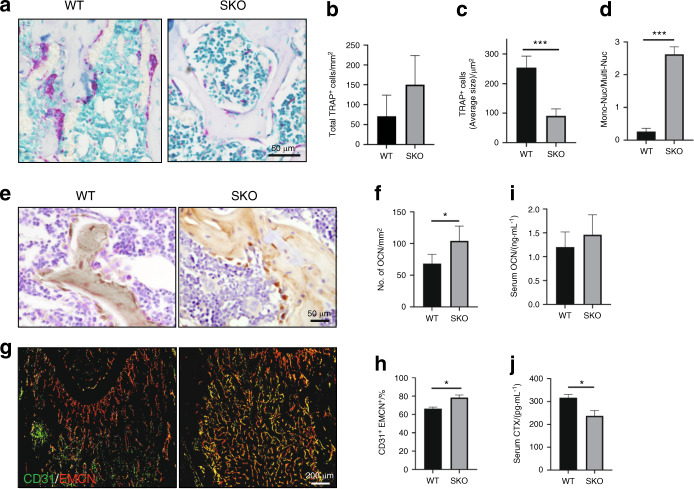
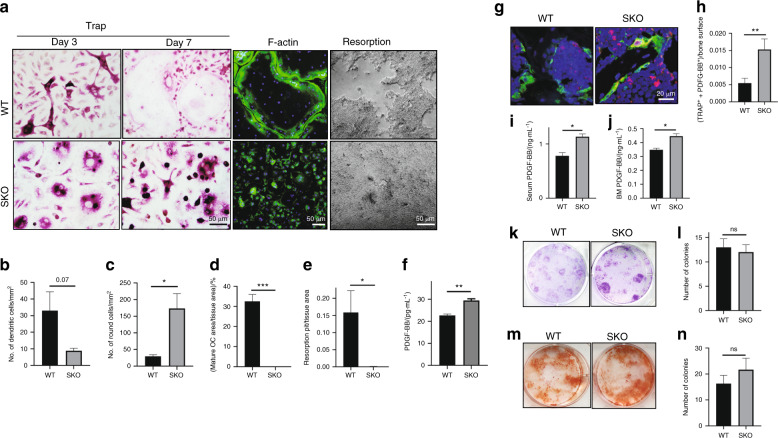
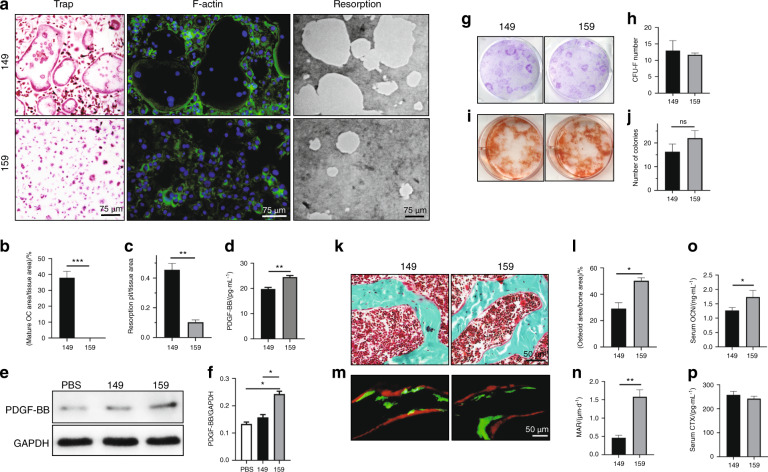
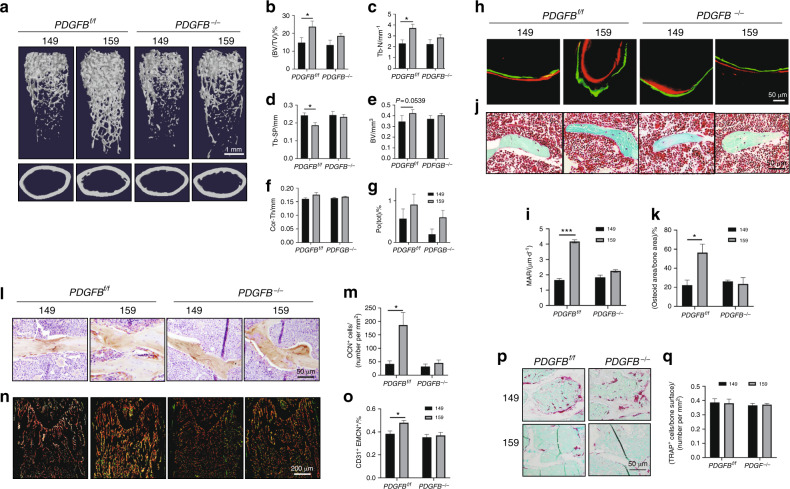
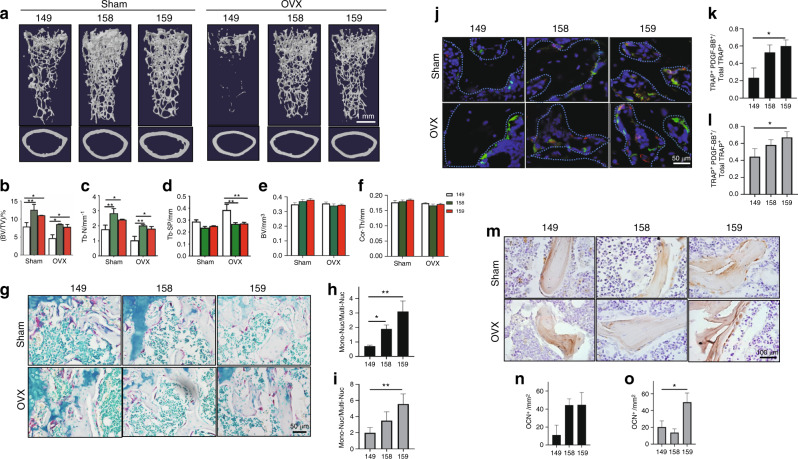
Osteoporosis (OP) is a common age-related disease characterized by a deterioration of bone mass and structure that predisposes patients to fragility fractures. Pharmaceutical therapies that promote anabolic bone formation in OP patients and OP-induced fracture are needed. We investigated whether a neutralizing antibody against Siglec-15 can simultaneously inhibit bone resorption and stimulate bone formation. We found that the multinucleation of osteoclasts was inhibited in SIGLEC-15 conditional knockout mice and mice undergoing Siglec-15 neutralizing antibody treatment. The secretion of platelet-derived growth factor-BB (PDGF-BB), the number of tartrate-resistant acid phosphatase-positive (TRAP) mononuclear cells, and bone formation were significantly increased in the SIGLEC-15 conditional knockout mice and antibody-treated mice. The anabolic effect of the Siglec-15 neutralizing antibody on bone formation was blunted in mice with Pdgfb deleted in TRAP cells. These findings showed that the anabolic effect of the Siglec-15 neutralizing antibody was mediated by elevating PDGF-BB production of TRAP mononuclear cells. To test the therapeutic potential of the Siglec-15 neutralizing antibody, we injected the antibody in an ovariectomy-induced osteoporotic mouse model, which mimics postmenopausal osteoporosis in women, and in two fracture healing models because fracture is the most serious health consequence of osteoporosis. The Siglec-15 neutralizing antibody effectively reduced bone resorption and stimulated bone formation in estrogen deficiency-induced osteoporosis. Of note, the Siglec-15 neutralizing antibody promoted intramembranous and endochondral ossification at the damaged area of cortical bone in fracture healing mouse models. Thus, the Siglec-15 neutralizing antibody shows significant translational potential as a novel therapy for OP and bone fracture.
骨质疏松症(OP)是一种常见的与年龄相关的疾病,其特征是骨量和骨结构恶化,使患者易发生脆性骨折。需要能够促进OP患者骨合成代谢以及OP所致骨折愈合的药物治疗。我们研究了抗Siglec-15中和抗体是否能同时抑制骨吸收并刺激骨形成。我们发现,在Siglec-15条件性敲除小鼠和接受Siglec-15中和抗体治疗的小鼠中,破骨细胞的多核化受到抑制。Siglec-15条件性敲除小鼠和抗体治疗小鼠中血小板衍生生长因子-BB(PDGF-BB)的分泌、抗酒石酸酸性磷酸酶阳性(TRAP)单核细胞数量以及骨形成均显著增加。在TRAP细胞中Pdgfb基因缺失的小鼠中,Siglec-15中和抗体对骨形成的合成代谢作用减弱。这些发现表明,Siglec-15中和抗体的合成代谢作用是通过提高TRAP单核细胞的PDGF-BB产生来介导的。为了测试Siglec-15中和抗体的治疗潜力,我们在卵巢切除诱导的骨质疏松小鼠模型(模拟女性绝经后骨质疏松症)以及两个骨折愈合模型中注射了该抗体,因为骨折是骨质疏松症最严重的健康后果。Siglec-15中和抗体在雌激素缺乏诱导的骨质疏松症中有效减少骨吸收并刺激骨形成。值得注意的是,Siglec-15中和抗体在骨折愈合小鼠模型的皮质骨损伤区域促进了膜内成骨和软骨内成骨。因此,Siglec-15中和抗体作为一种治疗OP和骨折的新型疗法具有显著的转化潜力。