Pavkova Ivona, Klimentova Jana, Bavlovic Jan, Horcickova Lenka, Kubelkova Klara, Vlcak Erik, Raabova Helena, Filimonenko Vlada, Ballek Ondrej, Stulik Jiri
Department of Molecular Pathology and Biology, Faculty of Military Health Sciences, University of Defence, Hradec Kralove, Czechia.
Electron Microscopy Core Facility, Institute of Molecular Genetics of the Czech Academy of Sciences, Prague, Czechia.
Front Microbiol. 2021 Oct 15;12:748706. doi: 10.3389/fmicb.2021.748706. eCollection 2021.
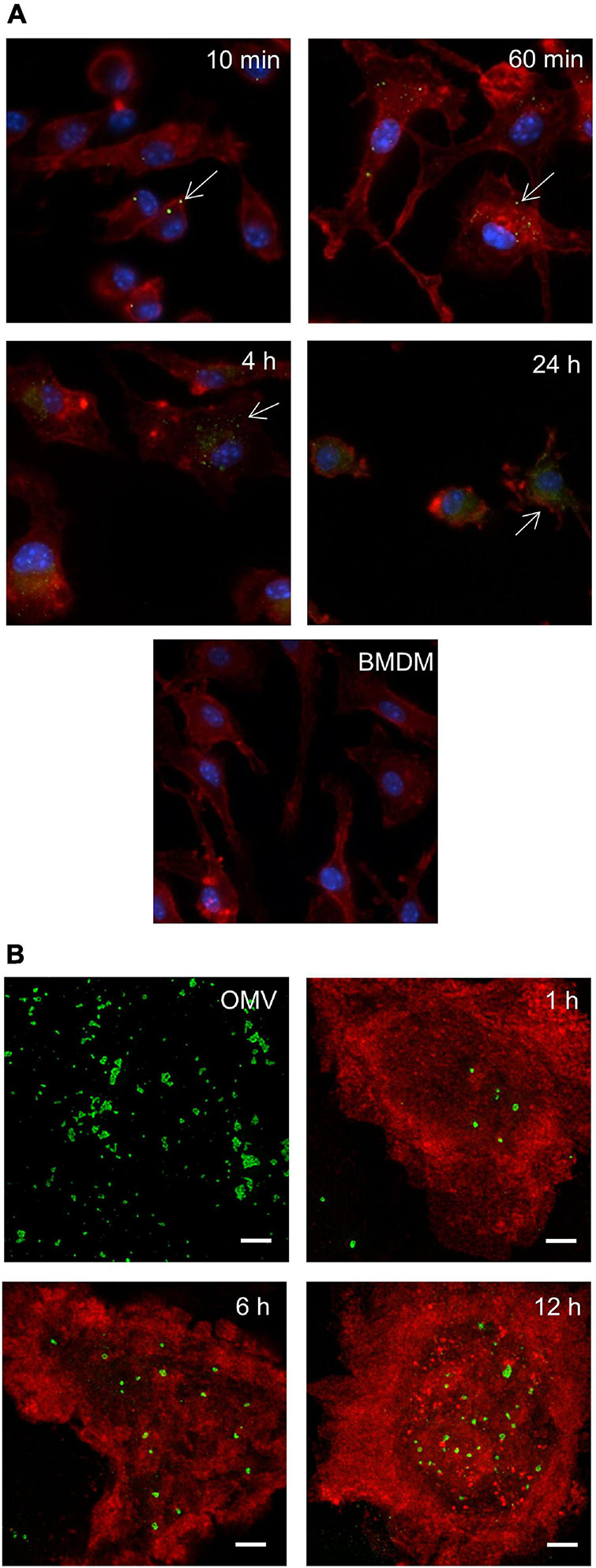
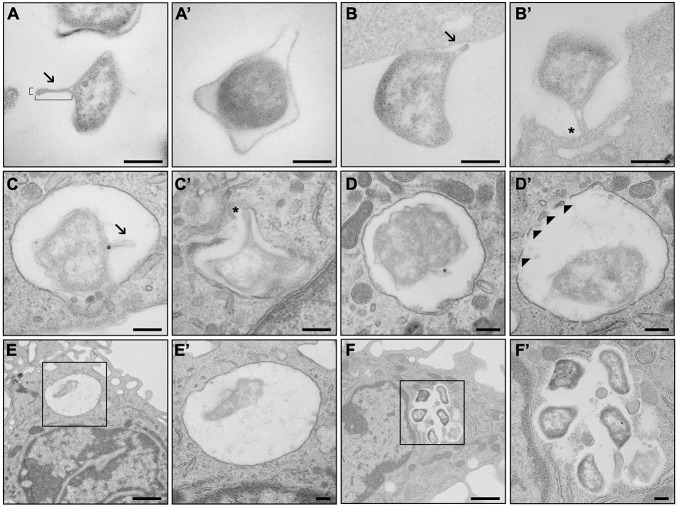
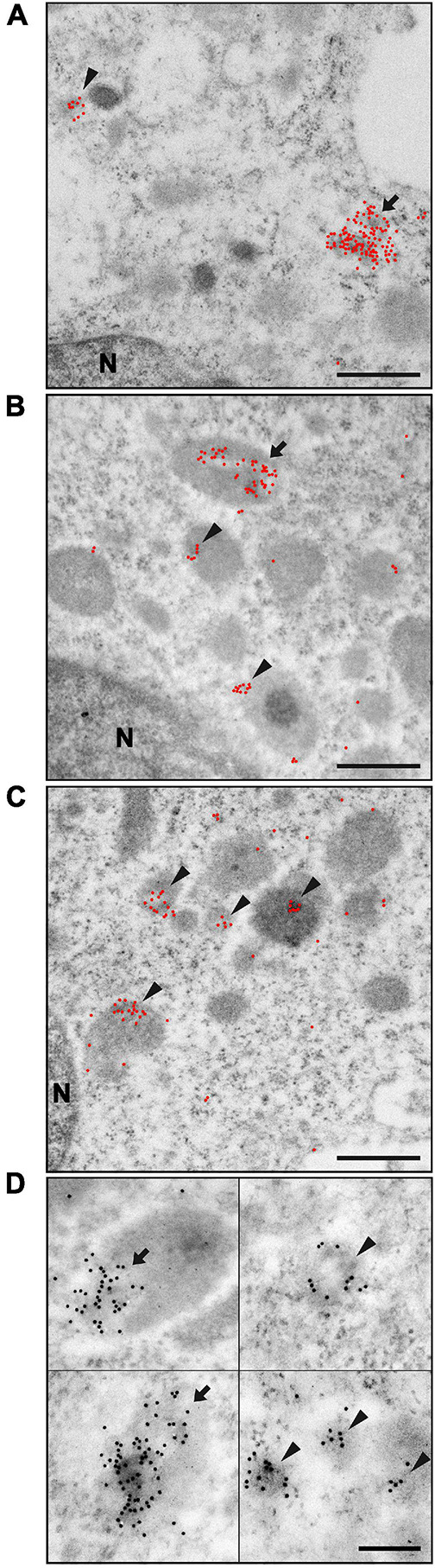
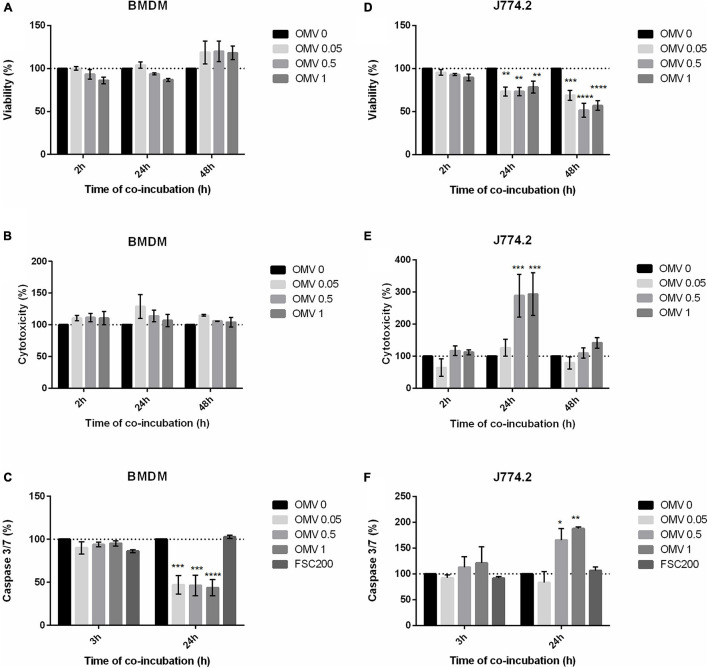
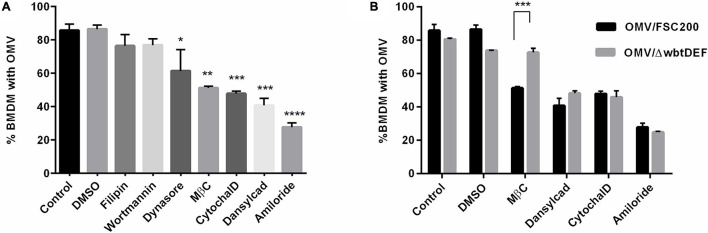
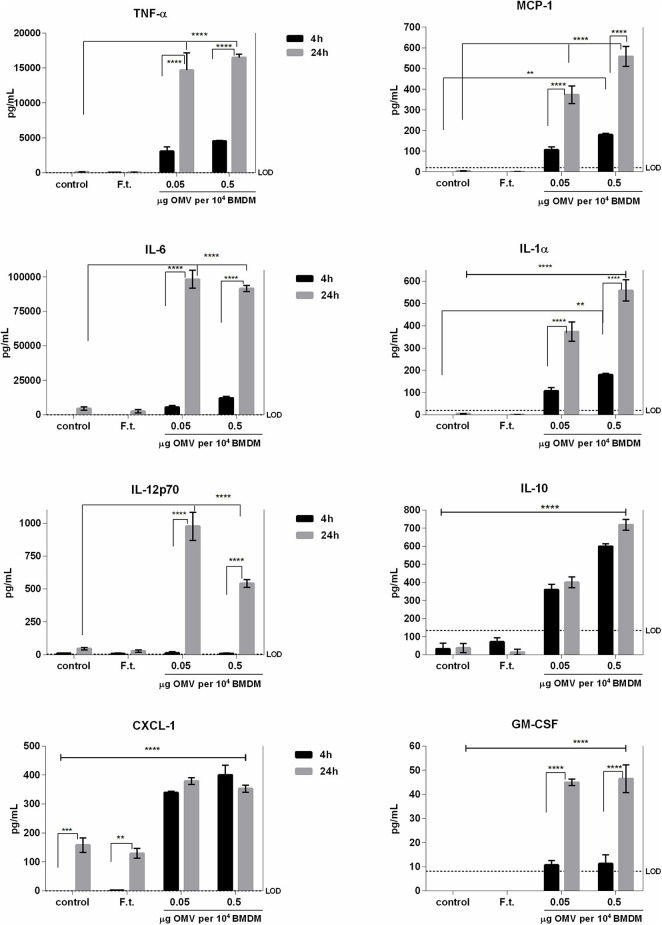
is known to release unusually shaped tubular outer membrane vesicles (OMV) containing a number of previously identified virulence factors and immunomodulatory proteins. In this study, we present that OMV isolated from the subsp. strain FSC200 enter readily into primary bone marrow-derived macrophages (BMDM) and seem to reside in structures resembling late endosomes in the later intervals. The isolated OMV enter BMDM generally macropinocytosis and clathrin-dependent endocytosis, with a minor role played by lipid raft-dependent endocytosis. OMVs proved to be non-toxic and had no negative impact on the viability of BMDM. Unlike the parent bacterium itself, isolated OMV induced massive and dose-dependent proinflammatory responses in BMDM. Using transmission electron microscopy, we also evaluated OMV release from the bacterial surface during several stages of the interaction of with BMDM. During adherence and the early phase of the uptake of bacteria, we observed numerous tubular OMV-like protrusions bulging from the bacteria in close proximity to the macrophage plasma membrane. This suggests a possible role of OMV in the entry of bacteria into host cells. On the contrary, the OMV release from the bacterial surface during its cytosolic phase was negligible. We propose that OMV play some role in the extracellular phase of the interaction of with the host and that they are involved in the entry mechanism of the bacteria into macrophages.
已知其会释放形状异常的管状外膜囊泡(OMV),其中包含许多先前已鉴定的毒力因子和免疫调节蛋白。在本研究中,我们发现从亚种菌株FSC200分离出的OMV很容易进入原代骨髓来源的巨噬细胞(BMDM),并且在随后的时间段内似乎存在于类似于晚期内体的结构中。分离出的OMV通常通过巨胞饮作用和网格蛋白依赖性内吞作用进入BMDM,脂筏依赖性内吞作用起的作用较小。事实证明,OMV无毒,对BMDM的活力没有负面影响。与亲本细菌本身不同,分离出的OMV在BMDM中诱导了大量的、剂量依赖性的促炎反应。我们还使用透射电子显微镜评估了在与BMDM相互作用的几个阶段中OMV从细菌表面的释放情况。在细菌粘附和摄取的早期阶段,我们观察到许多管状的OMV样突起从靠近巨噬细胞质膜的细菌中突出。这表明OMV在细菌进入宿主细胞的过程中可能发挥作用。相反,在细菌的胞质阶段,OMV从细菌表面的释放可以忽略不计。我们提出,OMV在与宿主相互作用的细胞外阶段发挥了一定作用,并且它们参与了细菌进入巨噬细胞的机制。