Laboratory of Gastroimmunology, Department of Immunology and Infectious Biology, Faculty of Biology and Environmental Protection, University of Łódź, Banacha 12/16, 90-237, Łódź, Poland.
J Biomed Sci. 2018 Nov 8;25(1):78. doi: 10.1186/s12929-018-0480-y.
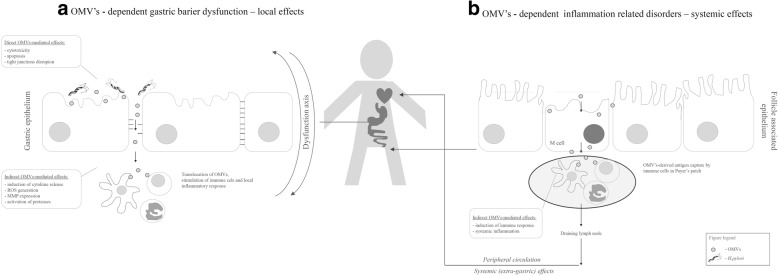
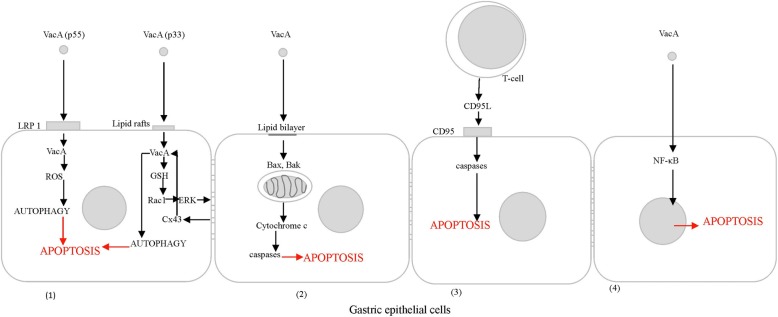
Helicobacter pylori - (H. pylori) play a role in the pathogenesis of gastritis, gastric and duodenal ulcers as well as gastric cancer. A possible involvement of outer membrane vesicles (OMVs) produced by H. pylori in the distribution of bacterial antigens through the gastric epithelial barrier and their role in the development of local and systemic host inflammatory and immune responses has been suggested. OMVs contain various biologically active compounds, which internalize into host cells affecting signaling pathways and promoting apoptosis of gastric epithelial and immunocompetent cells. OMVs-associated H. pylori virulence factors may strengthen or downregulate the immune responses leading to disease development. This review describes the biological importance of H. pylori OMVs and their role in the course of H. pylori infections, as well as H. pylori related local and systemic effects.
幽门螺杆菌(H. pylori)在胃炎、胃和十二指肠溃疡以及胃癌的发病机制中起作用。有人提出,幽门螺杆菌产生的外膜囊泡(OMVs)可能参与细菌抗原通过胃上皮屏障的分布,以及它们在局部和全身宿主炎症和免疫反应发展中的作用。OMVs 含有各种生物活性化合物,这些化合物内化到宿主细胞中,影响信号通路,并促进胃上皮和免疫活性细胞的凋亡。与 OMVs 相关的幽门螺杆菌毒力因子可能增强或下调免疫反应,导致疾病发展。这篇综述描述了幽门螺杆菌 OMVs 的生物学重要性及其在幽门螺杆菌感染过程中的作用,以及与幽门螺杆菌相关的局部和全身效应。