Dowling Cameron, Gooley Robert, McCormick Liam, Firoozi Sami, Brecker Stephen J
MonashHeart, Monash Health and Monash Cardiovascular Research Centre, Monash University Melbourne, Australia.
Cardiology Clinical Academic Group, St George's, University of London and St George's University Hospitals NHS Foundation Trust London, UK.
Interv Cardiol. 2021 Aug 19;16:e26. doi: 10.15420/icr.2021.09. eCollection 2021 Apr.
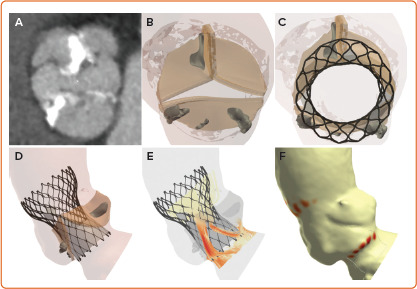
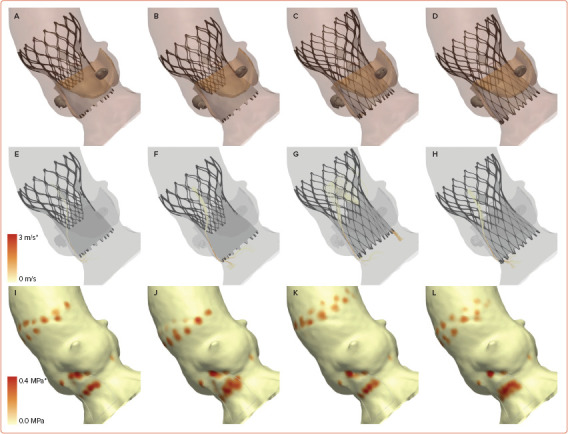
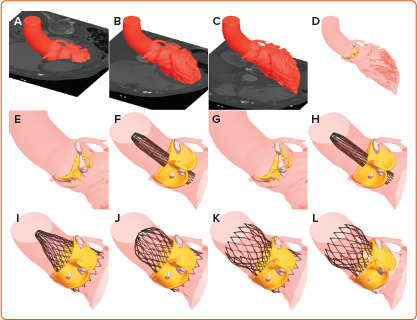
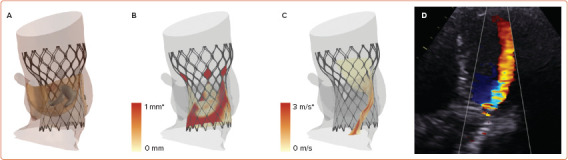
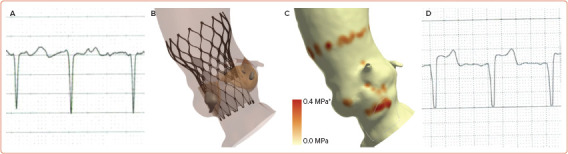
Transcatheter aortic valve implantation (TAVI) is increasingly being used to treat younger, lower-risk patients, many of whom have bicuspid aortic valve (BAV). As TAVI begins to enter these younger patient cohorts, it is critical that clinical outcomes from TAVI in BAV are matched to those achieved by surgery. Therefore, the identification of patients who, on an anatomical basis, may not be suitable for TAVI, would be desirable. Furthermore, clinical outcomes of TAVI in BAV might be improved through improved transcatheter heart valve sizing and positioning. One potential solution to these challenges is patient-specific computer simulation. This review presents the methodology and clinical evidence surrounding patient-specific computer simulation of TAVI in BAV.
经导管主动脉瓣植入术(TAVI)越来越多地用于治疗更年轻、风险较低的患者,其中许多患者患有二叶式主动脉瓣(BAV)。随着TAVI开始进入这些更年轻的患者群体,至关重要的是,BAV患者接受TAVI后的临床结果要与手术治疗的结果相匹配。因此,识别那些基于解剖学基础可能不适合TAVI的患者是很有必要的。此外,通过改进经导管心脏瓣膜的尺寸选择和定位,BAV患者接受TAVI后的临床结果可能会得到改善。针对这些挑战的一个潜在解决方案是针对患者的计算机模拟。本综述介绍了围绕BAV患者TAVI的患者特异性计算机模拟的方法和临床证据。