Liu Hao-Yu, Gu Haotian, Li Yanwei, Hu Ping, Yang Yatian, Li Kaiqi, Li Hao, Zhang Kexin, Zhou Bo, Wu Huaxing, Bao Wenbin, Cai Demin
Laboratory of Animal Physiology and Molecular Nutrition, College of Animal Science and Technology, Yangzhou University, Yangzhou, China.
Department of Biochemistry and Molecular Medicine, UC Davis School of Medicine, Sacramento, CA, United States.
Front Nutr. 2021 Oct 15;8:711398. doi: 10.3389/fnut.2021.711398. eCollection 2021.
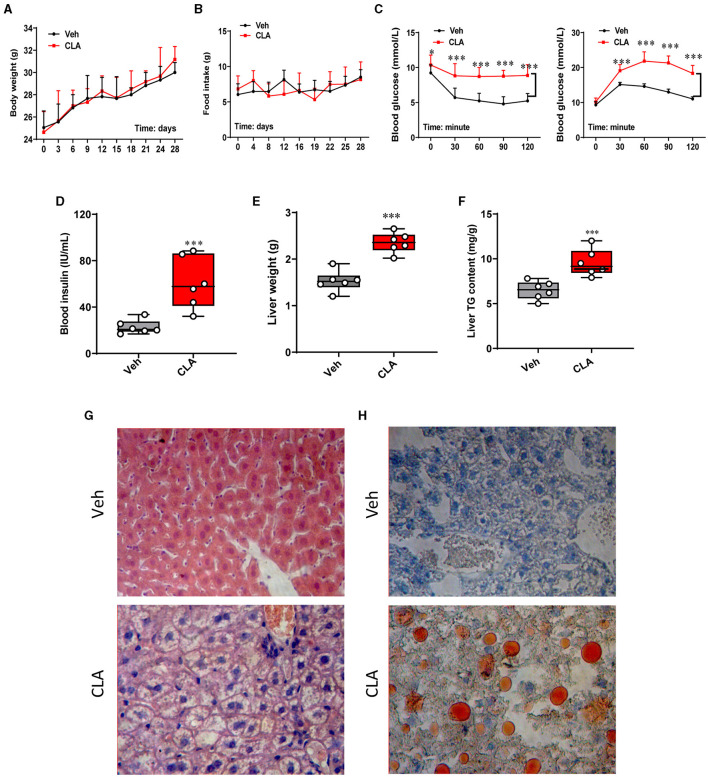
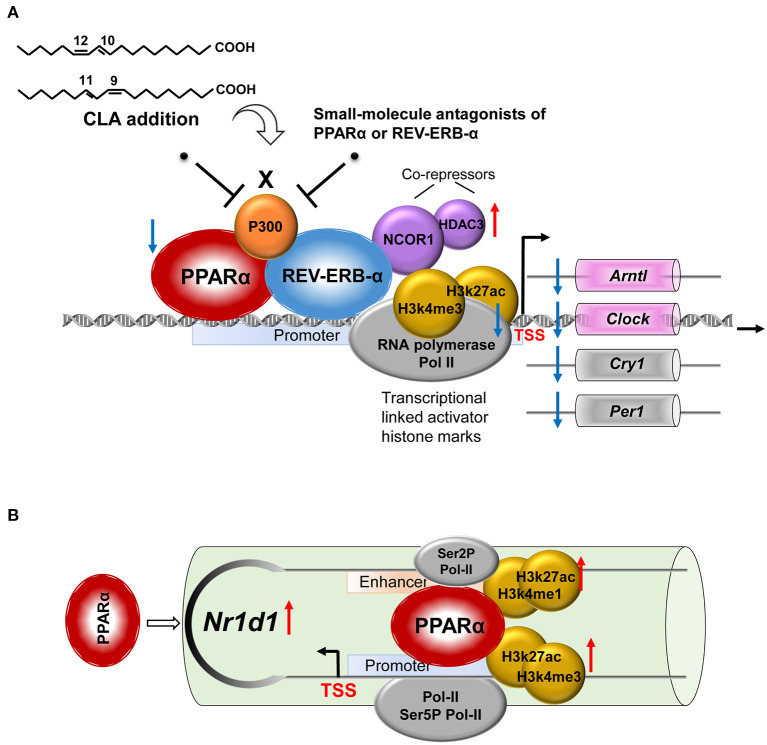
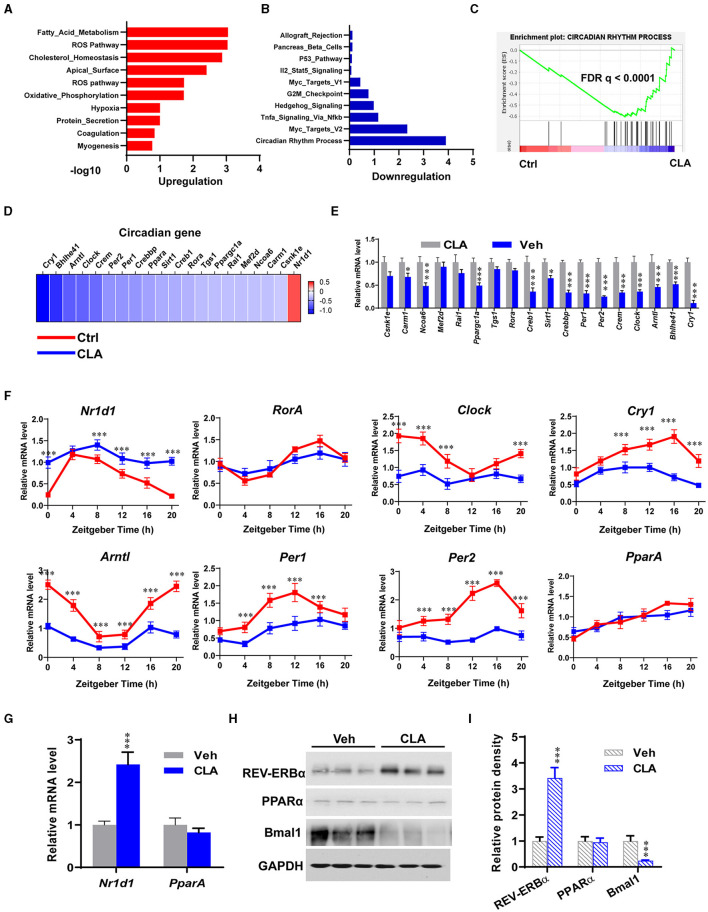
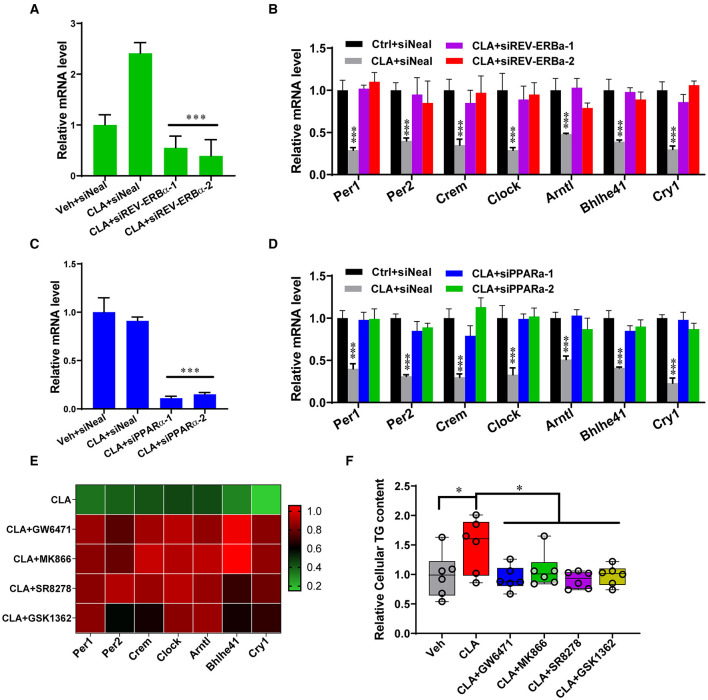
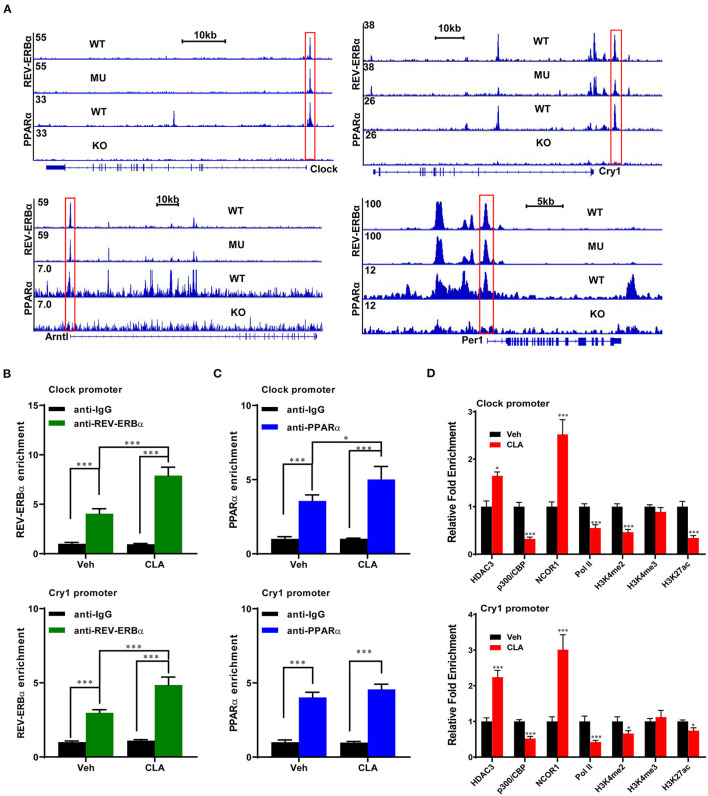
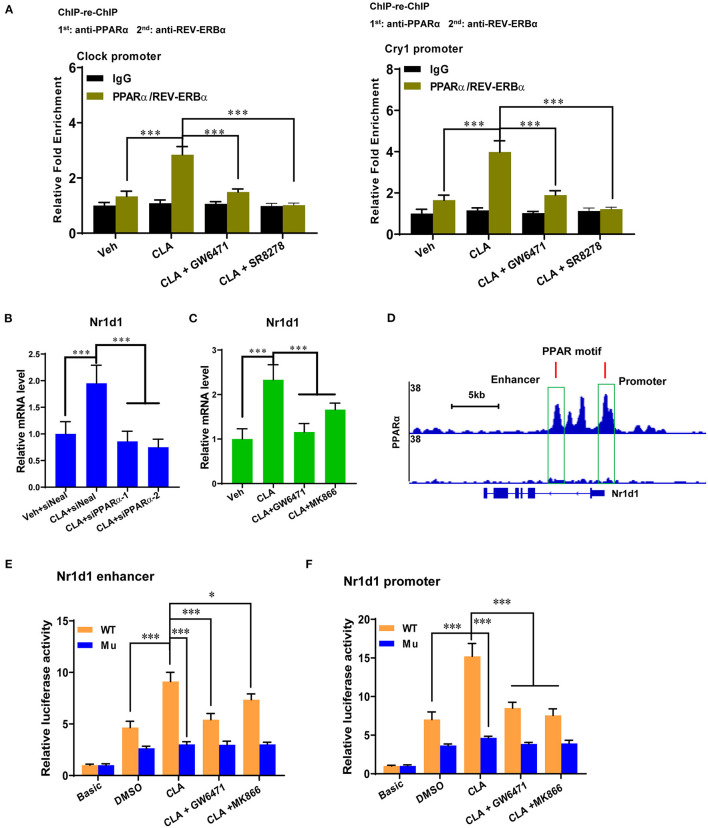
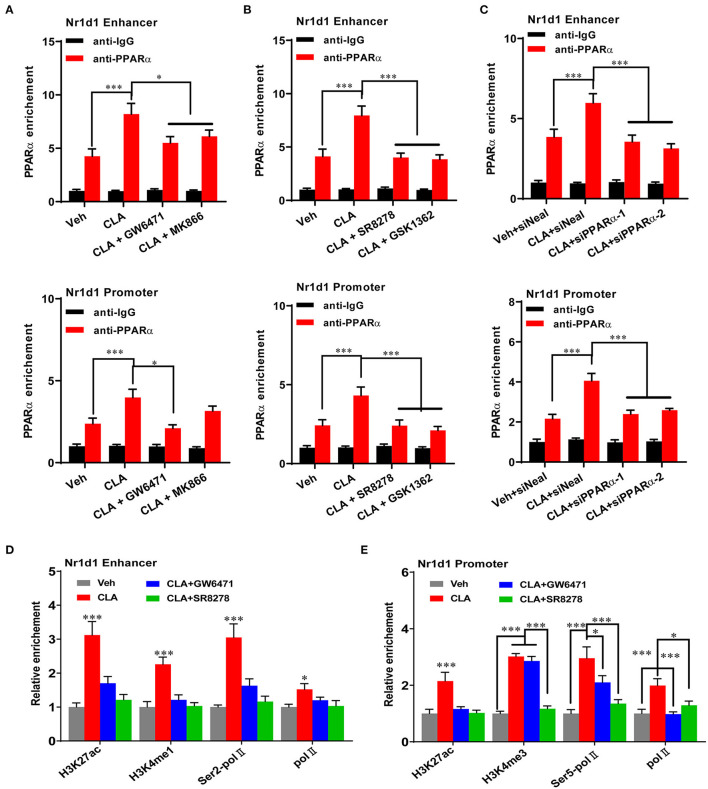
Disruptions of circadian rhythm cause metabolic disorders and are closely related to dietary factors. In this study, we investigated the interplays between the dietary conjugated linoleic acid (CLA)-induced hepatic steatosis and the circadian clock regulation, in association with lipid homeostasis. Exposure of mice to 1.5% dietary CLA for 28 days caused insulin resistance, enlarged livers, caused hepatic steatosis, and increased triglyceride levels. Transcriptional profiling showed that hepatic circadian clock genes were significantly downregulated with increased expression of the negative transcription factor, REV-ERBα. We uncovered that the nuclear receptor (NR) PPARα, as a major target of dietary CLA, drives REV-ERBα expression its binding to key genes of the circadian clock, including and , and the recruitment of histone marks and cofactors. The PPARα or REV-ERBα inhibition blocked the physical connection of this NR pair, reduced the cobinding of PPARα and REV-ERBα to the genomic DNA response element, and abolished histone modifications in the CLA-hepatocytes. In addition, we demonstrated that CLA promotes PPARα driving REV-ERBα transcriptional activity by directly binding to the PPAR response element (PPRE) at the gene. Our results add a layer to the understanding of the peripheral clock feedback loop, which involves the PPARα-REV-ERBα, and provide guidance for nutrients optimization in circadian physiology.
昼夜节律紊乱会导致代谢紊乱,且与饮食因素密切相关。在本研究中,我们调查了饮食中共轭亚油酸(CLA)诱导的肝脂肪变性与昼夜节律调节之间的相互作用,并关联了脂质稳态。将小鼠暴露于含1.5%饮食CLA的环境中28天,会导致胰岛素抵抗、肝脏肿大、肝脂肪变性,并使甘油三酯水平升高。转录谱分析表明,肝脏昼夜节律时钟基因显著下调,同时负转录因子REV-ERBα的表达增加。我们发现核受体(NR)PPARα作为饮食CLA的主要靶点,驱动REV-ERBα的表达,其与昼夜节律时钟的关键基因结合,包括[此处原文缺失具体基因名称],并募集组蛋白标记和辅因子。抑制PPARα或REV-ERBα会阻断这一核受体对的物理连接,减少PPARα和REV-ERBα与基因组DNA反应元件的共结合,并消除CLA处理的肝细胞中的组蛋白修饰。此外,我们证明CLA通过直接结合[此处原文缺失具体基因名称]基因处的PPAR反应元件(PPRE)来促进PPARα驱动REV-ERBα的转录活性。我们的研究结果为理解涉及PPARα-REV-ERBα的外周时钟反馈回路增添了新内容,并为昼夜生理中的营养优化提供了指导。