Department of Psychological and Brain Sciences, Krieger School of Arts and Sciences, Johns Hopkins University, Baltimore, MD 21218
Department of Psychological and Brain Sciences, Krieger School of Arts and Sciences, Johns Hopkins University, Baltimore, MD 21218.
eNeuro. 2021 Nov 18;8(6). doi: 10.1523/ENEURO.0279-21.2021. Print 2021 Nov-Dec.
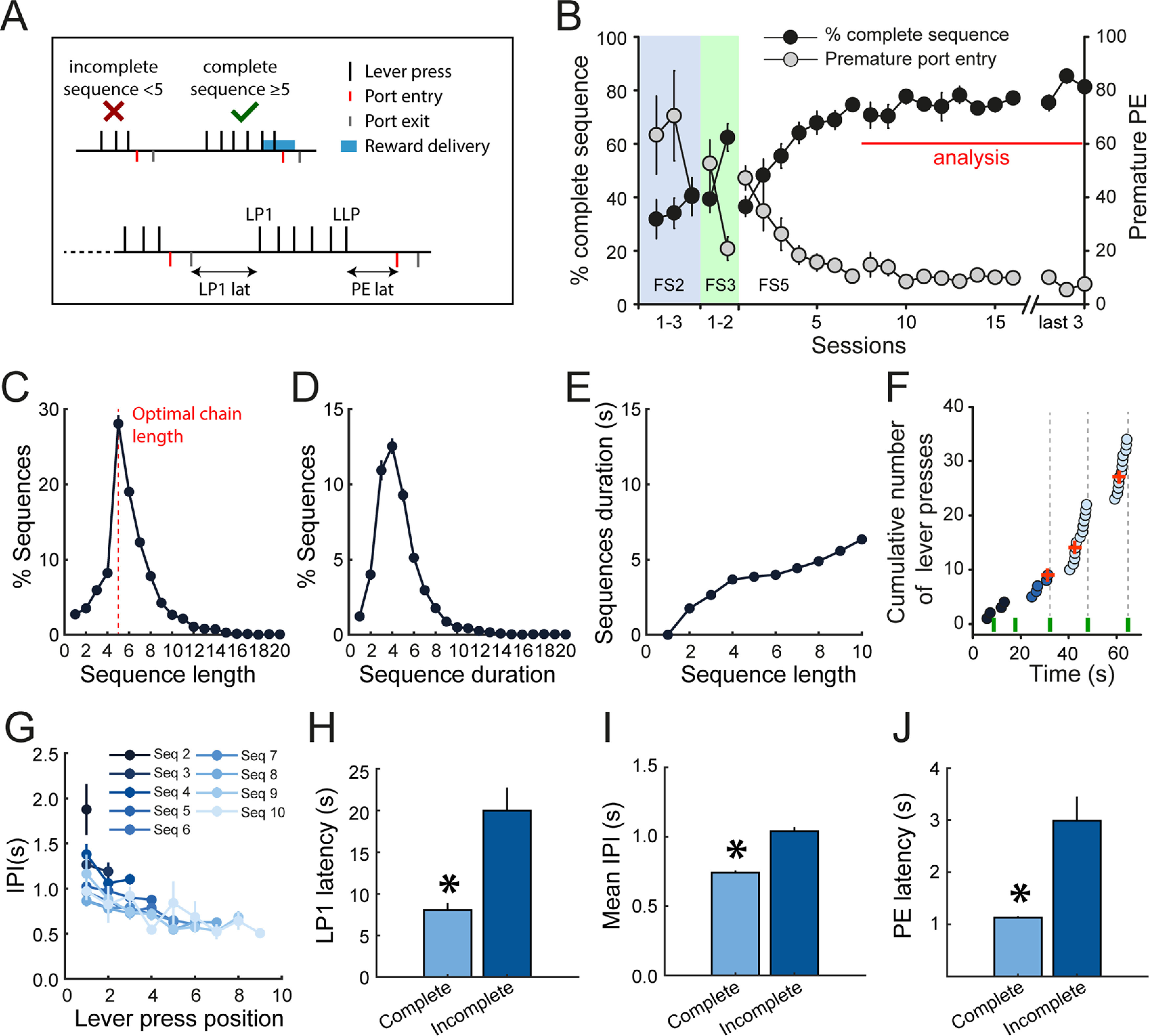
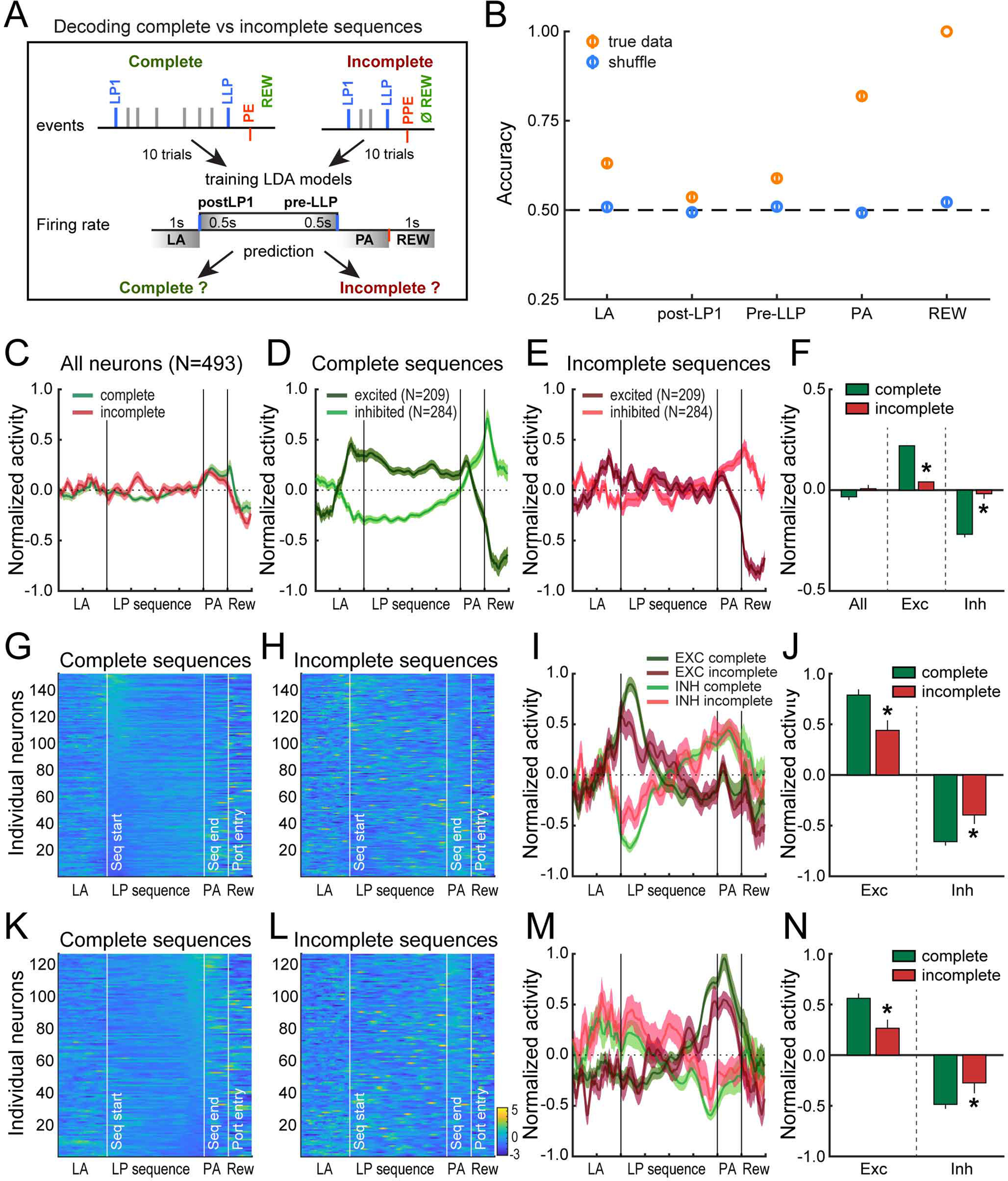
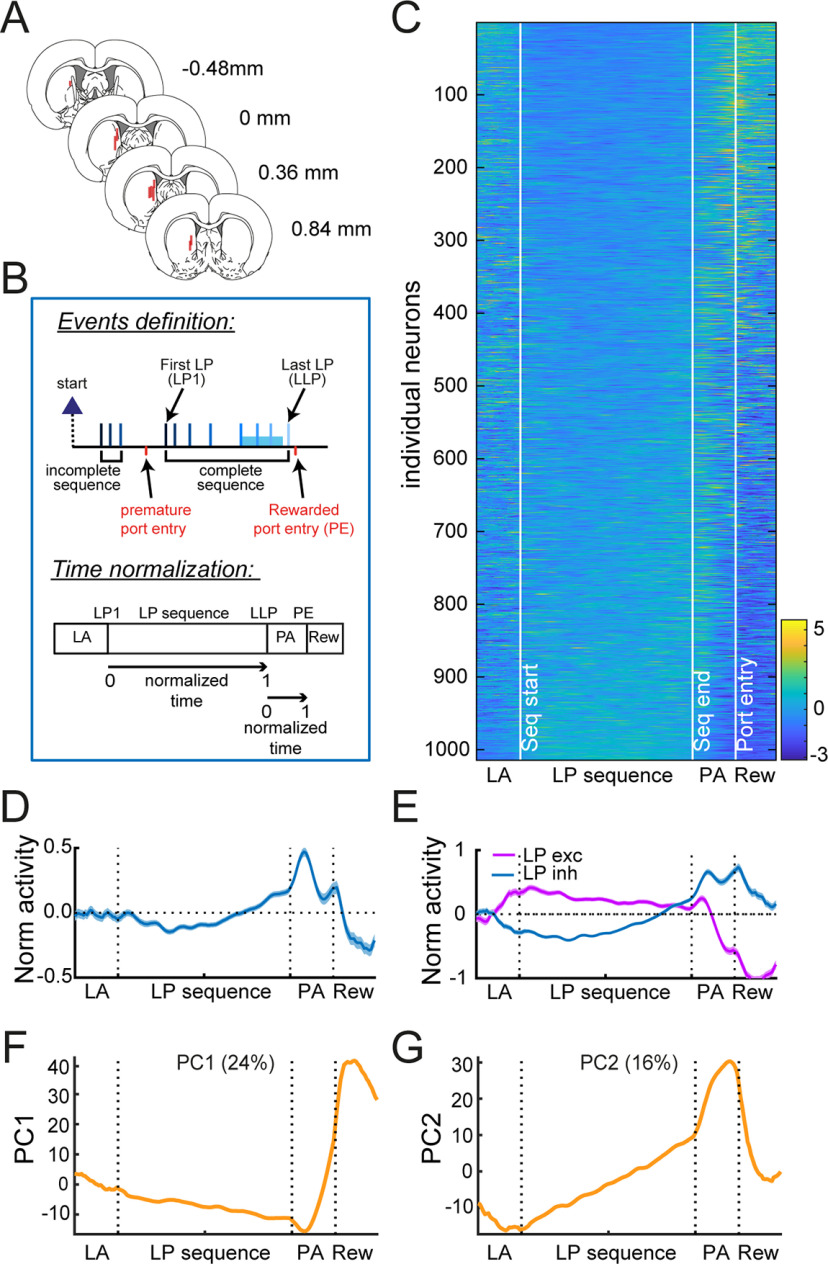
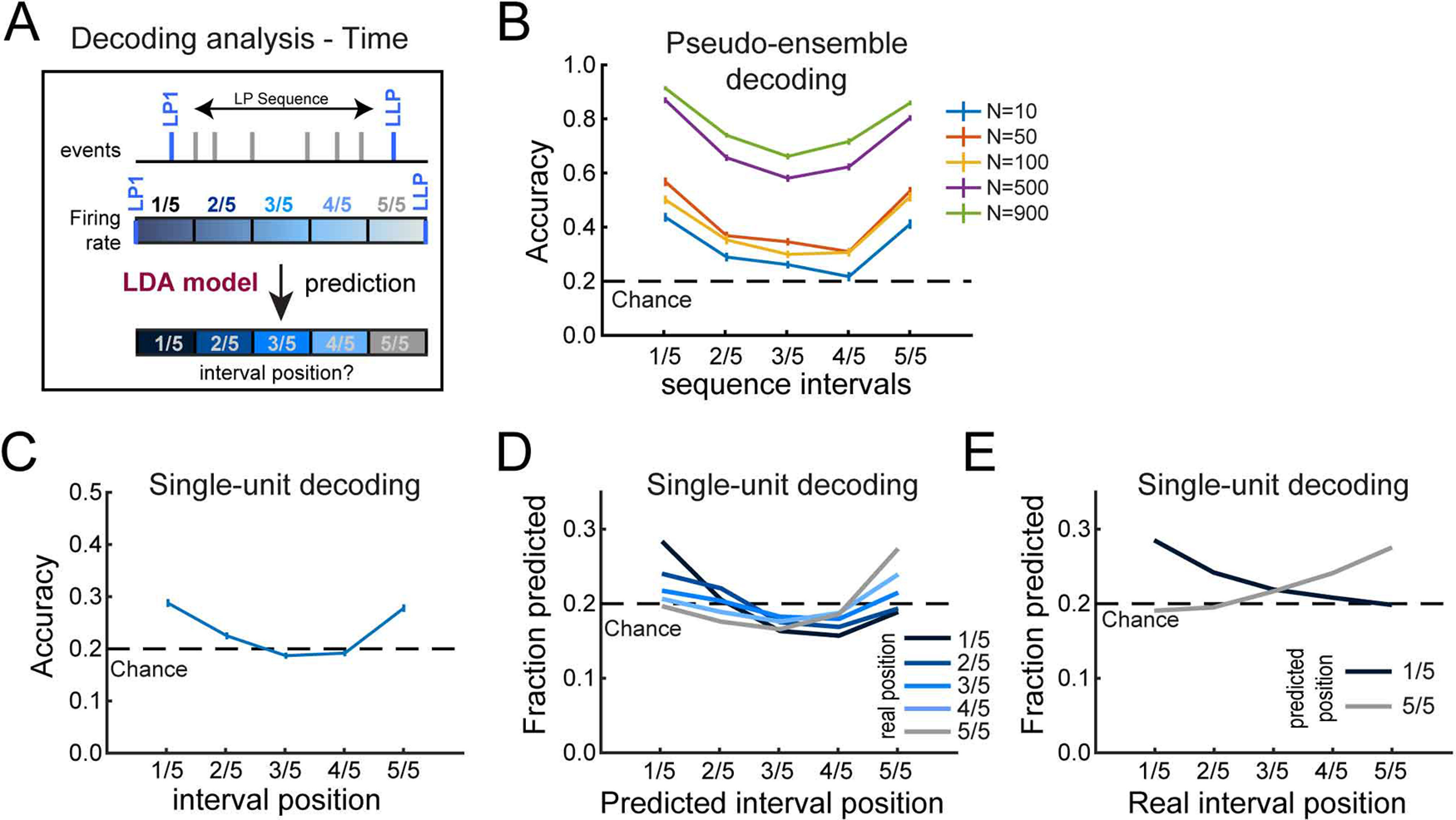
For proper execution of goal-directed behaviors, individuals require both a general representation of the goal and an ability to monitor their own progress toward that goal. Here, we examine how dorsomedial striatum (DMS), a region pivotal for forming associations among stimuli, actions, and outcomes, encodes the execution of goal-directed action sequences that require self-monitoring of behavior. We trained rats to complete a sequence of at least five consecutive lever presses (without visiting the reward port) to obtain a reward and recorded the activity of individual cells in DMS while rats performed the task. We found that the pattern of DMS activity gradually changed during the execution of the sequence, permitting accurate decoding of sequence progress from neural activity at a population level. Moreover, this sequence-related activity was blunted on trials where rats did not complete a sufficient number of presses. Overall, these data suggest a link between DMS activity and the execution of behavioral sequences that require monitoring of ongoing behavior.
为了正确执行目标导向行为,个体既需要目标的一般表示,又需要能够监测自己朝着该目标的进展。在这里,我们研究了背内侧纹状体(DMS)如何编码需要自我监测行为的目标导向动作序列的执行,DMS 是一个对于在刺激、动作和结果之间形成关联至关重要的区域。我们训练大鼠完成至少连续五次压杆(不访问奖励端口)以获得奖励,并在大鼠执行任务时记录 DMS 中单个细胞的活动。我们发现,在序列执行过程中,DMS 的活动模式逐渐发生变化,从而可以从群体水平的神经活动中准确解码序列进展。此外,在大鼠没有完成足够次数按压的试验中,这种与序列相关的活动减弱。总体而言,这些数据表明 DMS 活动与需要监测正在进行的行为的行为序列的执行之间存在联系。