Oxford Health NHS Foundation Trust, Warneford Hospital, Oxford, UK.
Department of Psychiatry, University of Oxford, Oxford, UK.
Hum Psychopharmacol. 2021 Nov;36(6):e2801. doi: 10.1002/hup.2801. Epub 2021 Jun 3.
Depressive symptoms occur in several psychiatric disorders, often in the absence of a formal diagnosis of depression. We aimed to evaluate the efficacy and the tolerability of amisulpride, both alone and as augmentation therapy, in the treatment of depressive symptoms in individuals with any major psychiatric disorder.
We searched PubMed, Embase, PsycINFO, GreyLit, OpenGrey and ProQuest up to March 2020 for randomised controlled trials focussing on the treatment of an acute depressive episode in any major psychiatric disorder. A random-effect meta-analysis was performed to synthesize the findings on depressive symptoms (primary outcome), response rate and tolerability.
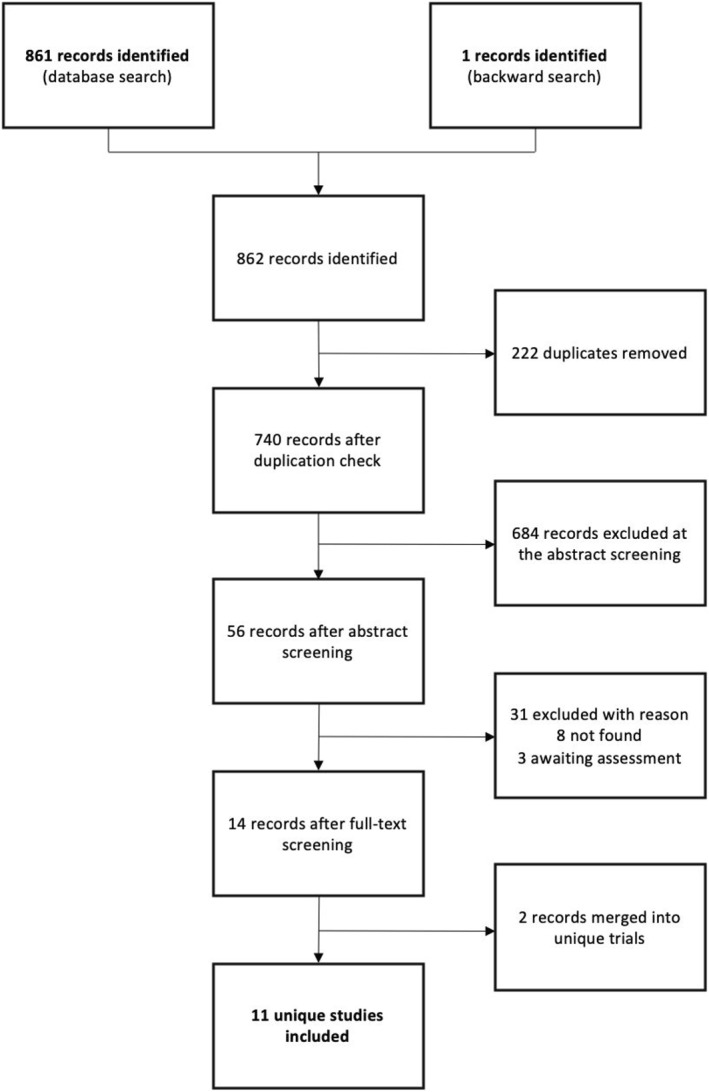
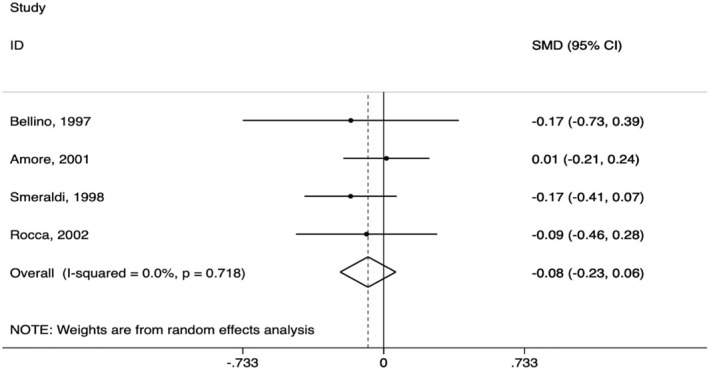
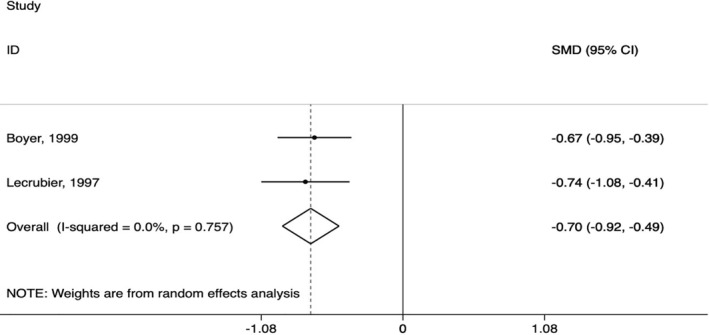
We retrieved 11 studies including 2065 patients with a diagnosis of dysthymia (eight studies), major depression (one study) or schizophrenia (two studies). Amisulpride 50 mg/day was associated with a larger reduction of depressive symptoms compared to placebo (standardised mean difference [SMD] = -0.70, CI 95% -0.92, -0.49; I = 0.0%), and was found to be comparable to selective serotonin reuptake inhibitors (SSRIs; SMD = -0.08, CI 95% -0.23, 0.06, I = 0.0%), amineptine, imipramine and amitriptyline in the treatment of dysthymia (three studies, not pooled). In individuals with schizophrenia, amisulpride administered at higher doses (>400 mg/day) was comparable to olanzapine and risperidone (two studies, not pooled). In terms of tolerability, amisulpride was superior to placebo for dysthymia (odds ratio [OR] = 3.94, CI 95% 1.07, 14.48; I = 0.0) and comparable with SSRIs (OR = 0.94, CI 95% 0.55, 1.62; I = 0.0%).
Treatment with amisulpride could be a valid choice for selected individuals with dysthymia or depressive symptoms in the context of schizophrenia. More studies on the efficacy and tolerability of amisulpride are needed to draw firm conclusions on its potential benefits in other psychiatric disorders.
抑郁症状出现在几种精神疾病中,通常在没有正式诊断为抑郁症的情况下出现。我们旨在评估氨磺必利单独使用和作为增效治疗在治疗任何主要精神疾病患者的抑郁症状方面的疗效和耐受性。
我们检索了 PubMed、Embase、PsycINFO、GreyLit、OpenGrey 和 ProQuest,以获取截至 2020 年 3 月的关于治疗任何主要精神疾病急性抑郁发作的随机对照试验。我们进行了随机效应荟萃分析,以综合抑郁症状(主要结局)、反应率和耐受性的研究结果。
我们检索到 11 项研究,共纳入 2065 例诊断为心境恶劣(8 项研究)、重性抑郁症(1 项研究)或精神分裂症(2 项研究)的患者。氨磺必利 50mg/天与安慰剂相比,可更大程度地减轻抑郁症状(标准化均数差[SMD]=-0.70,95%CI -0.92,-0.49;I²=0.0%),并且与选择性 5-羟色胺再摄取抑制剂(SSRIs;SMD=-0.08,95%CI -0.23,0.06,I²=0.0%)、阿米替林、丙咪嗪在治疗心境恶劣方面相当(3 项研究,未汇总)。在精神分裂症患者中,氨磺必利高剂量(>400mg/天)与奥氮平和利培酮相当(2 项研究,未汇总)。在耐受性方面,氨磺必利在治疗心境恶劣方面优于安慰剂(比值比[OR]=3.94,95%CI 1.07,14.48;I²=0.0%),与 SSRIs 相当(OR=0.94,95%CI 0.55,1.62;I²=0.0%)。
氨磺必利治疗可能是心境恶劣或精神分裂症中抑郁症状患者的一种有效选择。需要更多关于氨磺必利疗效和耐受性的研究,以得出其在其他精神疾病中潜在益处的结论。