Ecology & Evolutionary Biology Department, University of Arizona, Tucson, Arizona, USA.
Department of Environmental Science, University of Arizona, Tucson, Arizona, USA.
Glob Chang Biol. 2022 Feb;28(3):950-968. doi: 10.1111/gcb.15970. Epub 2021 Nov 17.
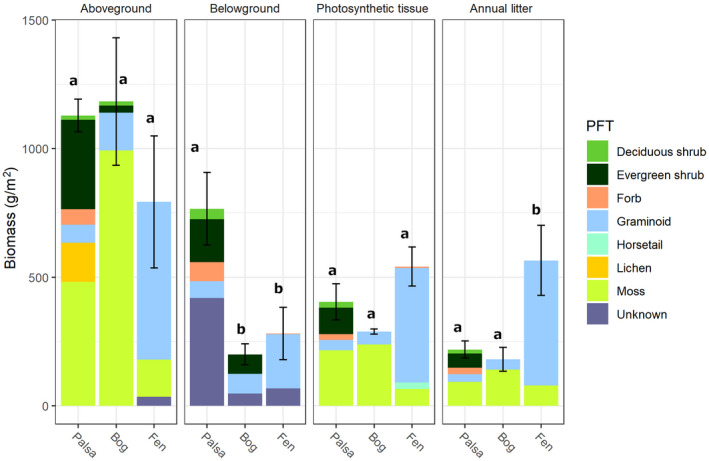
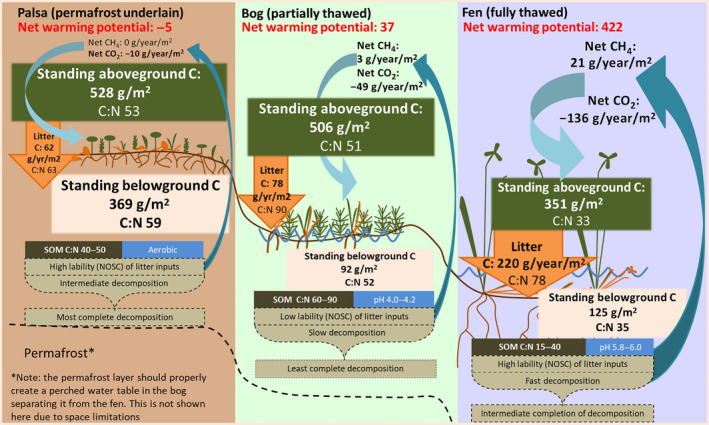
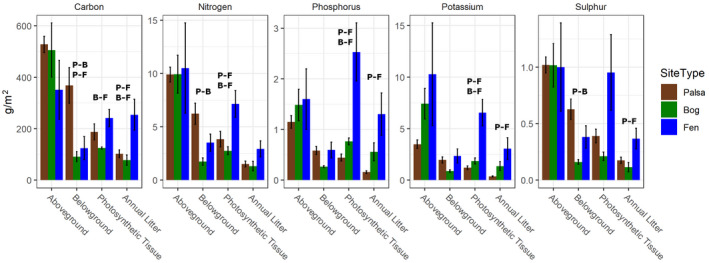
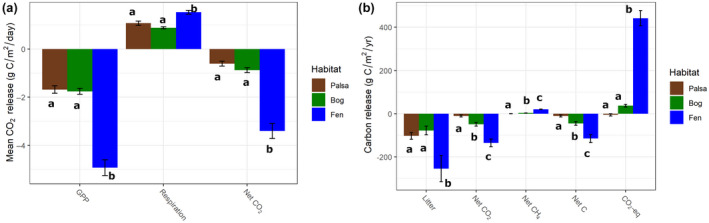
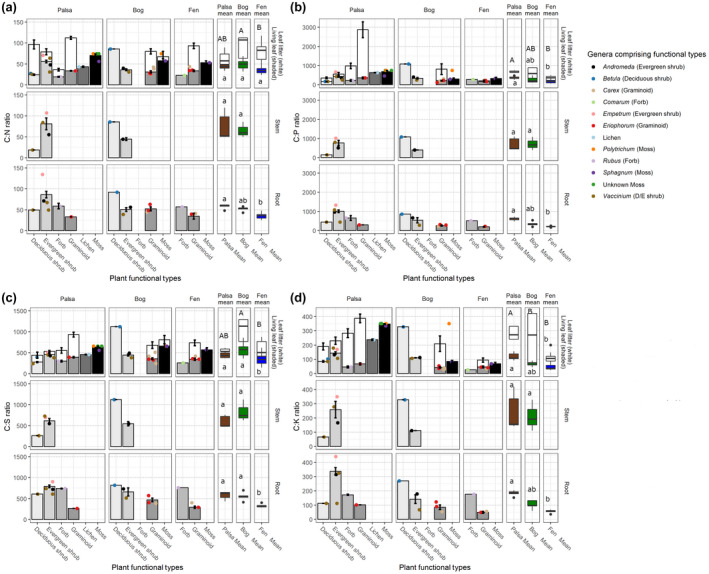
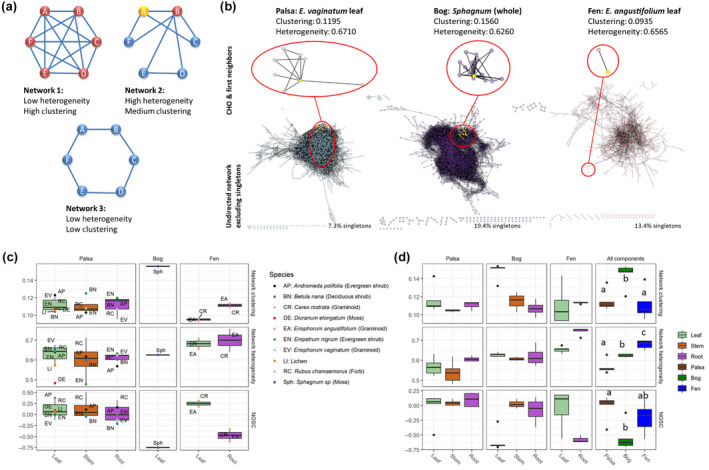
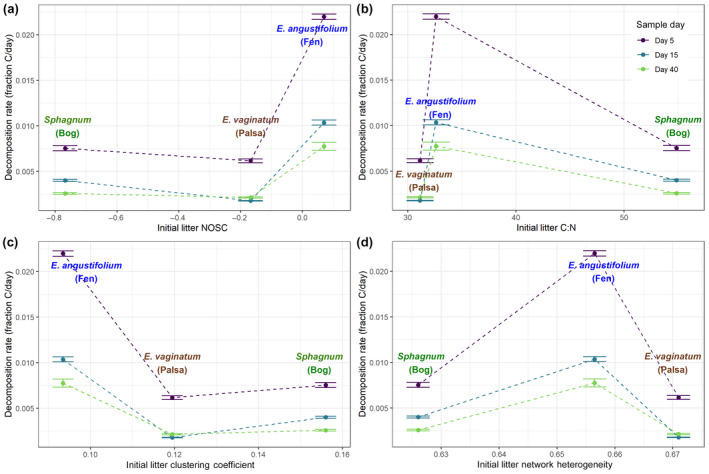
Permafrost thaw is a major potential feedback source to climate change as it can drive the increased release of greenhouse gases carbon dioxide (CO ) and methane (CH ). This carbon release from the decomposition of thawing soil organic material can be mitigated by increased net primary productivity (NPP) caused by warming, increasing atmospheric CO , and plant community transition. However, the net effect on C storage also depends on how these plant community changes alter plant litter quantity, quality, and decomposition rates. Predicting decomposition rates based on litter quality remains challenging, but a promising new way forward is to incorporate measures of the energetic favorability to soil microbes of plant biomass decomposition. We asked how the variation in one such measure, the nominal oxidation state of carbon (NOSC), interacts with changing quantities of plant material inputs to influence the net C balance of a thawing permafrost peatland. We found: (1) Plant productivity (NPP) increased post-thaw, but instead of contributing to increased standing biomass, it increased plant biomass turnover via increased litter inputs to soil; (2) Plant litter thermodynamic favorability (NOSC) and decomposition rate both increased post-thaw, despite limited changes in bulk C:N ratios; (3) these increases caused the higher NPP to cycle more rapidly through both plants and soil, contributing to higher CO and CH fluxes from decomposition. Thus, the increased C-storage expected from higher productivity was limited and the high global warming potential of CH contributed a net positive warming effect. Although post-thaw peatlands are currently C sinks due to high NPP offsetting high CO release, this status is very sensitive to the plant community's litter input rate and quality. Integration of novel bioavailability metrics based on litter chemistry, including NOSC, into studies of ecosystem dynamics, is needed to improve the understanding of controls on arctic C stocks under continued ecosystem transition.
永冻层解冻是气候变化的一个主要潜在反馈源,因为它可以促使温室气体二氧化碳 (CO ) 和甲烷 (CH ) 的释放增加。这种由于土壤有机物质解冻分解而释放的碳可以通过变暖引起的净初级生产力 (NPP) 增加、大气中 CO 的增加和植物群落演替得到缓解。然而,碳储存的净效应还取决于这些植物群落变化如何改变植物凋落物的数量、质量和分解速率。基于凋落物质量预测分解速率仍然具有挑战性,但一个有前途的新方法是纳入衡量植物生物量分解对土壤微生物的能量有利性的措施。我们想知道这种衡量方法之一,即碳的名义氧化态 (NOSC) 的变化如何与植物物质输入量的变化相互作用,从而影响解冻永冻泥炭地的净碳平衡。我们发现:(1) 植物生产力 (NPP) 在解冻后增加,但它没有通过增加地上生物量来增加,而是通过增加凋落物输入到土壤来增加植物生物量周转;(2) 尽管 bulk C:N 比变化有限,但植物凋落物热力学有利性 (NOSC) 和分解速率都在解冻后增加;(3) 这些增加导致更高的 NPP 更快地在植物和土壤中循环,导致更高的 CO 和 CH 从分解中释放出来。因此,由于较高的生产力而预期的更高的碳储存量受到限制,并且 CH 的高全球变暖潜势导致了净正变暖效应。尽管由于高 NPP 抵消了高 CO 的释放,解冻后的泥炭地目前是碳汇,但这种状态对植物群落凋落物输入率和质量非常敏感。需要将基于凋落物化学的新型生物利用度指标(包括 NOSC)纳入生态系统动态研究中,以提高对北极碳储量在持续生态系统转变下的控制因素的理解。