Carroll Nicholas, Perreault Maude, Ma David Wl, Haines Jess
Department of Human Health and Nutritional Sciences, University of Guelph, Guelph, ON, Canada.
Department of Family Relations and Applied Nutrition, University of Guelph, 50 Stone Road East, Guelph, ONN1G 2W1, Canada.
Public Health Nutr. 2021 Nov 3;25(4):1-16. doi: 10.1017/S1368980021004389.
Food literacy (FL) and nutrition literacy (NL) are concepts that can help individuals to navigate the current food environment. Building these skills and knowledge at a young age is important for skill retention, confidence in food practices and supporting lifelong healthy eating habits. The objectives of this systematic review were to: (i) identify existing tools that measure FL and NL among children and/or adolescents and (ii) describe the psychometric properties.
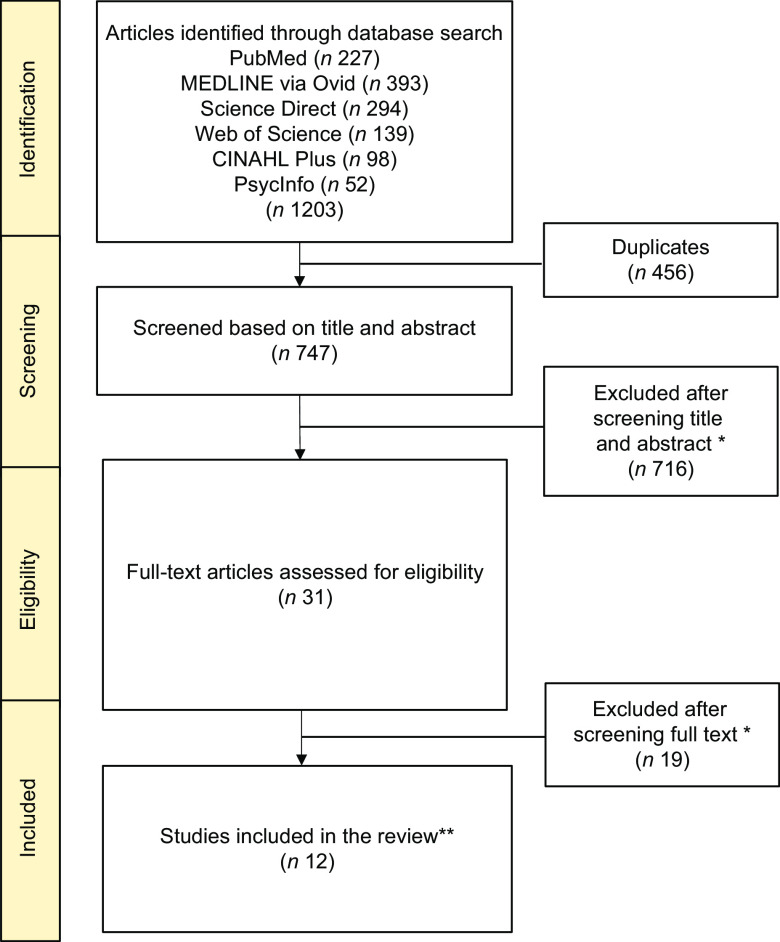
A 4-phase protocol was used to systematically retrieve articles. The search was performed in May 2021. Study characteristics and psychometric properties were extracted, and a narrative synthesis was used to summarise findings. Risk of bias was assessed using the COSMIN checklist.
Six databases were searched to identify current tools.
Children (2-12 years) and adolescents (13-18 years) participated in this study.
Twelve tools were identified. Three tools measured FL, 1 tool measured NL, 4 tools measured both FL and NL, and 4 tools measured subareas of NL-more specifically, critical NL, food label and menu board literacy. Most tools were self-reported, developed based on a theoretical framework and assessed some components of validity and/or reliability for a specific age and ethnic group. The majority of tools targeted older children and adolescents (9-18 years of age), and one tool targeted preschoolers (3-6 years of age).
Most widely used definitions of FL and NL do not acknowledge life-stage specific criterion. Continued efforts are needed to develop a comprehensive definition and framework of FL and NL appropriate for children, which will help inform future assessment tools.
食品素养(FL)和营养素养(NL)是有助于个人应对当前食品环境的概念。在年轻时培养这些技能和知识对于技能保持、食品实践中的信心以及支持终身健康饮食习惯至关重要。本系统评价的目的是:(i)识别用于测量儿童和/或青少年食品素养和营养素养的现有工具,以及(ii)描述其心理测量特性。
采用四阶段方案系统检索文章。检索于2021年5月进行。提取研究特征和心理测量特性,并采用叙述性综合方法总结研究结果。使用COSMIN清单评估偏倚风险。
检索了六个数据库以识别当前工具。
儿童(2至12岁)和青少年(13至18岁)参与了本研究。
识别出12种工具。3种工具测量食品素养,1种工具测量营养素养,4种工具同时测量食品素养和营养素养,4种工具测量营养素养的子领域,更具体地说是关键营养素养、食品标签和菜单板素养。大多数工具为自我报告式,基于理论框架开发,并针对特定年龄和种族群体评估了有效性和/或可靠性的一些组成部分。大多数工具针对年龄较大的儿童和青少年(9至18岁),一种工具针对学龄前儿童(3至6岁)。
食品素养和营养素养最广泛使用的定义未考虑特定生命阶段的标准。需要持续努力制定适合儿童的食品素养和营养素养的综合定义和框架,这将有助于为未来的评估工具提供信息。