Department of Psychology, University of Toronto, Toronto, ON, Canada.
Sci Rep. 2021 Nov 2;11(1):21429. doi: 10.1038/s41598-021-00864-9.
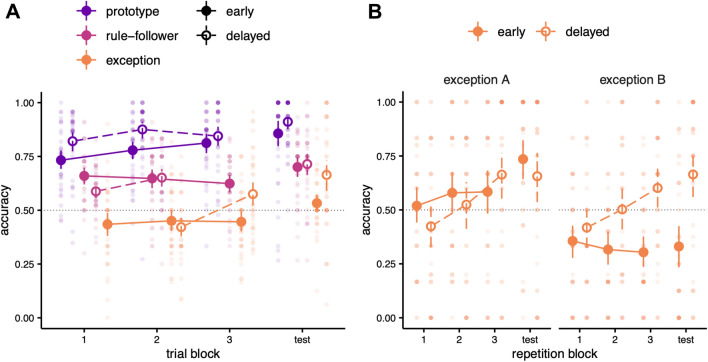
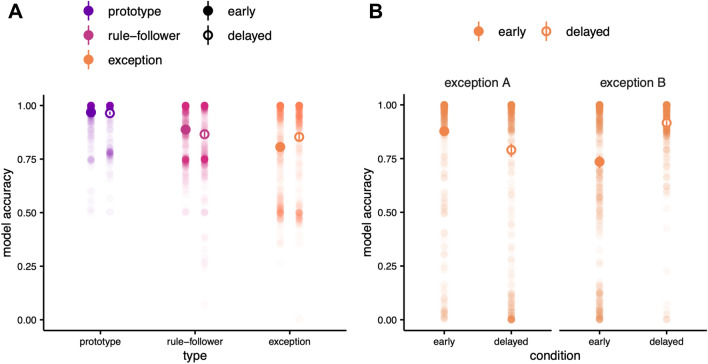
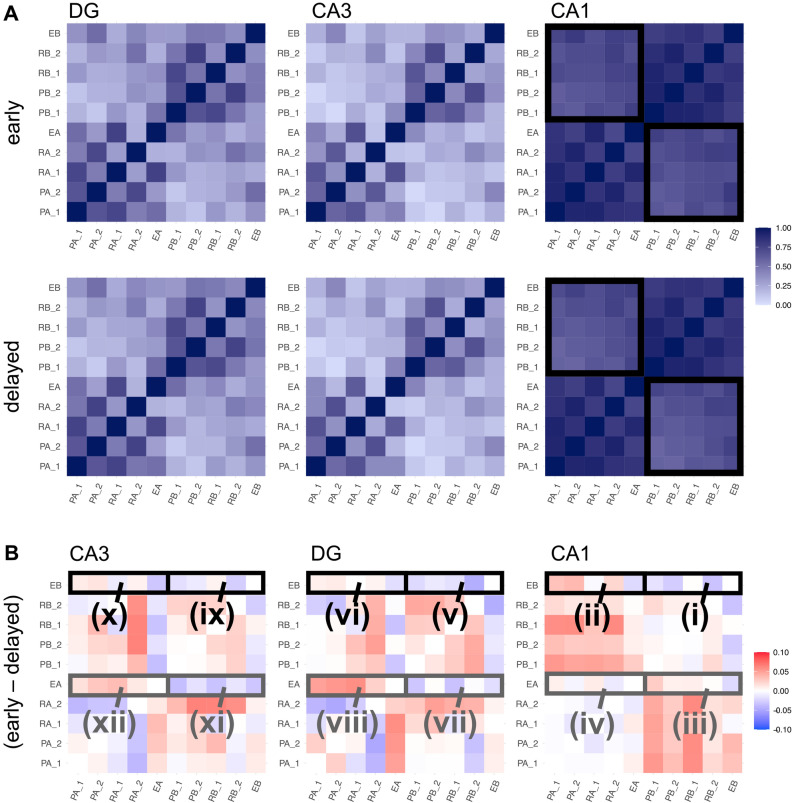
Category learning helps us process the influx of information we experience daily. A common category structure is "rule-plus-exceptions," in which most items follow a general rule, but exceptions violate this rule. People are worse at learning to categorize exceptions than rule-following items, but improved exception categorization has been positively associated with hippocampal function. In light of model-based predictions that the nature of existing memories of related experiences impacts memory formation, here we use behavioural and computational modelling data to explore how learning sequence impacts performance in rule-plus-exception categorization. Our behavioural results indicate that exception categorization accuracy improves when exceptions are introduced later in learning, after exposure to rule-followers. To explore whether hippocampal learning systems also benefit from this manipulation, we simulate our task using a computational model of hippocampus. The model successful replicates our behavioural findings related to exception learning, and representational similarity analysis of the model's hidden layers suggests that model representations are impacted by trial sequence: delaying the introduction of an exception shifts its representation closer to its own category members. Our results provide novel computational evidence of how hippocampal learning systems can be targeted by learning sequence and bolster extant evidence of hippocampus's role in category learning.
类别学习帮助我们处理日常生活中大量涌入的信息。一种常见的类别结构是“规则加例外”,其中大多数项目遵循一般规则,但例外情况违反了这一规则。人们在学习分类异常项方面比学习遵循规则的项目更差,但例外分类的改善与海马体功能呈正相关。鉴于基于模型的预测,即相关经验的现有记忆的性质会影响记忆形成,在这里我们使用行为和计算建模数据来探索学习序列如何影响规则加例外分类中的性能。我们的行为结果表明,在学习后,即暴露于规则遵循者之后,引入异常项时,异常分类的准确性会提高。为了探索海马体学习系统是否也受益于这种操作,我们使用海马体的计算模型模拟了我们的任务。该模型成功复制了我们关于异常学习的行为发现,并且模型隐藏层的表示相似性分析表明,模型表示受到试验序列的影响:延迟引入异常会使其表示更接近其自身类别成员。我们的结果提供了关于海马体学习系统如何通过学习序列进行靶向的新的计算证据,并支持了海马体在类别学习中的作用的现有证据。