Yan Dongmei, Shen Ziyuan, Zhang Shuo, Hu Lingling, Sun Qian, Xu Kailin, Jin Yingliang, Sang Wei
Department of Hematology, Affiliated Hospital of Xuzhou Medical University, Xuzhou, Jiangsu, 221002, China.
Department of Epidemiology and Biostatistics, School of Public Health, Xuzhou Medical University, Xuzhou, Jiangsu, 221004, China.
J Cancer. 2021 Oct 11;12(23):7010-7017. doi: 10.7150/jca.62340. eCollection 2021.
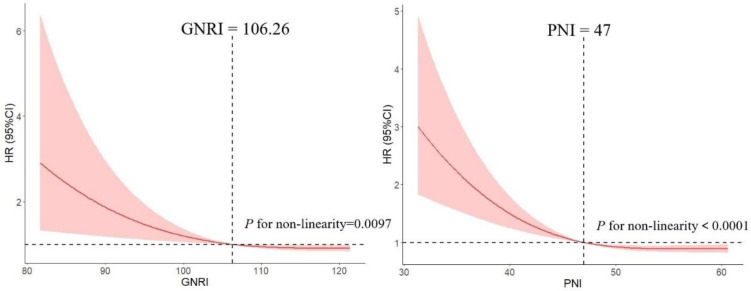
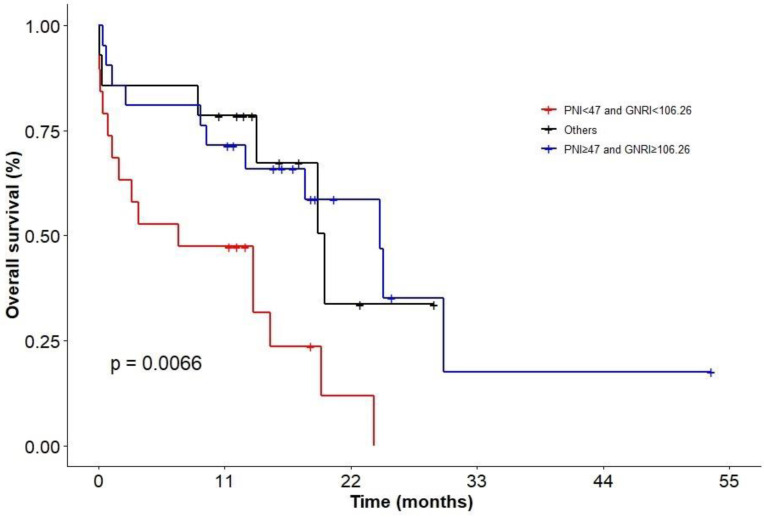
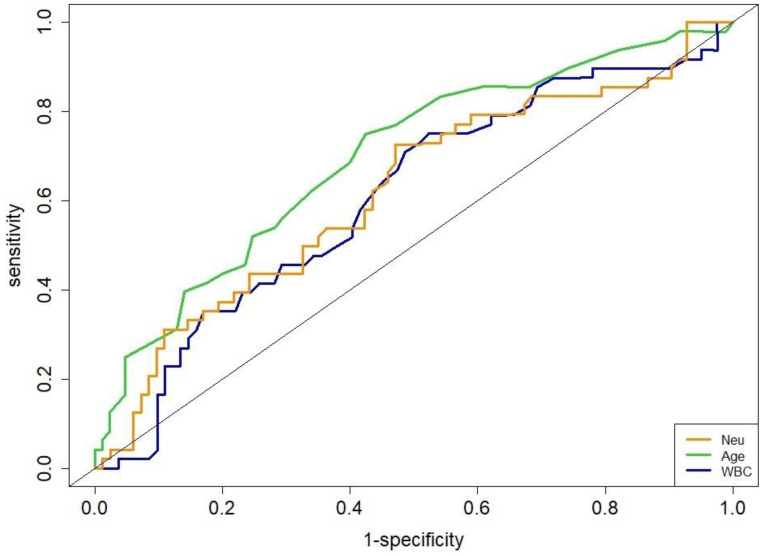
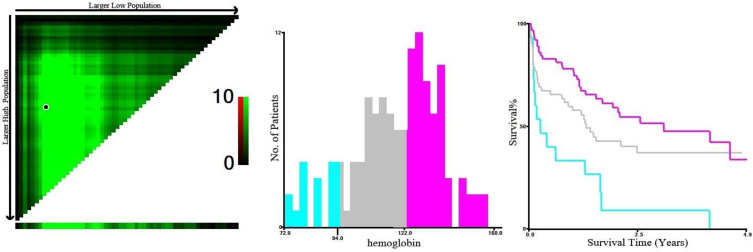
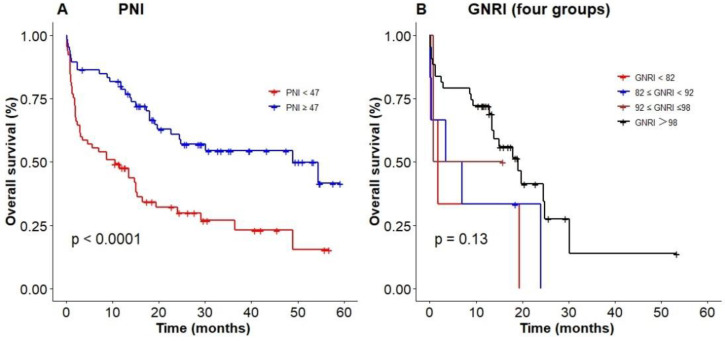
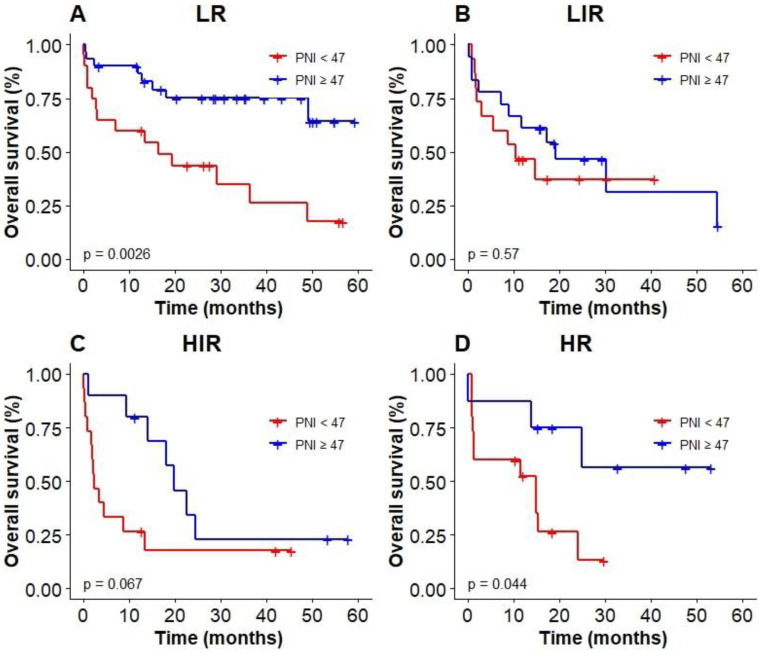
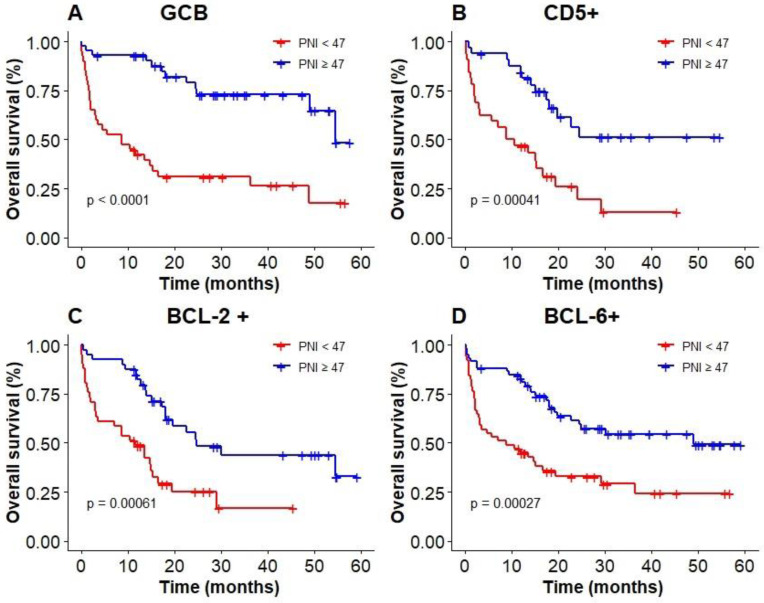
Geriatric nutritional risk index (GNRI) and prognostic nutritional index (PNI) are associated with prognosis of various malignancies. Although GNRI and PNI indicates prognosis in some clinical settings, the values of GNRI and PNI on the prognosis of geriatric patients with Diffuse Large B-Cell Lymphoma (DLBCL) is unclear. This retrospective analysis aimed to explore the prognostic values of GNRI and PNI in elderly DLBCL patients. A total of 133 geriatric patients with DLBCL were recruited from Affiliated Hospital of Xuzhou Medical University, and clinicopathological variables were analyzed. X-Tile program, restricted cubic spline (RCS) and time-dependent receiver operating characteristic (ROC) analysis were used to determine optimal cut-off points of GNRI, PNI and other continuous variables; univariate and multivariate Cox proportional hazards analyses were used for variables selection; Kaplan-Meier curve was utilized to analyze the influence of variables on prognosis; log-rank test was performed for difference evaluation between groups. The optimal cut-off points for GNRI and PNI were 106.26 and 47 by using RCS. Multivariate analysis showed that PNI, age, hemoglobin, liver invasion and central nervous system invasion were independent prognostic factors for elderly patients with DLBCL, and PNI was ( = 0.001, = 0.413, 95% (0.240-0.710) a stronger predictor. Low PNI could predict worse prognosis independently of elderly patients of DLBCL and could re-stratify patients in GCB group, CD5 positive group BCL-2 positive group, and BCL-6 positive group. PNI was an independent adverse factor for elderly DLBCL and patients with low PNI in GCB group, CD5 positive group and BCL-6 positive group were with poor survival.
老年营养风险指数(GNRI)和预后营养指数(PNI)与多种恶性肿瘤的预后相关。尽管GNRI和PNI在某些临床环境中可提示预后,但GNRI和PNI对老年弥漫性大B细胞淋巴瘤(DLBCL)患者预后的价值尚不清楚。本回顾性分析旨在探讨GNRI和PNI在老年DLBCL患者中的预后价值。从徐州医科大学附属医院招募了133例老年DLBCL患者,并对临床病理变量进行了分析。使用X-Tile程序、限制性立方样条(RCS)和时间依赖性受试者工作特征(ROC)分析来确定GNRI、PNI和其他连续变量的最佳截断点;采用单因素和多因素Cox比例风险分析进行变量选择;利用Kaplan-Meier曲线分析变量对预后的影响;进行对数秩检验以评估组间差异。使用RCS得出GNRI和PNI的最佳截断点分别为106.26和47。多因素分析表明,PNI、年龄、血红蛋白、肝脏侵犯和中枢神经系统侵犯是老年DLBCL患者的独立预后因素,且PNI是更强的预测因素( = 0.001, = 0.413,95% (0.240 - 0.710)。低PNI可独立预测老年DLBCL患者更差的预后,并可对生发中心B细胞(GCB)组、CD5阳性组、BCL-2阳性组和BCL-6阳性组的患者进行重新分层。PNI是老年DLBCL的独立不良因素,GCB组、CD5阳性组和BCL-6阳性组中PNI低的患者生存较差。