Department of Clinical Psychology, Leiden University, Leiden, Netherlands.
Arkin Mental Health Institute, Amsterdam, Netherlands.
Qual Life Res. 2022 May;31(5):1461-1471. doi: 10.1007/s11136-021-03019-5. Epub 2021 Nov 2.
Treatment outcome for common psychiatric disorders, such as mood and anxiety disorders, is usually assessed by self-report measures regarding psychopathology [e.g., via Brief Symptom Inventory (BSI)]. However, health-related quality of life [as measured by the 36-item Short-Form Health Survey (SF-36)] may be a useful supplementary outcome domain for routine outcome monitoring (ROM). To date, the assessment of both outcomes has become fairly commonplace with severe mental illness, but this is not yet the case for common psychiatric disorders. The present study examined among outpatients with common psychiatric disorders whether aggregate assessments of change across treatment regarding psychopathology and health-related quality of life yield similar results and effect sizes.
We compared treatment outcome on the BSI and the SF-36 in a sample of 13,423 outpatients. The concordance of both instruments was assessed at various time points during treatment.
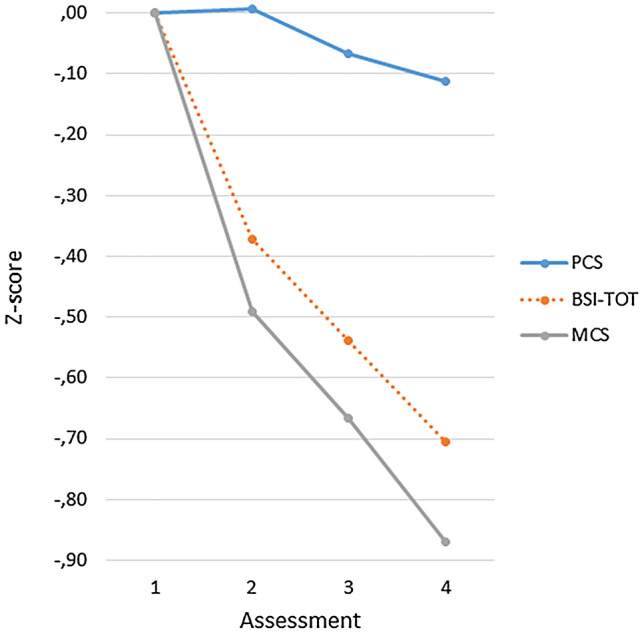
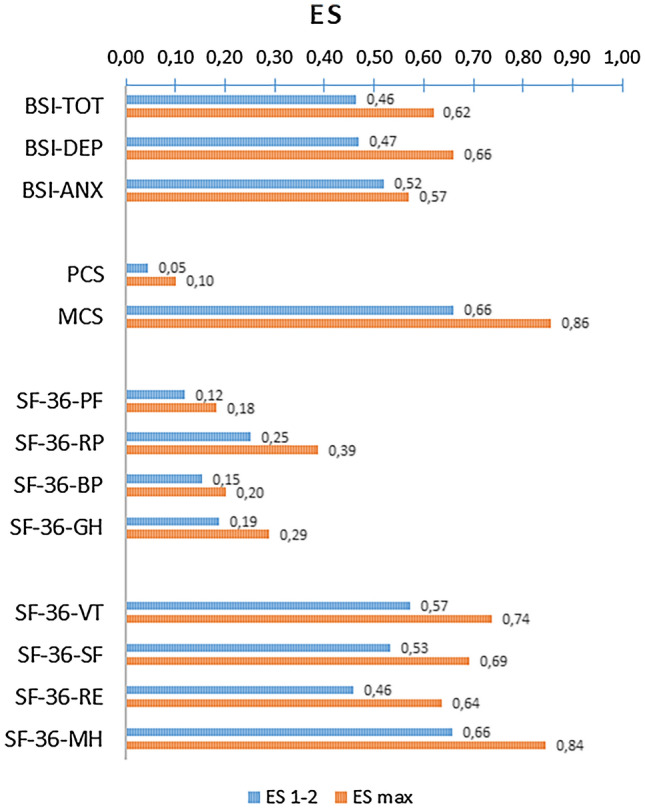
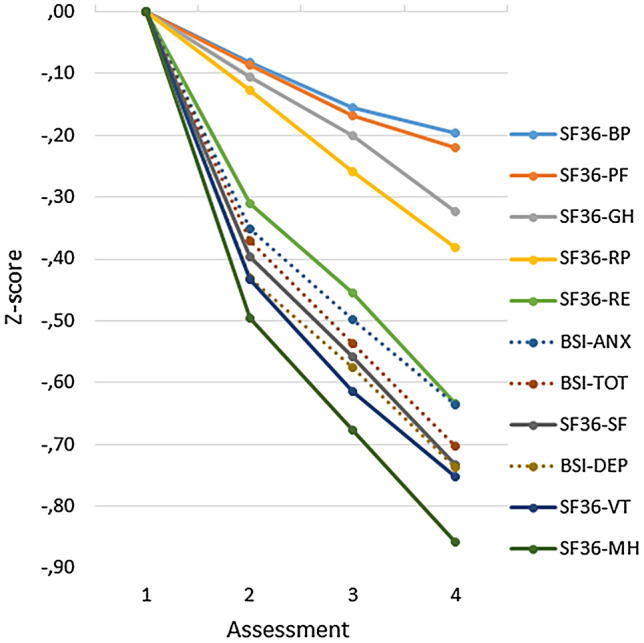
Scores on both instruments were associated, but not so strongly to suggest they measure the same underlying construct. The SF-36 scales presented a varied picture of treatment outcome: understandably, patients changed more on the mental component scales than on physical component scales. Outcome according to the BSI was quite similar to outcome according to scales of the SF-36 that showed the largest change.
Although (mental health) scores on both instruments are associated, adding the SF-36 in addition to the BSI in treatment evaluation research produces valuable information as the SF-36 measures a broader concept and contains physical/functional component scales, resulting in a more complete clinical picture of individual patients.
对于常见精神障碍(如心境和焦虑障碍)的治疗结果,通常通过心理病理学的自我报告测量来评估[例如,通过Brief Symptom Inventory (BSI)]。然而,健康相关生活质量[通过 36 项简短健康调查 (SF-36) 衡量]可能是常规结果监测 (ROM) 的有用补充结果领域。迄今为止,严重精神疾病患者的这两种结果的评估已经相当普遍,但常见精神障碍患者并非如此。本研究在患有常见精神障碍的门诊患者中检查了心理病理学和健康相关生活质量的治疗变化综合评估是否会产生相似的结果和效果大小。
我们在 13423 名门诊患者中比较了 BSI 和 SF-36 的治疗结果。在治疗过程中的各个时间点评估了两种仪器的一致性。
两种仪器的评分均相关,但没有强到表明它们测量相同的潜在结构。SF-36 量表呈现出不同的治疗结果图景:可以理解的是,患者在心理成分量表上的变化比在身体成分量表上的变化更大。BSI 的结果与 SF-36 量表中显示最大变化的结果非常相似。
尽管两种仪器的(心理健康)评分相关,但在治疗评估研究中除了 BSI 之外添加 SF-36 会产生有价值的信息,因为 SF-36 测量了更广泛的概念,并且包含身体/功能成分量表,从而为个体患者提供更完整的临床图景。