Department of Radiation Oncology, Fudan University Shanghai Cancer Center, Fudan University, Shanghai, China.
Department of Oncology, Shanghai Medical College, Fudan University, Shanghai, China.
Immun Inflamm Dis. 2022 Feb;10(2):241-254. doi: 10.1002/iid3.557. Epub 2021 Nov 2.
Recent studies have shown that myosin light chain 9 (MYL9) plays a vital role in immune infiltration, tumor invasion, and metastasis; however, the prognostic and immunological role of MYL9 has not been reported. The purpose of this study was to explore the potential prognostic and immunological roles of MYL9 in human cancers by public datasets mainly including the cancer genome atlas (TCGA) and Gene expression omnibus.
The expression pattern and prognostic value of MYL9 were analyzed across multiple public datasets in different cancer. The correlations between MYL9 expression and immune infiltration among multiple cancers were analyzed by using the TIMER2.0. The MYL9-related gene enrichment analysis was implemented by mainly using KEGG and GO datasets.
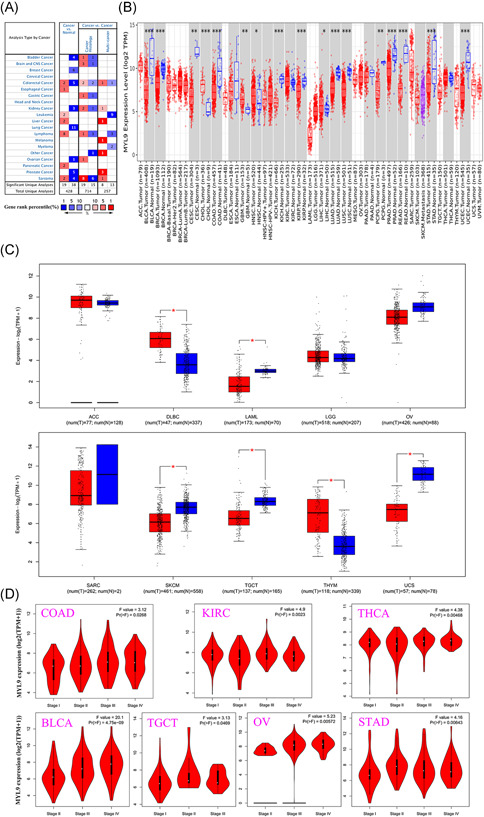
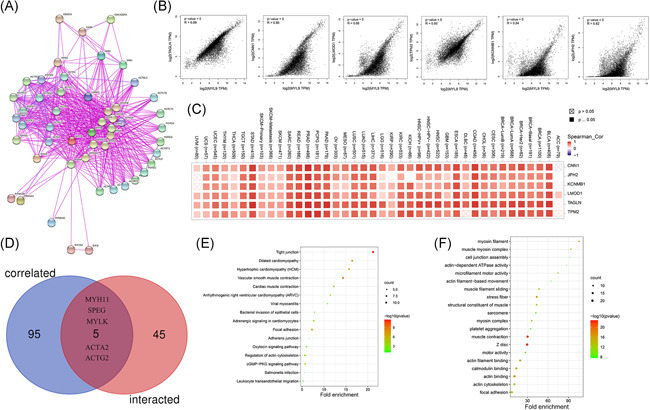
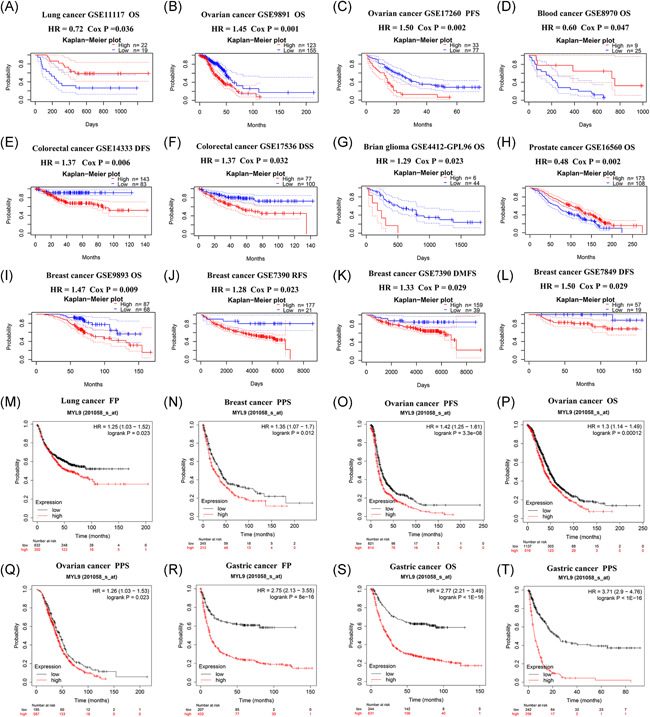
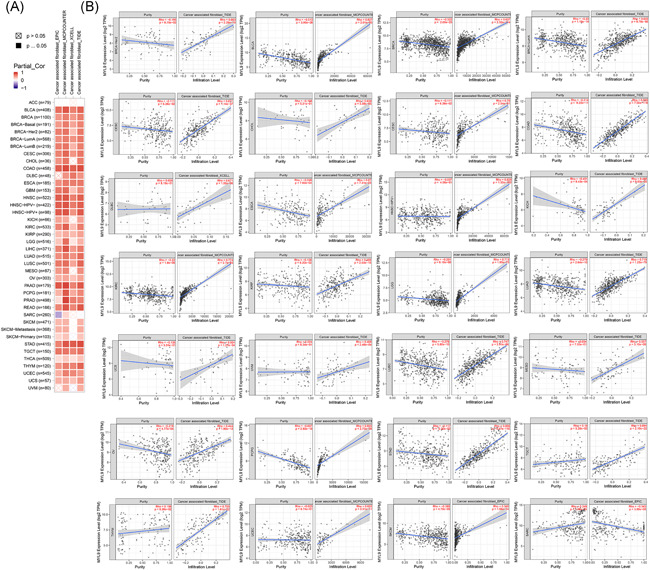
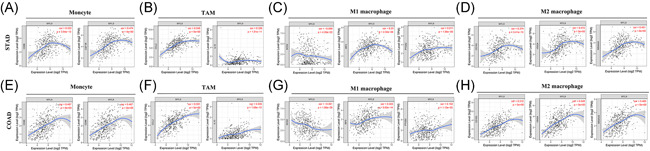
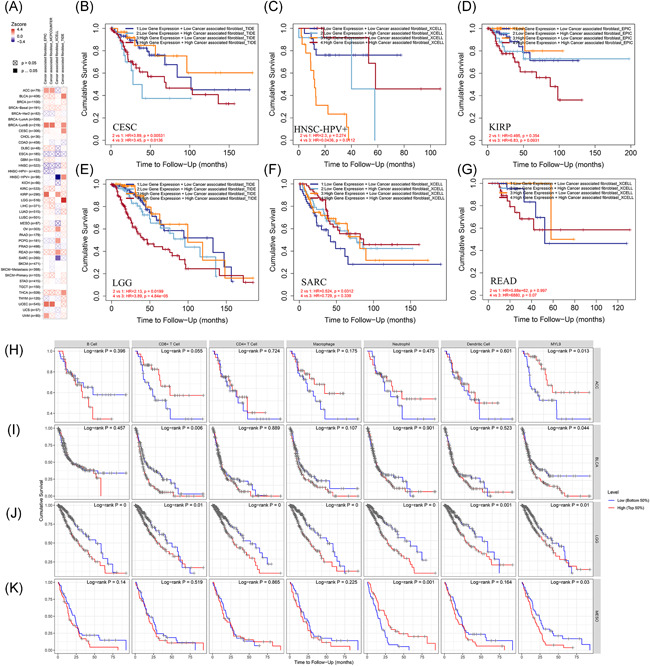
MYL9 was lowly expressed in most cancers, such as breast cancer, lung adenocarcinoma and squamous cell carcinoma, and stomach adenocarcinoma; but it was highly expressed in several cancers, such as cholangiocarcinoma, head and neck squamous cell carcinoma, and liver hepatocellular carcinoma. Furthermore, MYL9 expression was distinctively associated with prognosis in adrenocortical carcinoma, colon adenocarcinoma, brain glioma, lung cancer, ovarian cancer, gastric cancer, breast cancer, blood cancer, and prostate cancer patients. The expressions of MYL9 were significantly associated with the infiltration of cancer-associated fibroblasts, B cell, CD8 T cell, CD4 T cell, macrophage, neutrophil, dendritic cell in different tumors as well as immune markers. In addition, we found that the functional mechanisms of MYL9 involved muscle contraction and focal adhesion.
MYL9 can serve as a prognostic signature in pan-cancer and is associated with immune infiltration. This pan-cancer study is the first to show a relatively comprehensive understanding of the prognostic and immunological roles of MYL9 across different cancers.
最近的研究表明肌球蛋白轻链 9(MYL9)在免疫浸润、肿瘤侵袭和转移中起着至关重要的作用;然而,MYL9 的预后和免疫作用尚未报道。本研究旨在通过主要包括癌症基因组图谱(TCGA)和基因表达综合数据库的公共数据集,探讨 MYL9 在人类癌症中的潜在预后和免疫作用。
在不同癌症的多个公共数据集中分析 MYL9 的表达模式和预后价值。使用 TIMER2.0 分析了多个癌症中 MYL9 表达与免疫浸润之间的相关性。主要使用 KEGG 和 GO 数据集进行 MYL9 相关基因富集分析。
在大多数癌症中,如乳腺癌、肺腺癌和鳞状细胞癌以及胃腺癌,MYL9 表达水平较低;但在几种癌症中,如胆管癌、头颈部鳞状细胞癌和肝癌,MYL9 表达水平较高。此外,MYL9 表达与肾上腺皮质癌、结肠腺癌、脑胶质瘤、肺癌、卵巢癌、胃癌、乳腺癌、血液癌和前列腺癌患者的预后明显相关。在不同肿瘤以及免疫标志物中,MYL9 的表达与癌症相关成纤维细胞、B 细胞、CD8 T 细胞、CD4 T 细胞、巨噬细胞、中性粒细胞、树突状细胞的浸润显著相关。此外,我们发现 MYL9 的功能机制涉及肌肉收缩和黏附斑。
MYL9 可以作为泛癌的预后标志物,并与免疫浸润相关。这项泛癌研究首次较为全面地了解了 MYL9 在不同癌症中的预后和免疫作用。