Department of Psychosomatic Medicine, The Second Affiliated Hospital of Nanchang University, Nanchang, China.
First Clinical Medical School, Nanchang University, Nanchang, China.
Medicine (Baltimore). 2021 Oct 15;100(41):e27504. doi: 10.1097/MD.0000000000027504.
Post-stroke fatigue seriously affects the quality of life for stroke patients. There is no effective treatment at present. transcranial direct current stimulation (tDCS) is a non-invasive brain stimulation which may have therapeutic effect on post-stroke fatigue. This study will explore about this.
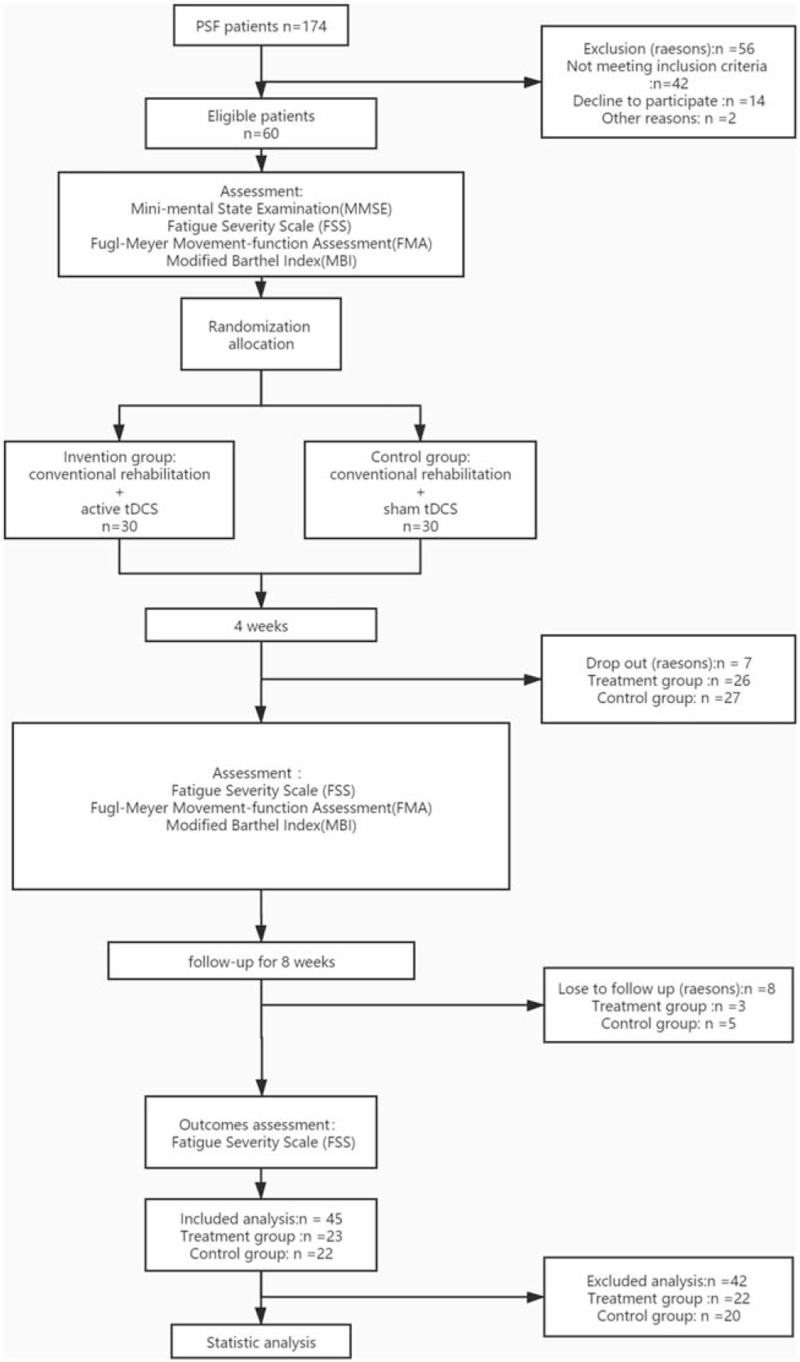
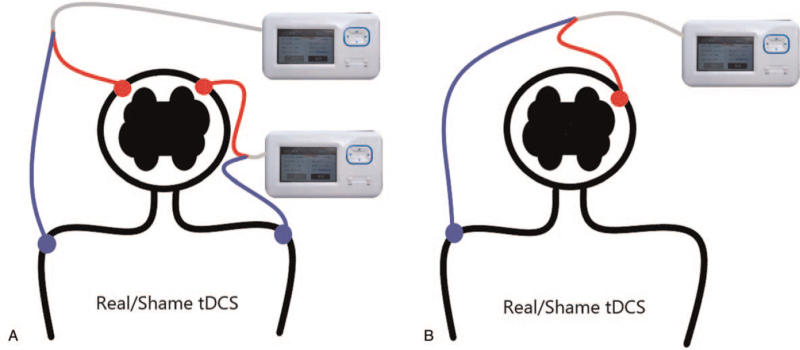
A total of 60 patients with post-stroke fatigue were randomly divided into the control group and the treatment group with 30 patients each by minimization randomization. Both groups received basic treatment and conventional rehabilitation. In the treatment group, patients were treated with active tDCS, while in the control group, sham tDCS. Both active and sham tDCS were administered 6 times a week for 4 weeks. Before and after the trial, the Fatigue Severity Scale (FSS), Fugl-Meyer Assessment (FMA) and Modified Barthel Index (MBI) were evaluated and analyzed. And comparisons were made among groups. And there were an 8-week follow-up after the intervention.
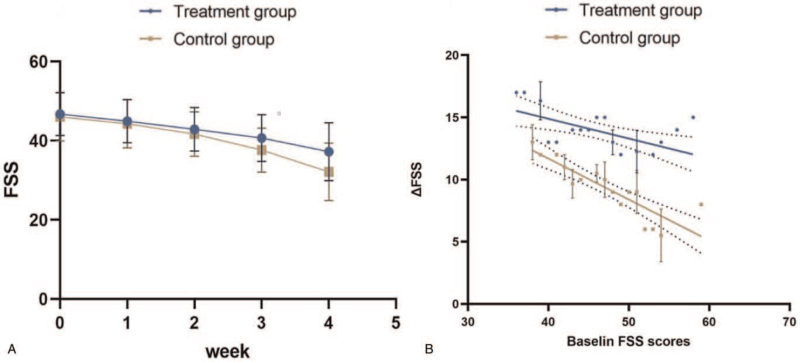
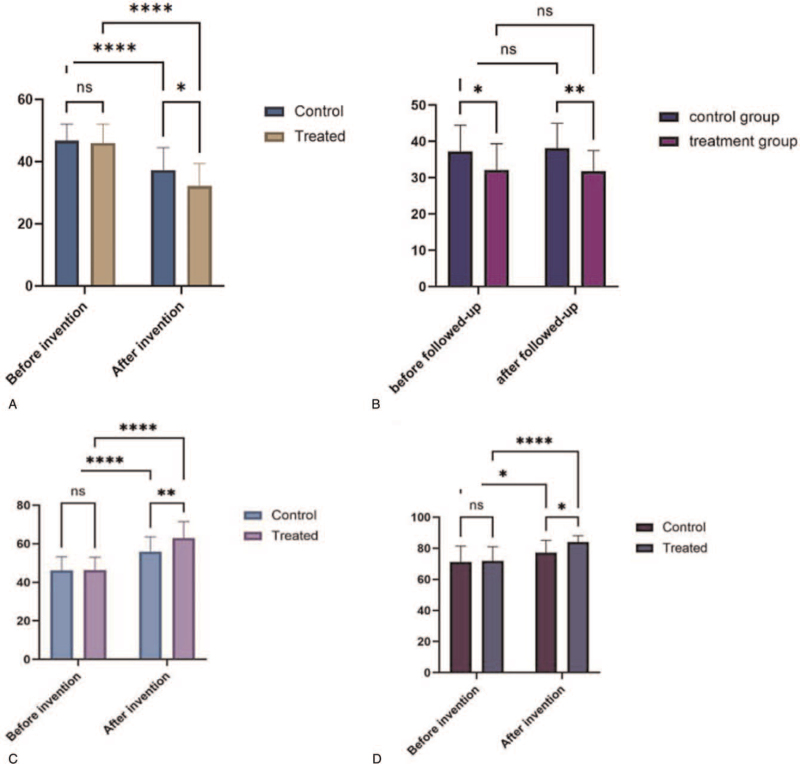
Before the intervention, there were no significant differences in baseline data and assessment scores between the groups (P > 0.05). After 4 weeks of intervention, FSS scores in the treatment group were significantly lower than those in the control group (P = 0.012), and FMA and BMI scores were significantly higher than those in the control group (P < 0.05). There was no significant change in FSS scores after 8 months of follow-up (P > 0.05).
TDCS is a safe treatment that can effectively reduce the degree of fatigue after stroke, improve the motor function and daily activity ability of patients after stroke, and the efficacy is better than only routine rehabilitation training.
Chinese Clinical Trial Registry, ChiCTR2000031120. Registered on March 22, 2020.
脑卒中后疲劳严重影响脑卒中患者的生活质量。目前尚无有效的治疗方法。经颅直流电刺激(tDCS)是一种非侵入性脑刺激方法,可能对脑卒中后疲劳有治疗作用。本研究将对此进行探讨。
将 60 例脑卒中后疲劳患者采用最小化随机分组法分为对照组和治疗组,每组 30 例。两组均给予基础治疗和常规康复治疗。治疗组采用主动 tDCS 治疗,对照组采用假刺激 tDCS 治疗。两组均每周治疗 6 次,共治疗 4 周。在试验前后,采用疲劳严重程度量表(FSS)、Fugl-Meyer 评估量表(FMA)和改良巴氏指数(MBI)进行评估和分析,并对组间进行比较。干预后进行 8 周随访。
干预前,两组基线资料和评估评分比较差异均无统计学意义(P>0.05)。干预 4 周后,治疗组 FSS 评分明显低于对照组(P=0.012),FMA 和 MBI 评分明显高于对照组(P<0.05)。干预 8 个月后 FSS 评分无明显变化(P>0.05)。
tDCS 是一种安全的治疗方法,可有效降低脑卒中后疲劳程度,改善脑卒中后患者的运动功能和日常生活活动能力,其疗效优于单纯常规康复训练。
中国临床试验注册中心,ChiCTR2000031120。注册日期:2020 年 3 月 22 日。