Dong Zhaocheng, Dai Haoran, Gao Yu, Jiang Hanxue, Liu Meiqi, Liu Fei, Liu Wenbin, Feng Zhendong, Zhang Xiaoyan, Ren Aijie, Li Xiaolan, Rui Hongliang, Tian Xuefei, Li Guiming, Liu Baoli
Beijing Hospital of Traditional Chinese Medicine Affiliated to Capital Medical University, Beijing, China.
Shunyi Branch, Beijing Traditional Chinese Medicine Hospital, Beijing, China.
Front Pharmacol. 2021 Oct 18;12:724744. doi: 10.3389/fphar.2021.724744. eCollection 2021.
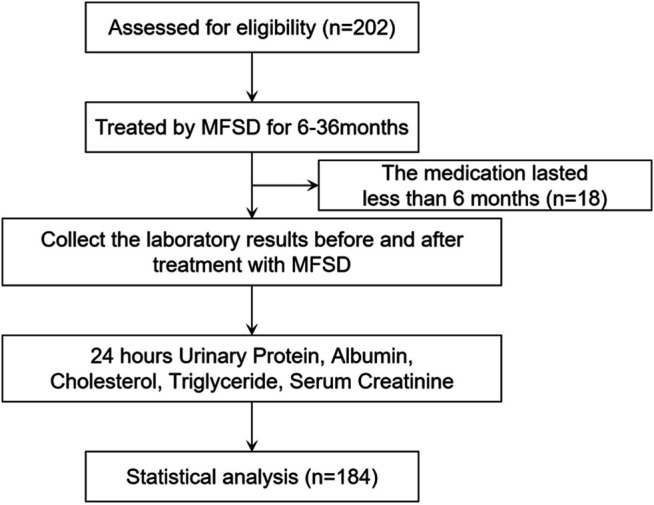
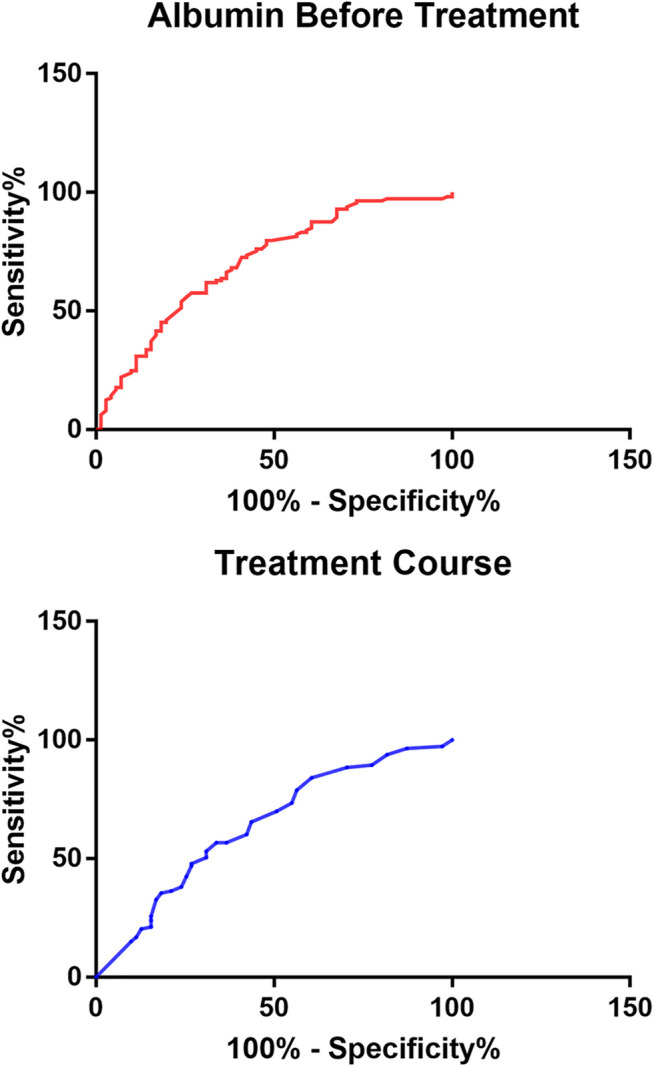
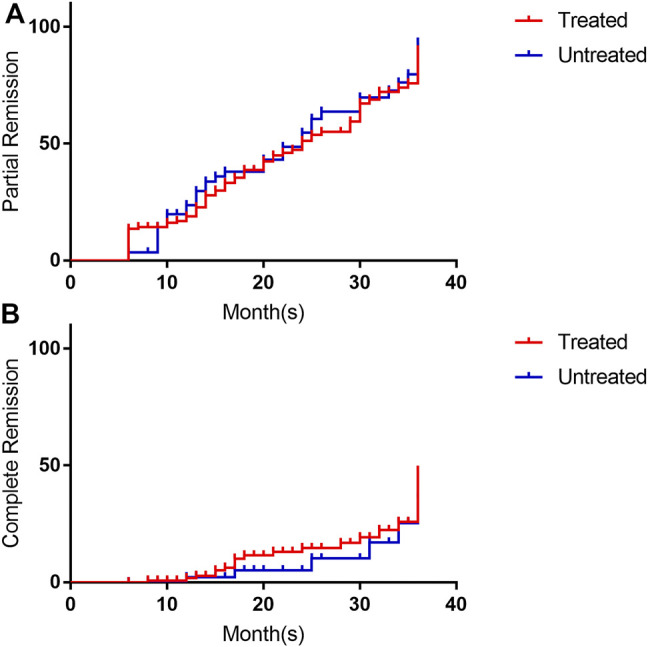
To explore the clinical effect of Mahuang Fuzi and Shenzhuo Decoction on idiopathic membranous nephropathy. This study is a multicenter, nonrandomized, single-arm clinical trial carried out as per the objective performance criteria, with the target being set at 35.0%. 184 cases of patients suffering from idiopathic membranous nephropathy with Shaoyin Taiyin syndrome were collected. These patients were treated with Mahuang Fuzi and Shenzhuo Decoction with a follow-up period of 3 years. The 24-hour urine protein and blood albumin were observed, and the remission rates of the patients were compared with the target. The mean follow-up time was 18 (12.5, 30) months, and the remission rate was 61.4%, which is a statistically significant difference from the target group of 35%. The remission rates for patients who had and had not used immunosuppressive therapy were 59.6 and 65.5%, respectively, but the difference was not statistically significant ( = 0.254). However, the albumin before the treatment and the course of treatment of the patients was significantly correlated with the disease remission ( < 0.05). However, the albumin before the treatment and the course of treatment of the patients was significantly correlated with the disease remission ( < 0.05). There were no significant changes in renal function before and after treatment, and no severe adverse events occurred during treatment. Mahuang Fuzi and Shenzhuo Decoction have significant effects on idiopathic membranous nephropathy, and has the same effect on patients with membranous nephropathy who are newly treated as well as those who have been treated with immunosuppressive therapy without remission. In addition, the efficacy of this regimen is related to the albumin and the duration of the therapy, but not to 24-hour urine protein or other factors.
探讨麻黄附子及参芪汤治疗特发性膜性肾病的临床疗效。本研究为多中心、非随机、单臂临床试验,按照客观绩效标准开展,目标设定为35.0%。收集184例患有少阴太阴证特发性膜性肾病的患者。这些患者采用麻黄附子及参芪汤治疗,随访期为3年。观察24小时尿蛋白和血白蛋白,并将患者的缓解率与目标进行比较。平均随访时间为18(12.5,30)个月,缓解率为61.4%,与目标组35%有统计学显著差异。使用和未使用免疫抑制治疗的患者缓解率分别为59.6%和65.5%,但差异无统计学意义( = 0.254)。然而,患者治疗前的白蛋白水平和病程与疾病缓解显著相关( < 0.05)。然而,患者治疗前的白蛋白水平和病程与疾病缓解显著相关( < 0.05)。治疗前后肾功能无显著变化,治疗期间未发生严重不良事件。麻黄附子及参芪汤对特发性膜性肾病有显著疗效,对初治的膜性肾病患者以及接受免疫抑制治疗未缓解的患者效果相同。此外,该治疗方案的疗效与白蛋白和治疗持续时间有关,但与24小时尿蛋白或其他因素无关。