Pérez-Aguado Guillermo, de la Mata Diego Martinez-Acitores, Valenciano Carlos Marra-López, Sainz Ignacio Fernandez-Urien
Department of Gastroenterology, Complejo Hospitalario Insular Materno Infantil de Gran Canaria, Las Palmas de Gran Canaria, Las Palmas 35016, Spain.
Department of Gastroenterology, Endoscopy Unit, Complejo Hospitalario de Navarra CHN, Pamplona Navarra 31008, Spain.
World J Gastrointest Endosc. 2021 Oct 16;13(10):460-472. doi: 10.4253/wjge.v13.i10.460.
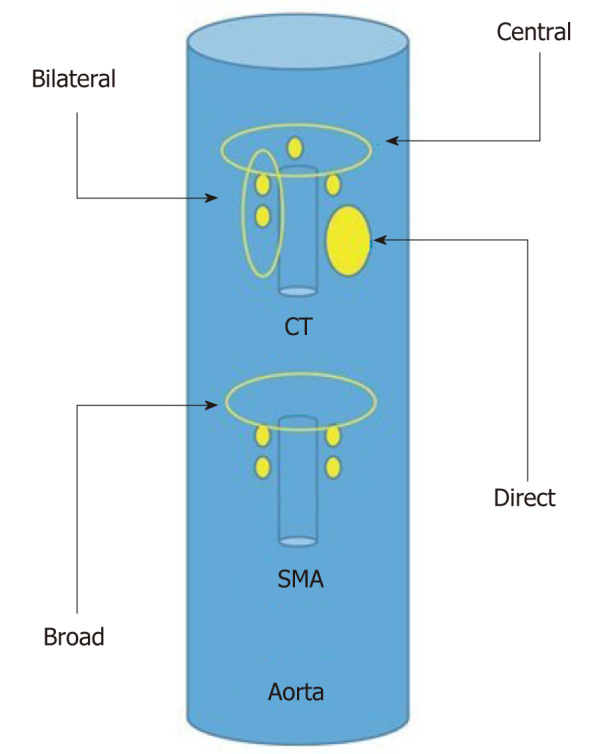
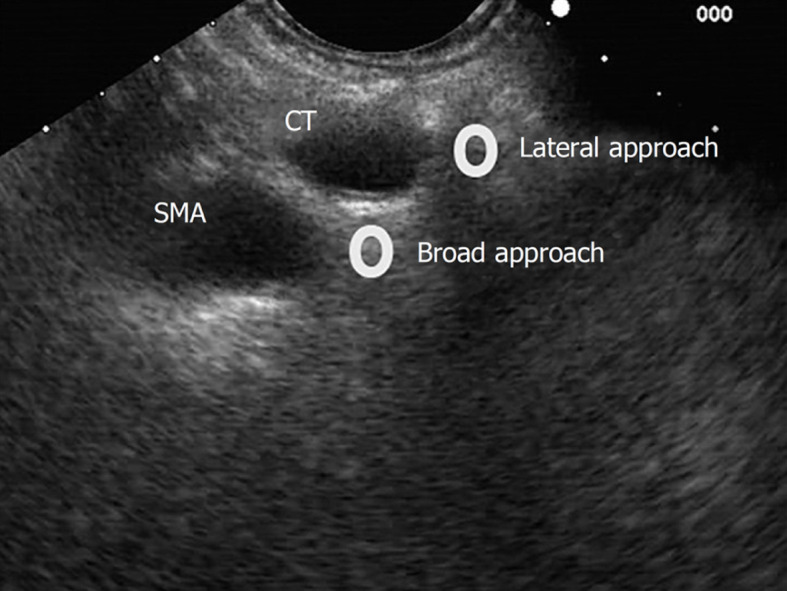
Pancreatic cancer produces disabling abdominal pain, and the pain medical management for pancreatic cancer is often challenging because it mainly relies on the use of narcotics (major opioids). However, opioids often provide suboptimal pain relief, and the use of opioids can lead to patient tolerance and several side effects that considerably reduce the quality of life of pancreatic cancer patients. Endosonography-guided celiac plexus neurolysis (EUS-CPN) is an alternative for pain control in patients with nonsurgical pancreatic cancer; EUS-CPN consists of the injection of alcohol and a local anesthetic into the area of the celiac plexus to achieve chemical ablation of the nerve tissue. EUS-CPN the transgastric approach is a safer and more accessible technique than the percutaneous approach. We have reviewed most of the studies that evaluate the efficacy of EUS-CPN and that have compared the different approaches that have been performed by endosonographers. The efficacy of EUS-CPN varies from 50% to 94% in the different studies, and EUS-CPN has a pain relief duration of 4-8 wk. Several factors are involved in its efficacy, such as the onset of pain, previous use of chemotherapy, presence of metastatic disease, EUS-CPN technique, type of needle or neurolytic agent used, According to this review, injection into the ganglia may be the best technique, and a good visualization of the ganglia is the best predictor for a good EUS-CPN response, although more studies are needed. However, any of the 4 different techniques could be used to perform EUS-CPN effectively with no differences in terms of complications between the techniques, but more studies are needed. The effect of EUS-CPN on pain improvement, patient survival and patient quality of life should be evaluated in well-designed randomized clinical trials. Further research also needs to be performed to clarify the best time frame in performing a EUS-CPN.
胰腺癌会引发使人丧失能力的腹痛,而胰腺癌的疼痛医学管理往往具有挑战性,因为它主要依赖于使用麻醉药品(主要是阿片类药物)。然而,阿片类药物通常只能提供次优的疼痛缓解效果,并且使用阿片类药物会导致患者产生耐受性以及出现多种副作用,这些副作用会显著降低胰腺癌患者的生活质量。内镜超声引导下腹腔神经丛毁损术(EUS-CPN)是无法进行手术的胰腺癌患者控制疼痛的一种替代方法;EUS-CPN包括将酒精和局部麻醉剂注射到腹腔神经丛区域,以实现神经组织的化学消融。与经皮途径相比,经胃途径的EUS-CPN是一种更安全、更易操作的技术。我们回顾了大多数评估EUS-CPN疗效以及比较内镜超声检查者所采用的不同方法的研究。在不同研究中,EUS-CPN的疗效从50%到94%不等,其疼痛缓解持续时间为4至8周。其疗效受多种因素影响,如疼痛发作情况、先前是否使用过化疗、是否存在转移性疾病、EUS-CPN技术、所用针具或神经溶解剂的类型等。根据这篇综述,向神经节内注射可能是最佳技术,并且神经节清晰可见是EUS-CPN获得良好效果的最佳预测指标,不过还需要更多研究。然而,这4种不同技术中的任何一种都可有效用于实施EUS-CPN,各技术在并发症方面并无差异,但仍需要更多研究。应在精心设计的随机临床试验中评估EUS-CPN对疼痛改善、患者生存及患者生活质量的影响。还需要进一步开展研究以明确实施EUS-CPN的最佳时间范围。