Chor Ana, Skeff Maria Adriana, Takiya Christina, Gonçalves Raquel, Dias Marcos, Farina Marcos, Andrade Leonardo R, Coelho Valeria de Mello
Laboratory of Biomineralization, Institute of Biomedical Sciences, Health Sciences Center, Federal University of Rio de Janeiro, Rio de Janeiro 21941-902, Brazil.
Laboratory of Immunopathology, Institute of Biophysics Carlos Chagas Filho, Health Sciences Center, Federal University of Rio de Janeiro, Rio de Janeiro 21941-902, Brazil.
Oncotarget. 2021 Oct 26;12(22):2283-2299. doi: 10.18632/oncotarget.28091.
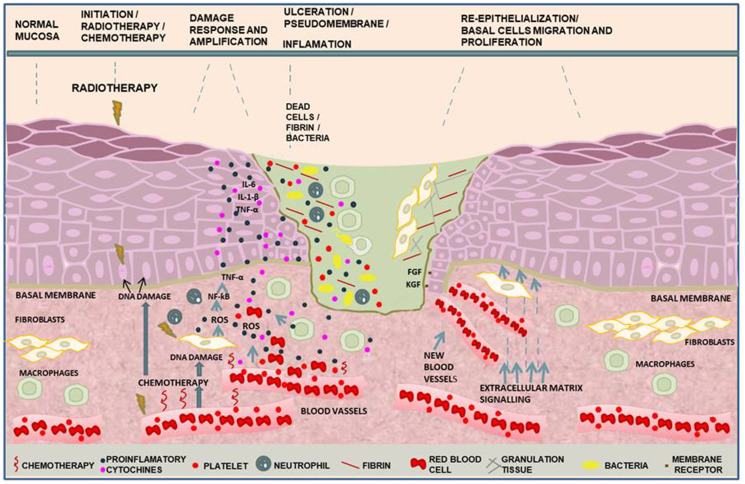
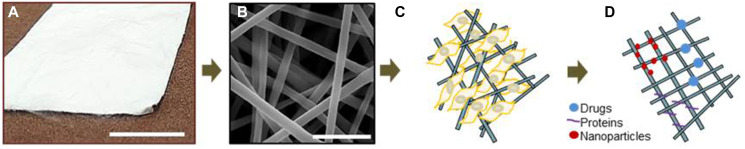
Clinical guidelines for oral mucositis (OM) still consist in palliative care. Herein, we summarize cellular and molecular mechanisms of OM ulceration in response to chemical therapies in animal models. We discuss evidenced anti-inflammatory and anti-oxidant drugs which have not been ever used for OM, such as synthetic peptides as well as cell therapy with mesenchymal stem cells; amniotic membranes, mucoadhesive polymers loaded with anti-inflammatory agents and natural or synthetic electrospun. These approaches have been promising to allow the production of drug-loaded membranes, scaffolds for cells encapsulation or guided tissue regeneration.
口腔黏膜炎(OM)的临床指南仍以姑息治疗为主。在此,我们总结了动物模型中化学疗法引发的OM溃疡的细胞和分子机制。我们讨论了尚未用于OM的、有证据支持的抗炎和抗氧化药物,如合成肽以及间充质干细胞的细胞疗法;羊膜、负载抗炎剂的黏膜黏附聚合物以及天然或合成的电纺材料。这些方法有望用于制备载药膜、用于细胞封装或引导组织再生的支架。