Mao Qingyan, Zhuang Qianfeng, Shen Jie, Chen Zhen, Xue Dong, Ding Tao, He Xiaozhou
Department of Urology, The Third Affiliated Hospital of Soochow University, Changzhou, China.
Transl Androl Urol. 2021 Sep;10(9):3669-3683. doi: 10.21037/tau-21-777.
Currently, drug-resistance is a major challenge in the treatment of renal cancer. Although microRNAs (miRNAs) have been reported to contribute to the incidence of drug resistance in renal cancer, the bio-functional roles and underlying regulatory mechanisms of novel miRNAs in cisplatin resistance remain largely unclear.
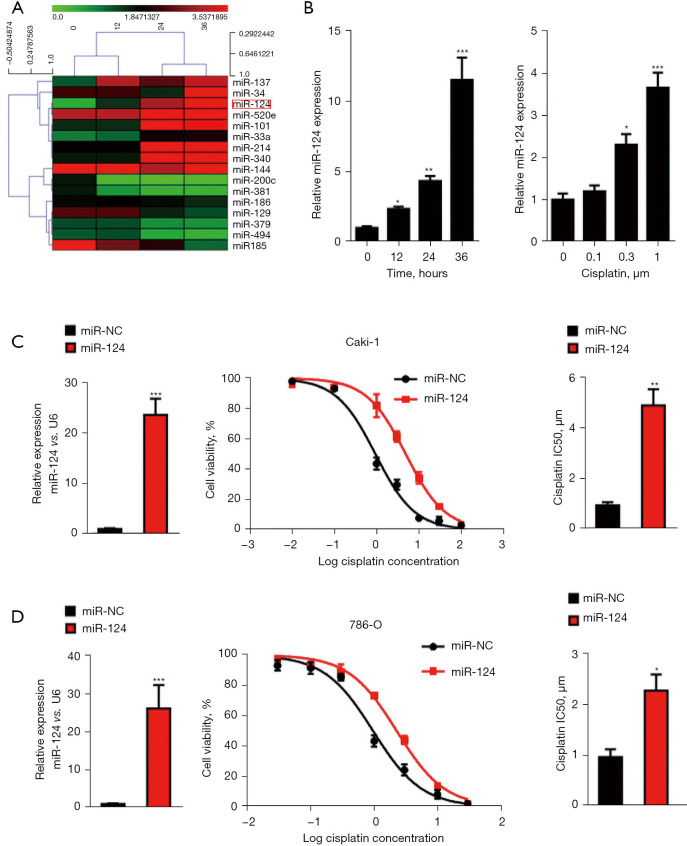
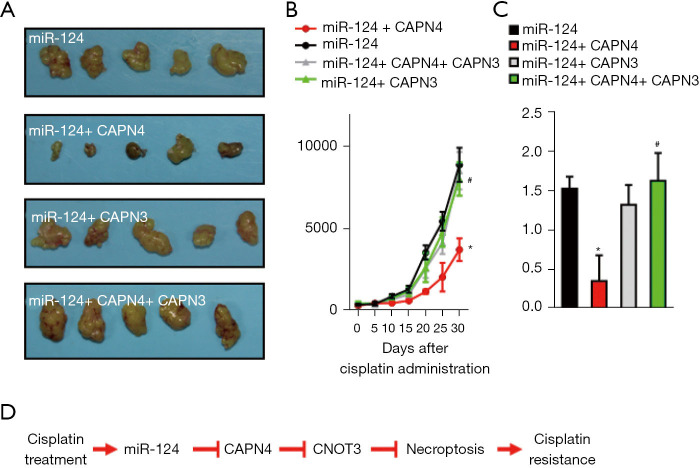
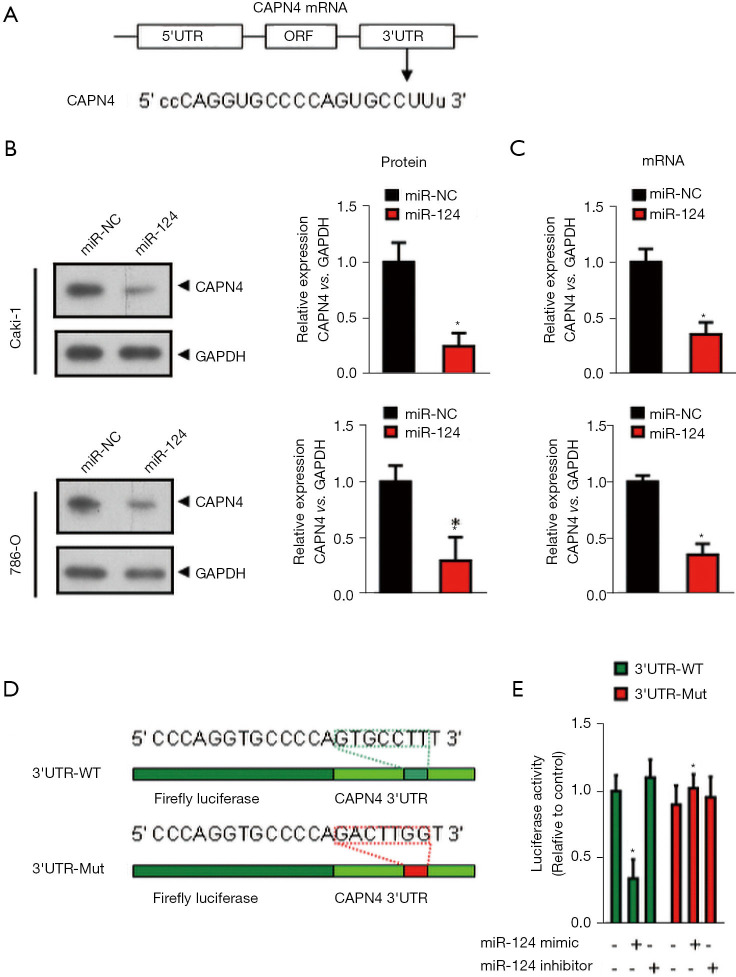
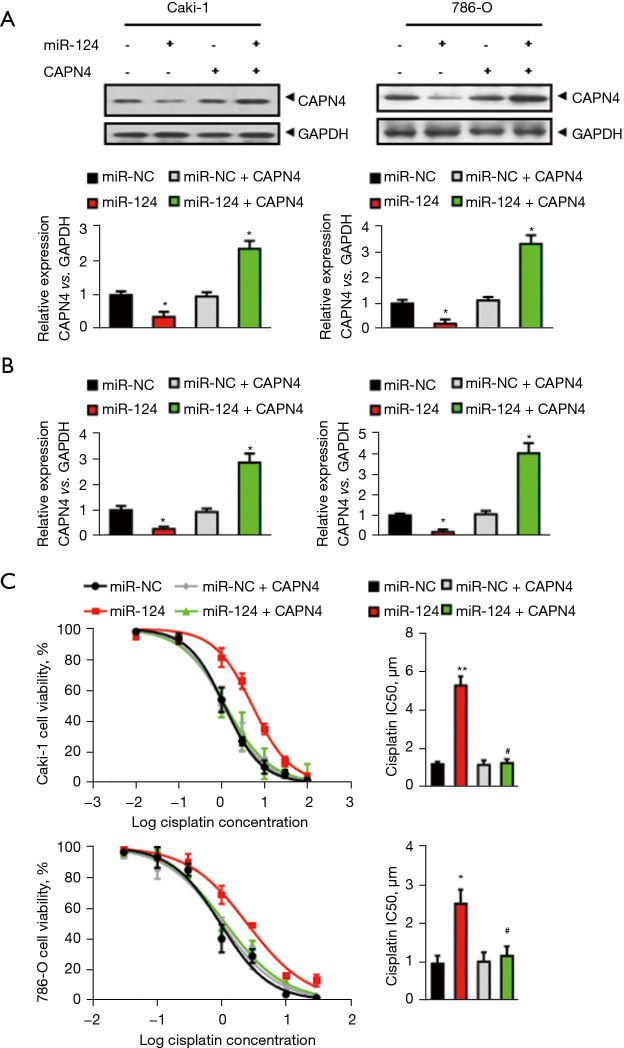
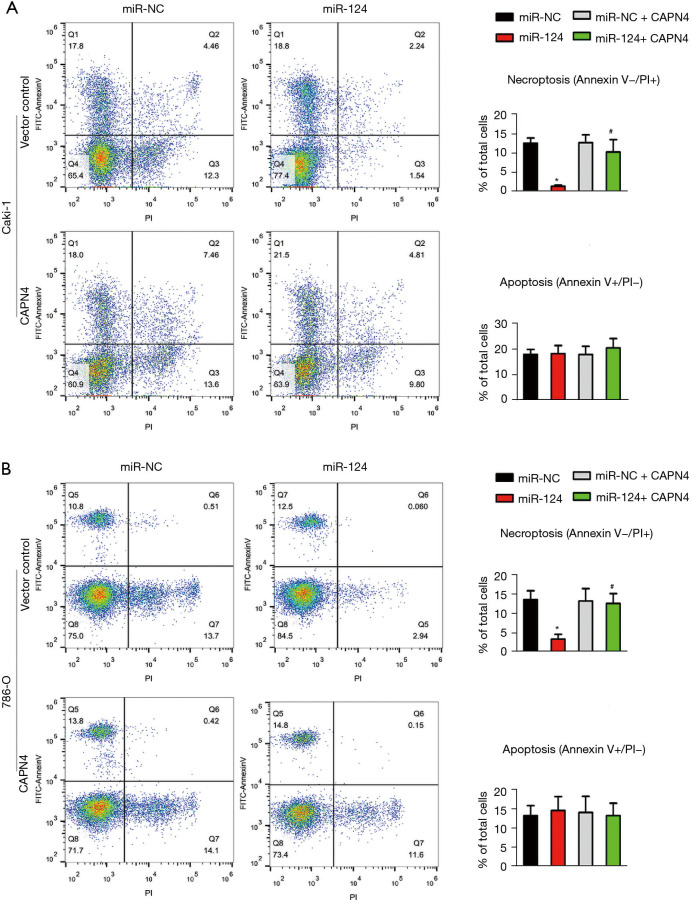
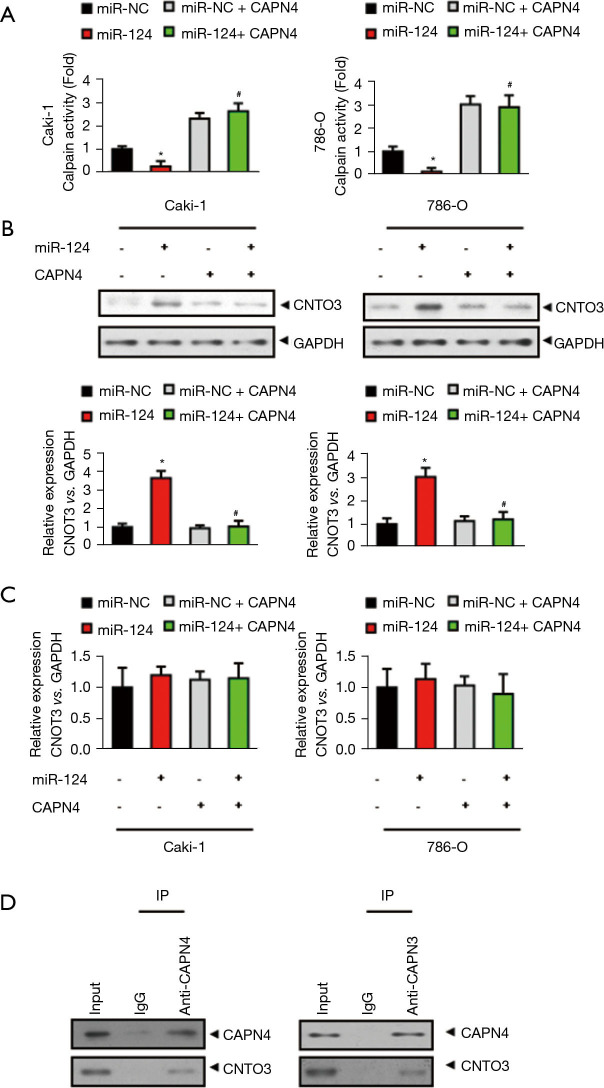
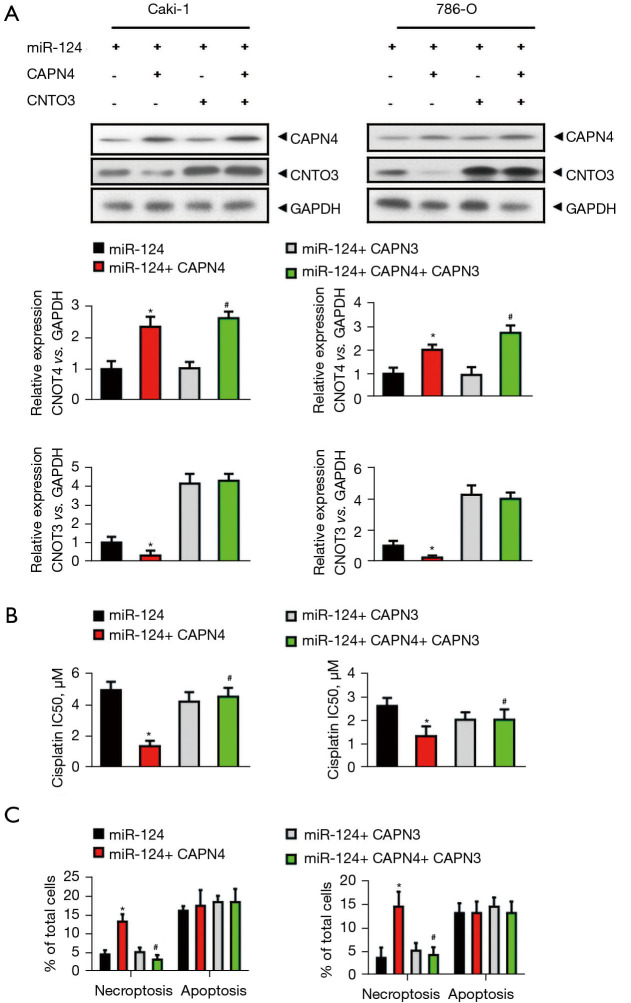
In this study, miRNA microarray analysis was applied to evaluate miRNA changes induced by cisplatin on RCC (renal cell carcinoma) cell lines. Then, Caki-1 and 786-0 cells were transfected with miR (miRNA)-124 mimics to observe cisplatin resistance in RCC cell lines after up-regulation of miR-124. TargetScan was used to identify putative protein-coding gene targets of miR-124. Further, the interaction between calpain small subunit 1 (Capn4) and CCR4-NOT transcription complex subunit 3 (CNOT3) was detected by quantitative real-time PCR (qPCR) and western blotting, and confirmed by co-immunoprecipitation. The effect of Capn4 and/or CNOT3 on cell viability and half maximal inhibitory concentration (IC50) value of miR-124 overexpressed Caki-1 and 786-O cells to cisplatin was evaluated using the Cell Counting Kit-8 (CCK-8) assay. And the effect of Capn4 and/or CNOT3 on the level of necroptosis in miR-124 overexpressed Caki-1 and 786-O cells to cisplatin was evaluated by flow cytometric analysis. Then, four groups of 786-0 cells (miR-124, miR-124+ Capn4, miR-124+ CNOT3, miR-124+ Capn4+ CNOT3) were inoculated into nude mice to observe the effect of cisplatin on tumor formation.
miR-124 was found to be markedly elevated in renal cancer cells by cisplatin. Functionally, the overexpression of miR-124 reduced the sensitivity of renal cancer cells to cisplatin and CAPN4 was found to be a direct target of miR-124, which can negatively regulated CAPN4 expression. Moreover, ectopic expression of CAPN4 reversed the impairment of miR-124 on cisplatin-sensitivity and cisplatin-induced necroptosis. Mechanically, the present study revealed that CAPN4 could directly interact with CNOT3 and promote its degradation, and that the cisplatin-resistant phenotype was reversed by up-regulation of CNOT3.
Therefore, miR-124 is an important inhibitor in cisplatin-induced necroptosis, and the miR-124-CAPN4-CNOT3 signaling axis plays a critical role in the emergence of cisplatin-resistance.
目前,耐药性是肾癌治疗中的一项重大挑战。尽管已有报道称微小RNA(miRNA)与肾癌耐药性的发生有关,但新型miRNA在顺铂耐药中的生物功能作用及潜在调控机制仍 largely不清楚。
在本研究中,应用miRNA微阵列分析来评估顺铂对肾癌细胞系诱导的miRNA变化。然后,用miR(miRNA)-124模拟物转染Caki-1和786-0细胞,以上调miR-124后观察肾癌细胞系中的顺铂耐药性。使用TargetScan来鉴定miR-124的假定蛋白质编码基因靶点。此外,通过定量实时PCR(qPCR)和蛋白质印迹检测钙蛋白酶小亚基1(Capn4)和CCR4-NOT转录复合体亚基3(CNOT3)之间的相互作用,并通过免疫共沉淀进行确认。使用细胞计数试剂盒-8(CCK-8)检测评估Capn4和/或CNOT3对miR-124过表达的Caki-1和786-O细胞对顺铂的细胞活力和半数最大抑制浓度(IC50)值的影响。并且通过流式细胞术分析评估Capn4和/或CNOT3对miR-124过表达的Caki-1和786-O细胞对顺铂的坏死性凋亡水平的影响。然后,将四组786-0细胞(miR-124、miR-124 + Capn4、miR-124 + CNOT3、miR-124 + Capn4 + CNOT3)接种到裸鼠中,以观察顺铂对肿瘤形成的影响。
发现顺铂可使肾癌细胞中miR-124显著升高。在功能上,miR-124的过表达降低了肾癌细胞对顺铂的敏感性,并且发现CAPN4是miR-124的直接靶点,其可负向调节CAPN4的表达。此外,CAPN4的异位表达逆转了miR-124对顺铂敏感性和顺铂诱导的坏死性凋亡的损害。在机制上,本研究表明CAPN4可直接与CNOT3相互作用并促进其降解,并且上调CNOT3可逆转顺铂耐药表型。
因此,miR-124是顺铂诱导的坏死性凋亡中的重要抑制剂,并且miR-124-CAPN4-CNOT3信号轴在顺铂耐药的出现中起关键作用。