Smorodintsev Research Institute of Influenza, Prof. Popova Str., 15/17, 197376, Saint Petersburg, Russia.
Children's City Hospital Named After St. Olga, Zemledelcheskaya Str., 2, 194156, St. Petersburg, Russia.
J Epidemiol Glob Health. 2021 Dec;11(4):413-425. doi: 10.1007/s44197-021-00009-1. Epub 2021 Oct 28.
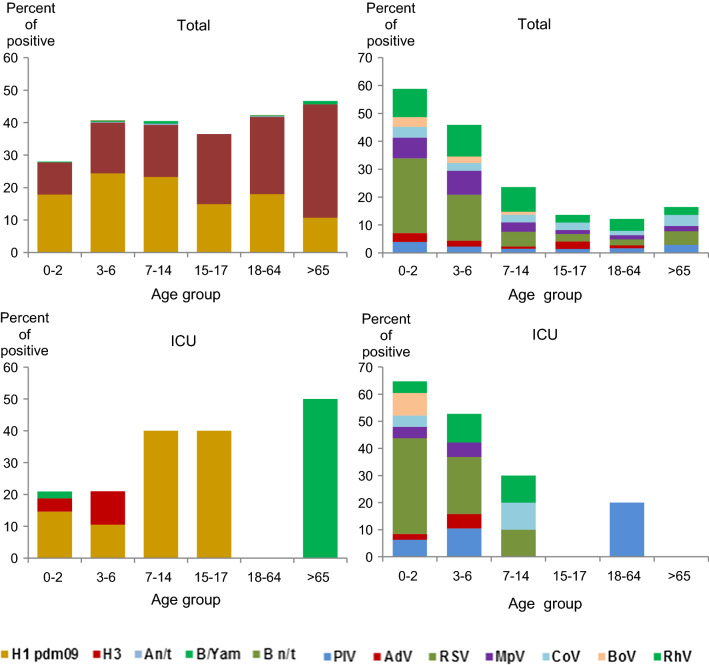
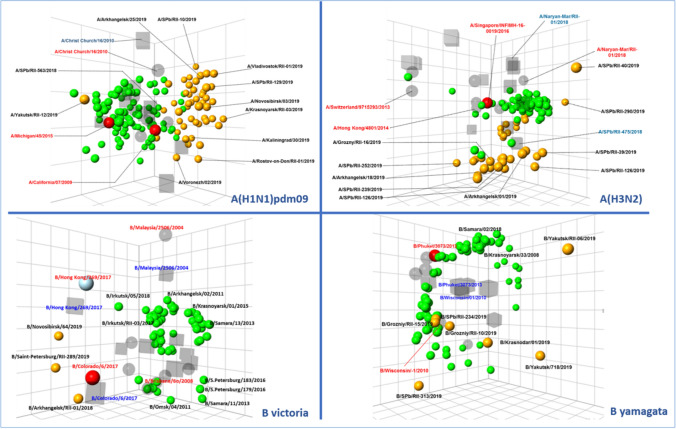
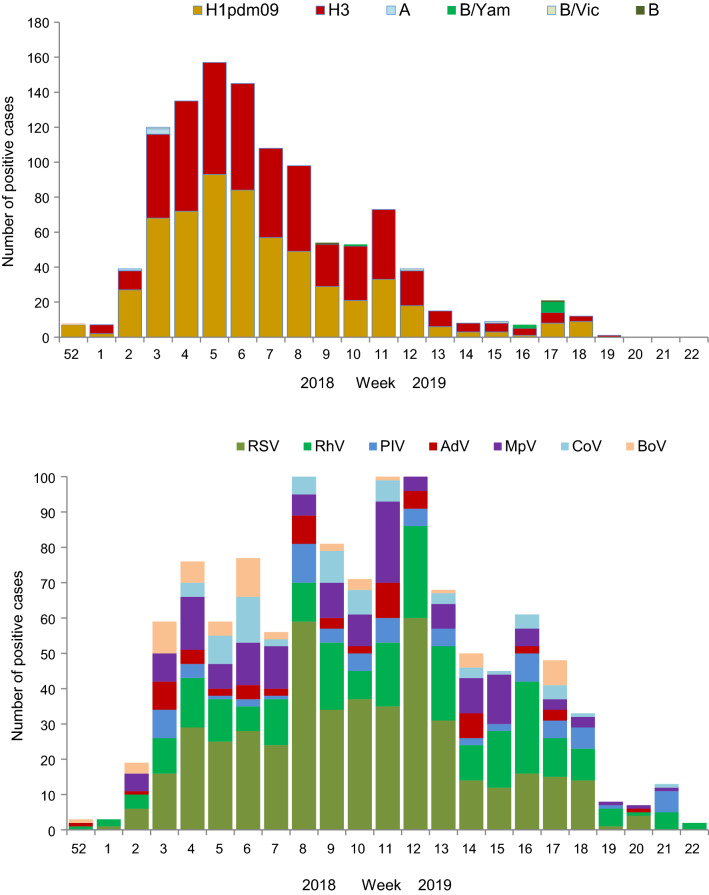
The expansion and standardization of clinical trials, as well as the use of sensitive and specific molecular diagnostics methods, provide new information on the age-specific roles of influenza and other respiratory viruses in development of severe acute respiratory infections (SARI). Here, we present the results of the multicenter hospital-based study aimed to detect age-specific impact of influenza and other respiratory viruses (ORV). The 2018-2019 influenza season in Russia was characterized by co-circulation of influenza A(H1N1)pdm09 and A(H3N2) virus subtypes which were detected among hospitalized patients with SARI in 19.3% and 16.4%, respectively. RSV dominated among ORV (15.1% of total cases and 26.8% in infants aged ≤ 2 years). The most significant SARI agents in intensive care units were RSV and influenza A(H1N1)pdm09 virus, (37.3% and 25.4%, respectively, of PCR-positive cases). Hyperthermia was the most frequently registered symptom for influenza cases. In contrast, hypoxia, decreased blood O concentration, and dyspnea were registered more often in RSV, rhinovirus, and metapneumovirus infection in young children. Influenza vaccine effectiveness (IVE) against hospitalization of patients with PCR-confirmed influenza was evaluated using test-negative case-control design. IVE for children and adults was estimated to be 57.0% and 62.0%, respectively. Subtype specific IVE was higher against influenza A(H1N1)pdm09, compared to influenza A(H3N2) (60.3% and 45.8%, respectively). This correlates with delayed antigenic drift of the influenza A(H1N1)pdm09 virus and genetic heterogeneity of the influenza A(H3N2) population. These studies demonstrate the need to improve seasonal influenza prevention and control in all countries as states by the WHO Global Influenza Strategy for 2019-2030 initiative.
临床试验的扩展和标准化,以及敏感和特异的分子诊断方法的应用,为流感和其他呼吸道病毒在严重急性呼吸道感染(SARI)发展中的年龄特异性作用提供了新信息。在这里,我们介绍了一项多中心医院基础研究的结果,旨在检测流感和其他呼吸道病毒(ORV)的年龄特异性影响。俄罗斯 2018-2019 年流感季节的特点是甲型 H1N1pdm09 和甲型 H3N2 病毒亚型的共同流行,这两种病毒分别在 SARI 住院患者中检测到 19.3%和 16.4%。RSV 在 ORV 中占主导地位(总病例的 15.1%,年龄≤2 岁的婴儿为 26.8%)。重症监护病房中最重要的 SARI 病原体是 RSV 和甲型 H1N1pdm09 病毒,(PCR 阳性病例的 37.3%和 25.4%)。发热是流感病例最常见的症状。相反,在 RSV、鼻病毒和副流感病毒感染的幼儿中,更常记录到缺氧、血氧浓度降低和呼吸困难。使用病例对照测试阴性设计评估了针对 PCR 确诊流感住院患者的流感疫苗有效性(IVE)。儿童和成人的 IVE 估计分别为 57.0%和 62.0%。针对甲型 H1N1pdm09 的亚型特异性 IVE 高于针对甲型 H3N2(分别为 60.3%和 45.8%)。这与甲型 H1N1pdm09 病毒的抗原漂移延迟和甲型 H3N2 人群的遗传异质性相关。这些研究表明,需要按照世卫组织 2019-2030 年全球流感战略倡议,在所有国家改善季节性流感的预防和控制。