Department of Neurobiology, Care Sciences and Society Karolinska Institutet, Sweden.
Department of Nursing, Umeå University, Sweden.
Scand J Public Health. 2022 Feb;50(1):144-151. doi: 10.1177/14034948211051884. Epub 2021 Nov 5.
To describe how children in Sweden accessed and perceived information about SARS-CoV2 and Covid-19 during the first phase of the outbreak.
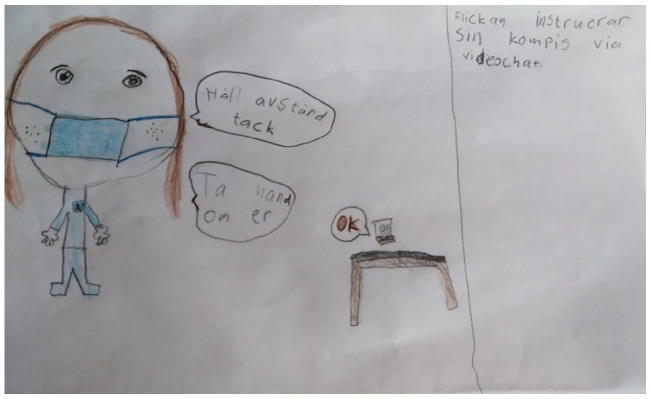
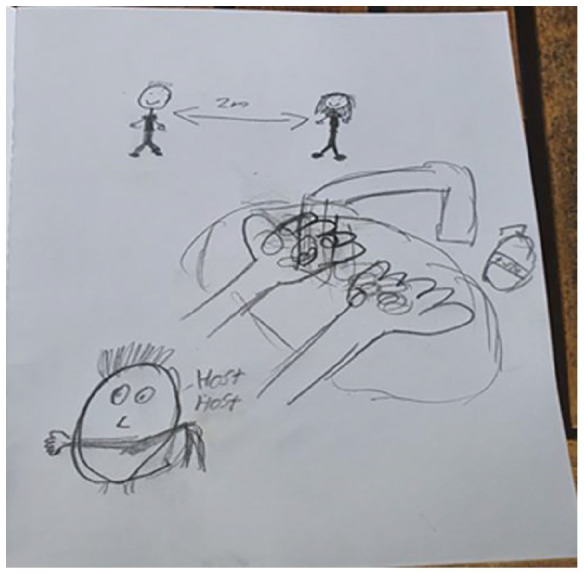
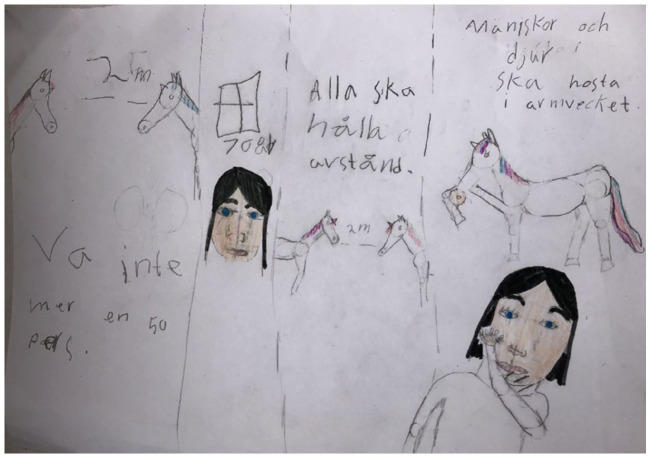
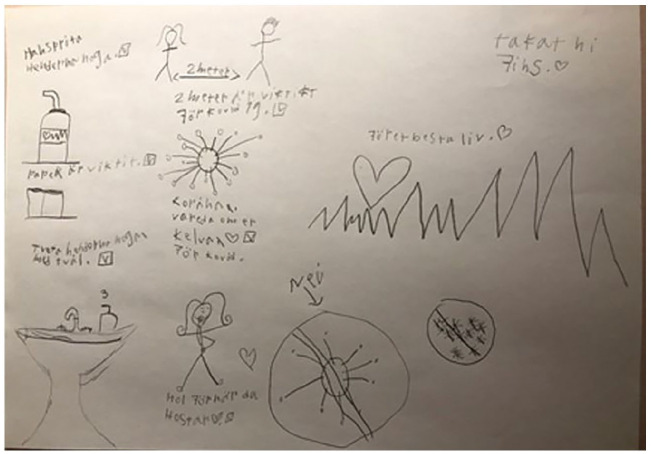
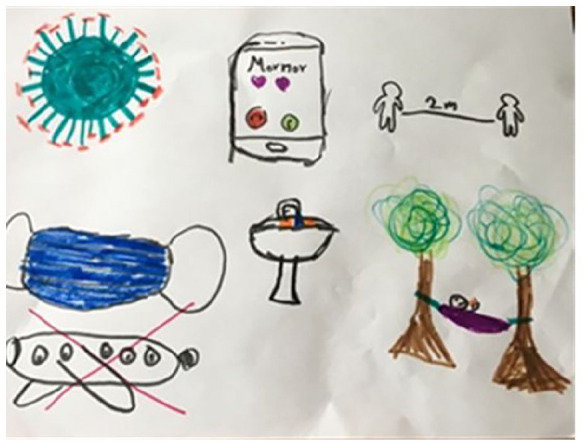
This study is a substudy of an international cross-sectional online mixed methods survey examining elements of children's health literacy in relation to Covid-19. The survey included multiple-choice questions, open-ended questions and drawings and collected information from 50 Swedish children (7-12 years). Data were analysed concurrently on a descriptive level using statistics and content analysis. Quantitative and qualitative data, including the drawings, were considered equally important and resulted in six categories, illuminating how children accessed and perceived information about the pandemic.
The survey showed that children accessed information mainly from school but also from TV. They preferred information from reliable sources. Children reported the information they accessed as easy to understand and it prompted them to ask new questions. They reported they knew a lot about the pandemic, for example, the potential danger to themselves and others and how to act to protect themselves and others. They perceived the pandemic as an intrusion on their lives.
描述瑞典儿童在疫情爆发初期如何获取和感知有关 SARS-CoV2 和 COVID-19 的信息。
本研究是一项国际横断面在线混合方法调查的子研究,旨在研究与 COVID-19 相关的儿童健康素养要素。该调查包括多项选择题、开放性问题和绘画,并从 50 名瑞典儿童(7-12 岁)处收集信息。数据在描述性水平上同时进行分析,使用统计学和内容分析。定量和定性数据(包括绘画)被同等重视,结果产生了六个类别,阐明了儿童获取和感知大流行信息的方式。
调查显示,儿童主要从学校获取信息,但也从电视获取信息。他们更喜欢来自可靠来源的信息。儿童表示他们获取的信息易于理解,并促使他们提出新的问题。他们表示,他们对大流行有很多了解,例如对自己和他人的潜在危险,以及如何采取行动保护自己和他人。他们认为大流行是对他们生活的干扰。